October 6, 2026 · 18 minute read
Congratulations, You're Engaged!! Now What?
This is a question we get asked nearly every day:
"I'm not sure what I want...what do people get?"
Well, after nearly a DECADE of growing for and planning weddings, we feel like it's an easy process! There's nothing like EXPERIENCE to lend a hand to planning, and most proposals can be completed after a quick 30 minute conversation with the bride. It's important to find an experienced FLORIST, but it's even better to find an experienced FARMER who knows how to grow your actual flowers...here at Eastern River Farm, we have nearly a decade of experience in both businesses: floristry, and flower farming! We would love to shed LIGHT on the process, making it easier to flower one of the most SPECIAL DAYS in your lives.
Choosing FLOWER arrangements for your spaces...
Planning wedding flowers doesn't have to be tricky! The first questions I always ask a new client are these: What is your wedding date, and where is your venue? What is the feeling or vision you are hoping to create in your ceremony and reception space? How many guests do you anticipate at your wedding? What style of tables do you have: round, rectangular, or a mix? Does the venue allow for live flame? What does your ceremony site look like? Are you hoping for certain colors in your wedding flowers? And finally, do you have a budget for your flowers, or are you hoping to find out what things cost first?
I know, I know-----those are a lot of questions, and typically, clients have a rough idea of guest count, vision and budget, but the rest is up to us. We like that. We love when the client notices that we are a family farm growing clean wedding flowers as our business, and that we have the EXPERIENCE to help them make an easy floral plan. It seems to makes people happy to support what we do, which in turn feeds our passion to continue.
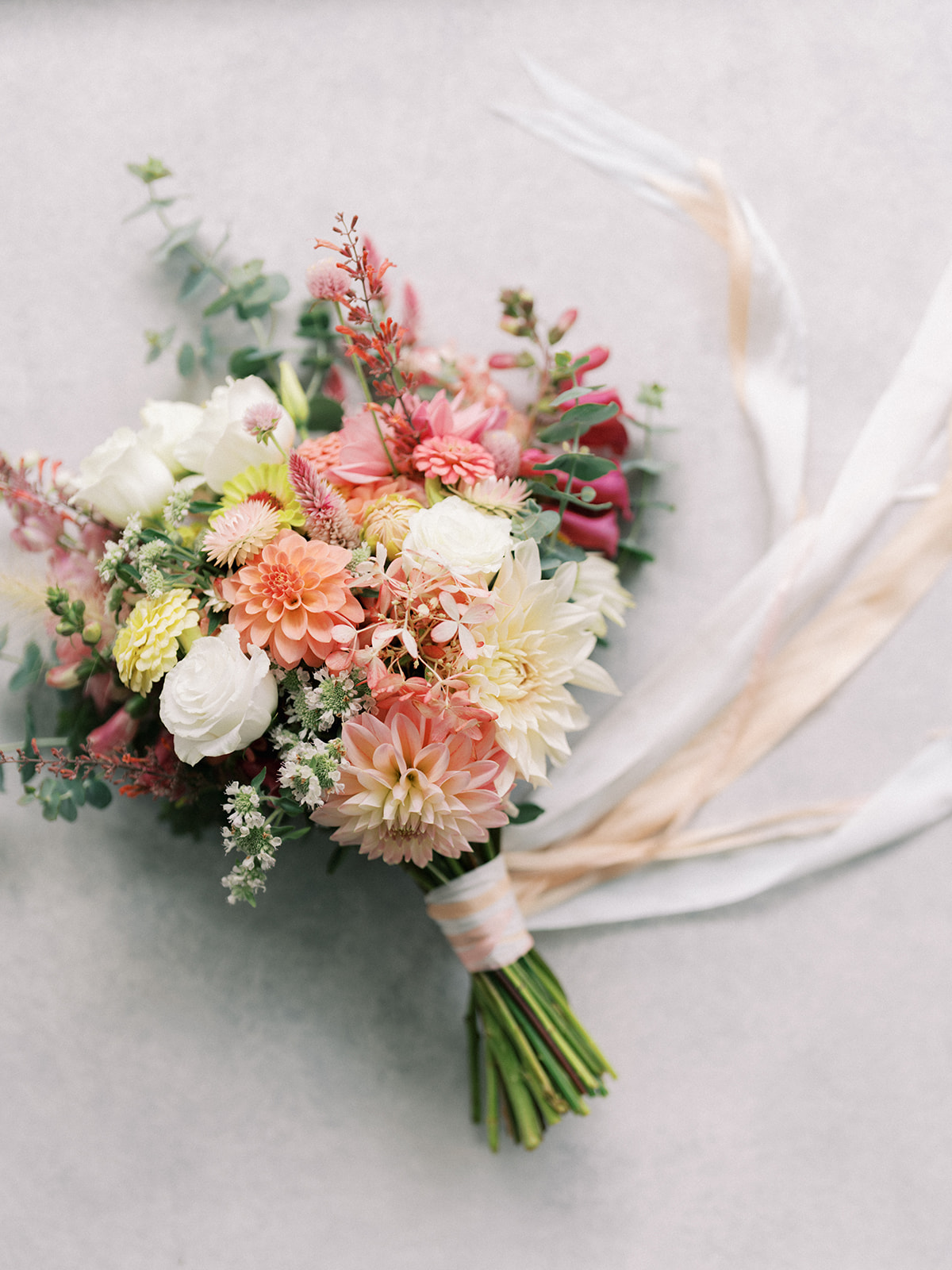
First, we ask if the client would like personal flowers, such as the bridal bouquet, any bouquets or single stems for the bridesmaids, boutonnieres for gentlemen, either wrist or another style of corsage for the ladies, flower crowns or hair flowers, and trailing silk ribbon for bouquets. That's usually pretty straightforward and simple, and it's totally OK if numbers change as the year goes on.
Next, we inquire about ceremony details, such as indoors or outdoors, oceanfront or lakefront, and the surfaces upon which arrangements will be placed (sand, grass, sloping hills, rock, cement or wood floors, etc.). This gives our farm an idea of overall wedding design complexity. Sometimes a client knows they would like to use an arch/arbor, or other existing structure on the site, or maybe they'd like to rent one of ours. If the property has a potential ceremony structure like trees, walls, arbors, etc., it's great to have dimensions and an image or two to help us plan the perfect floral accoutrement for that exact area. Most often, our clients envision arrangements that can be repurposed into the reception area following the wedding. For this purpose, we recommend different sizes and styles of compotes and pots, and sometimes baskets or smaller specialty trees. Potted arrangements such as low footed compotes which are lighter-weight can easily be moved indoors following the ceremony, but heavier, tall ceramic pots with lots of volume and height can be better seen in photographs during the ceremony, and can bring a nautical flair in white-wash finishes that coordinate so well with blues, greens, and colorful field florals. Sometimes clients envision baskets, a grounded arch with multiple arrangements for repurposing afterwards in the reception space, or pedestals or pillars to help frame the ceremony space. One of the most popular trends for 2027 is several mismatched pots, baskets, and ginger jars in various sizes and appearing in groups throughout the head and end of the aisle, which are intended for use later by gracing the steps to an inn, atop barrels entering a barn space, or on the ground in front of a sweetheart table. Regardless of their repurposed use, most of our ceremony pieces are designed to be moved for further enjoyment by our clients' guests. The beauty of pots and vessels is that WATER can be used, so flowers remain fresh into the night, and never wilt in the hot sun. This may sound obvious, but many arrangements seen in client inspiration images presented to us as inspiration have clearly been created on site in very shallow plastic dishes not easily moveable following the ceremony, or worse, floral foam (we don't use this toxic concoction of chemicals since they don't break down and can harm the land and its inhabitants for a long time following their disposal). I am a hug fan of vessels that hold water for use at a ceremony site, and I love their ease for re-use! Why not get the most out of the gorgeous designs you have spent your whole life dreaming of?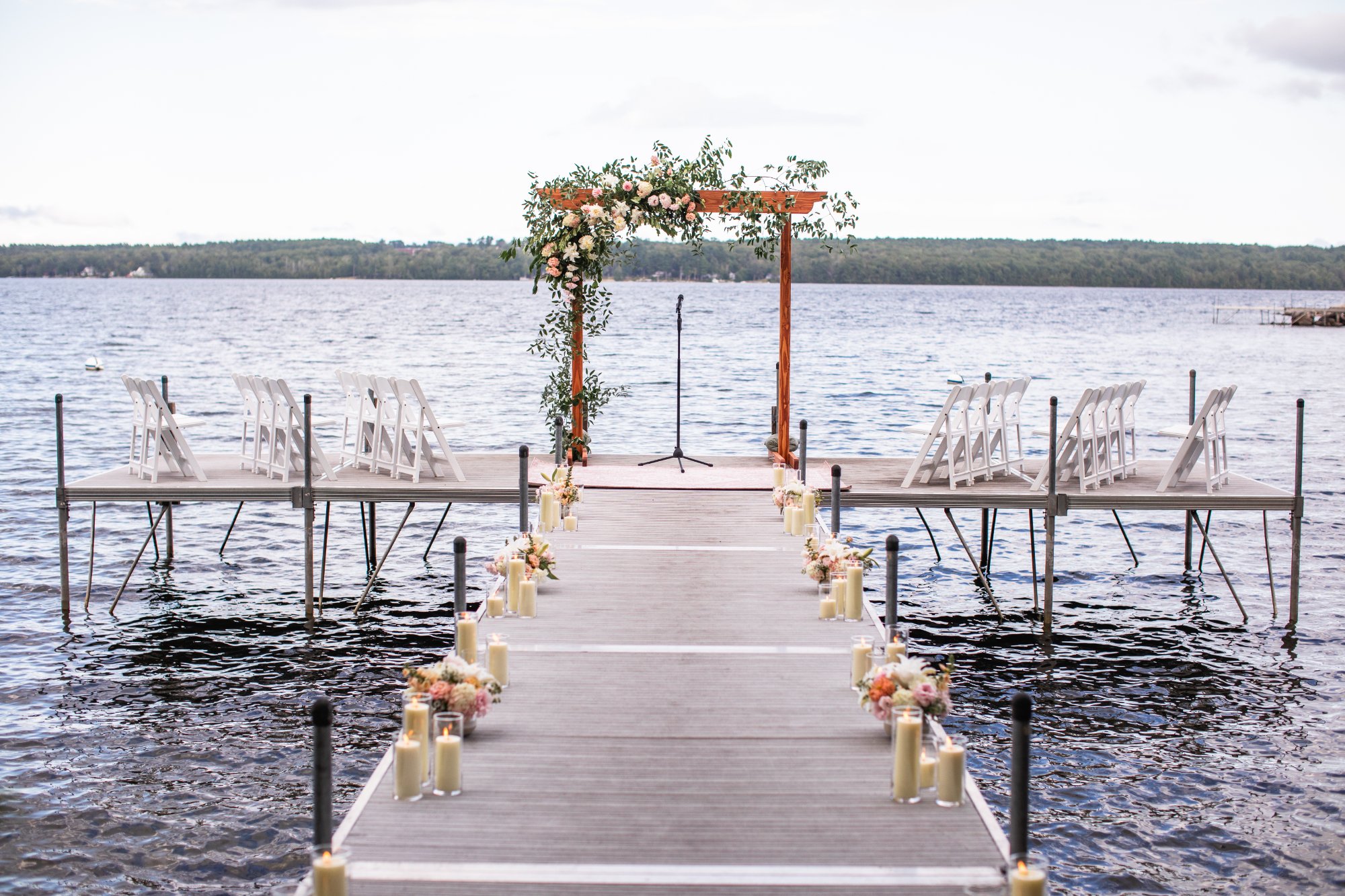
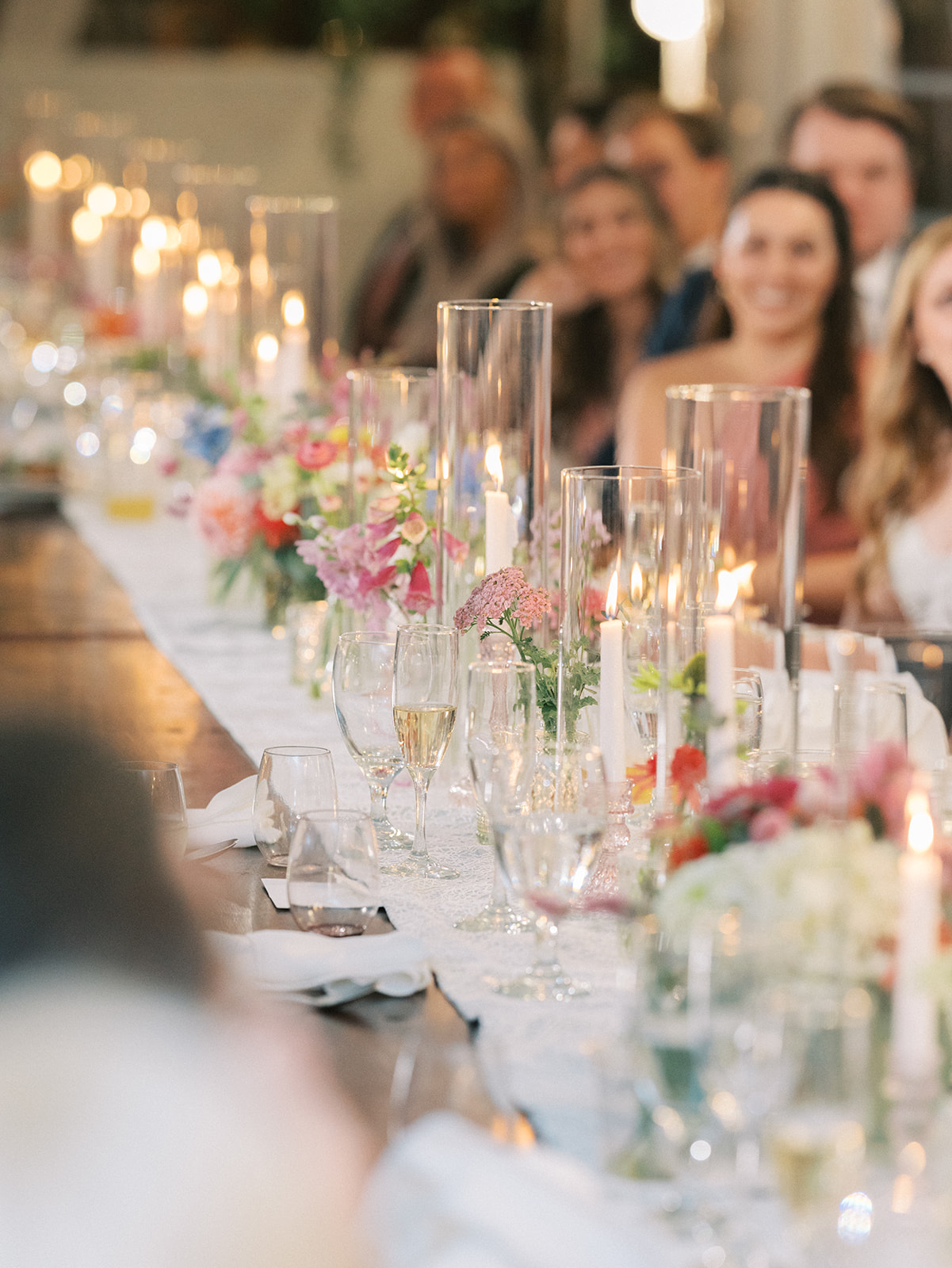
Finally, we talk about the reception space. Receptions are where your guests will spend the majority of their time, and where your florals will get the most appreciation. We love it when our clients focus the majority of their budget on their reception, because it's a wonderful way to take care of your guests and show them that you care about their experience. It is helpful to know if a client plans for round tables or rectangular tables, or a mix! Rounds are essentially like little islands throughout the reception space and need either a small grouping of florals in the center, or one larger, lush centerpiece in either a clear glass, or perhaps a low-footed ceramic compote with a softly curving, matte finish. Rectangular tables are more expensive to flower, since most clients ask for a runner-type approach with several, variously sized arrangements and bud vases for interest and natural flow. When simply scattering smaller bud vases and candles along the center of a fabric runner, cost tends to be lower. Some strategically placed, larger centerpieces interspersed with bud vases and candles is a terrific look that provides lots of flowering and interest, but that gasp factor from your guests will cost more. Other things to consider: will there be any overhead installations, linen rentals, or glass chimney tubes necessary to follow venue safety protocol? If so, the rental costs can help make that cost lower than purchasing, but this means the wedding must go through FULL SERVICE rather than a la Carte MENU. We will discuss those items later in this blog post! Regardless of the table approach, we only use natural materials in our wedding design, such as glass, ceramic, wood, and metal. We refuse to use plastic vessels of any sort (with the exception of liners in a basket), because higher end materials produce a higher end floral design. After all...our florals are grown and styled for a WEDDING!
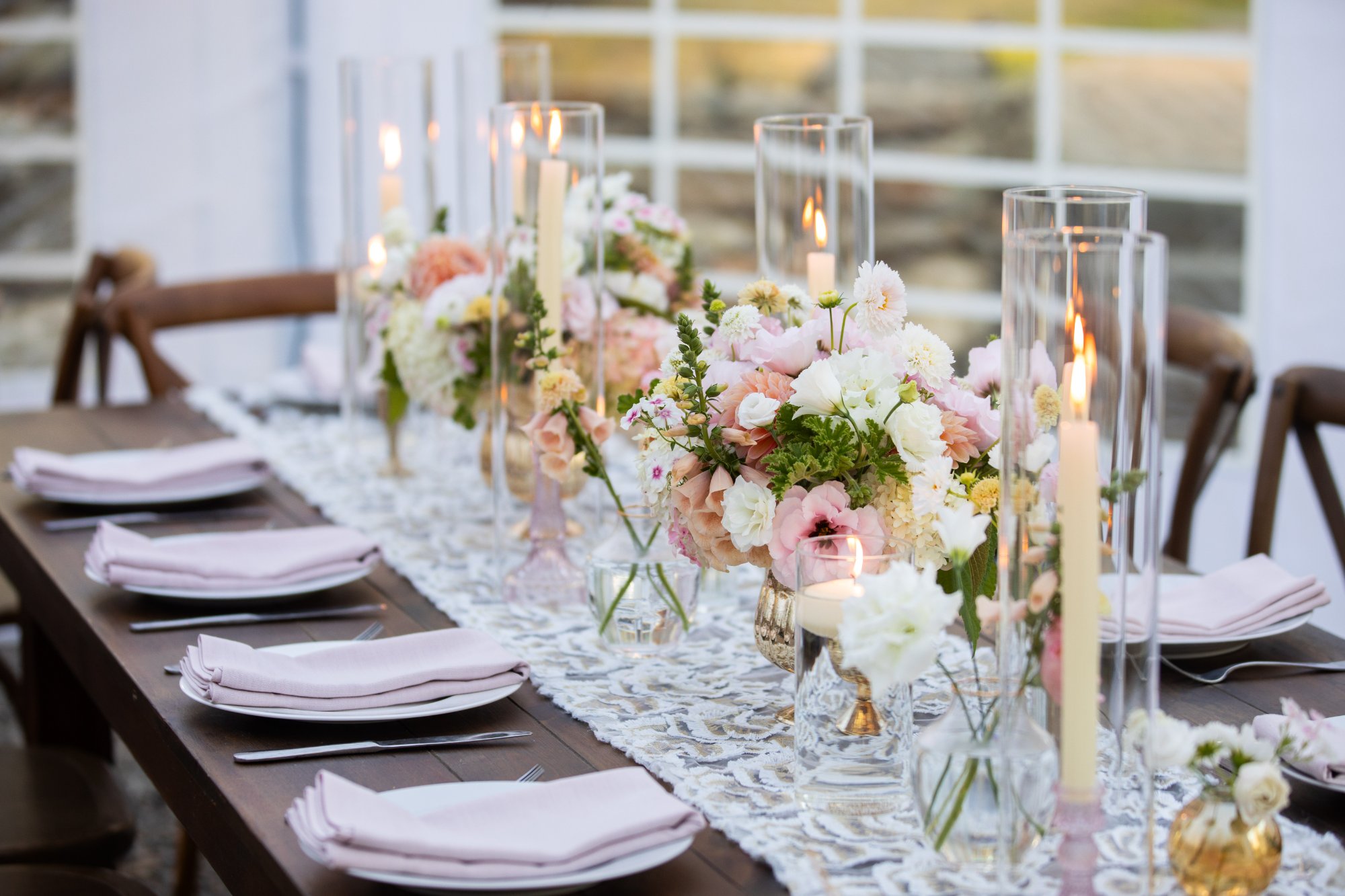
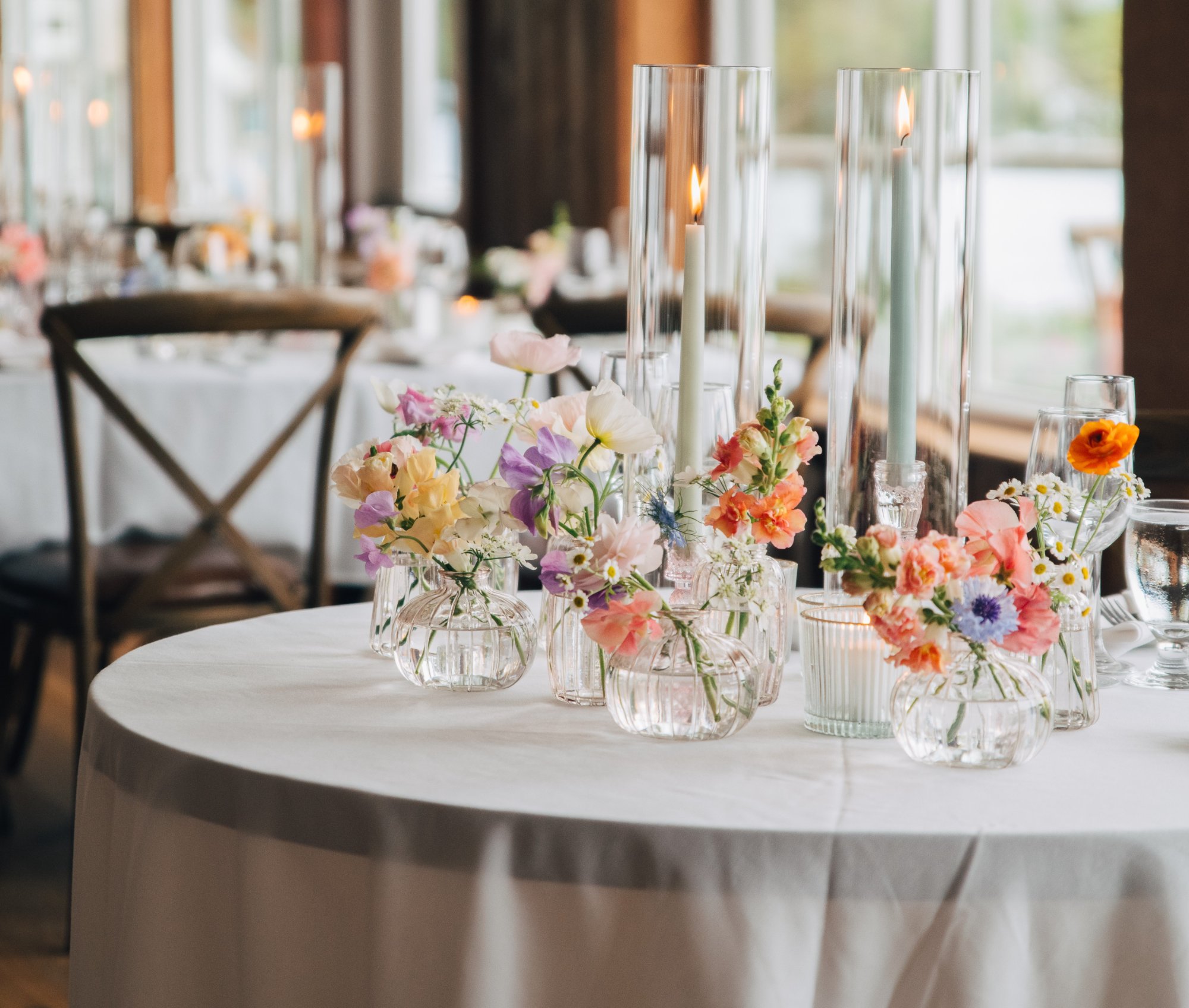
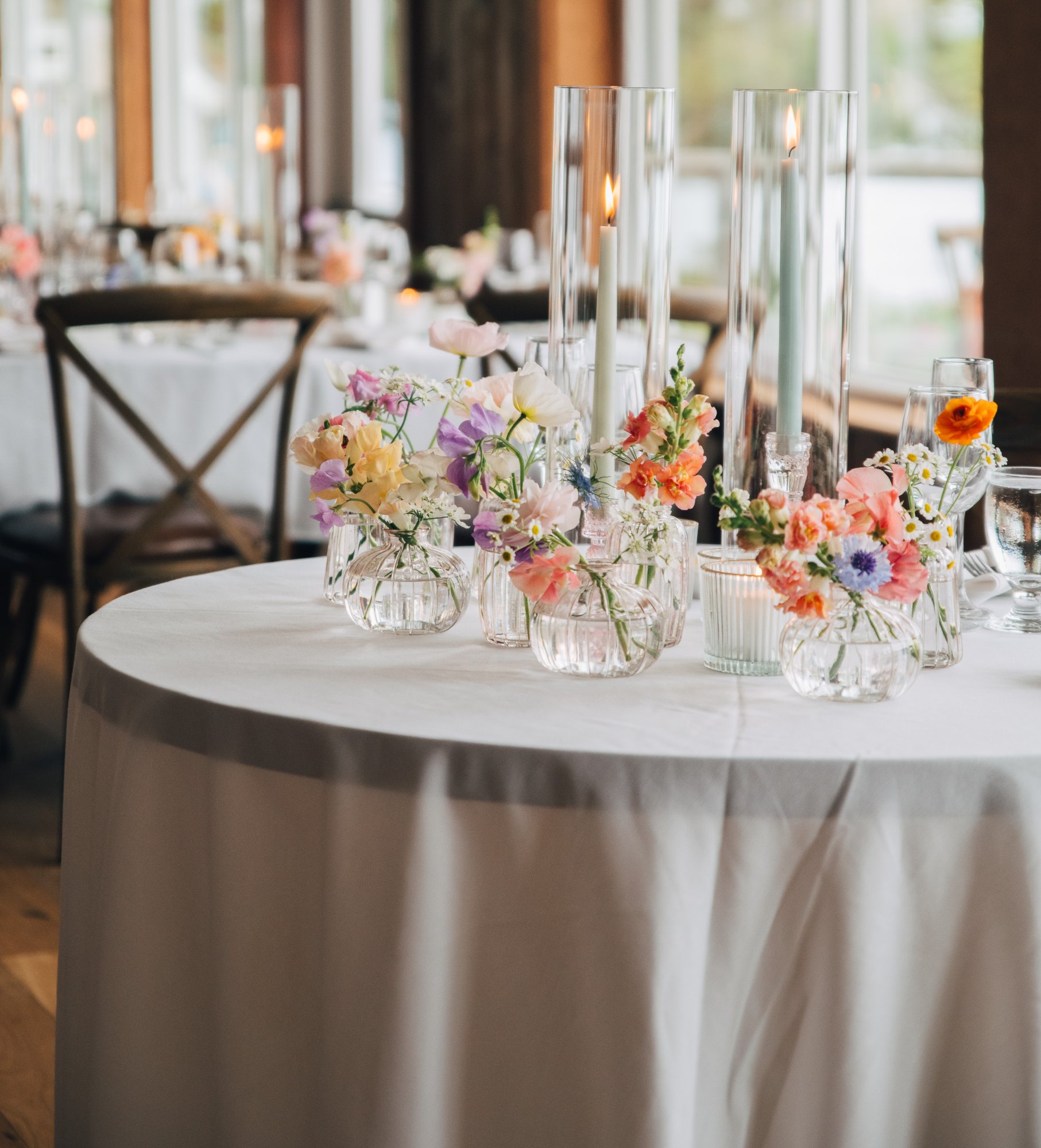
Reception spaces are one of the most budget-altering areas for wedding florals, because a full flowering plan that looks stunning is easier to afford on a smaller scale with fewer guests. Once that same design is multiplied for 200 guests across 20 tables...well, you can imagine that can get pricey quickly. Our simple formula offers clients flexibility in the number of vessels and volume of flowers they can afford. We usually begin with one bud vase per two guests (sitting across from one another), and then those vases can be grouped in a pleasing way for that table, usually by twos or three, then one, then two, etc. So, if a client has a 200-guest count, we recommend beginning with 100 bud vases. Our vases are little arrangements, holding between 3-5 stems per, which ends up being a delicate scattering of blooms along the whole length of the rectangular table. The number of bud vases can be increased with a larger budget. Sometimes, we even load up on buds in the middle of a large round, intended for the sweethearts, as in the photograph above. Another option for more flower density is to selectively place a petite posy arrangement here and there along a rectangular table, giving guests more flowers for a smaller price tag, typically around $125 for the posy in a 3" clear glass cylinder and measuring a finished, loose arrangement styling of 5-6" with some high-low stems and greenery. Would it be easier and more cost effective for a client to make their own arrangements? We have found the answer to be a resounding, "NO!" Most often, wedding day and wedding week leading up to wedding day is FULL of unexpected things to do, and the price of flowers is at an all time high. Buying one's own is oftentimes MORE expensive than purchasing finished arrangements, because the design experience is not there. We do not offer DIY buckets to our clients, because we are the floral professionals, and we know you need to actually kick back and ENJOY your day! We have heard from so many clients over the years who are thrilled they made the WISE decision to allow us to style everything for them. It does make a big impact.
What about DELIVERY? Our goal is to make the most gorgeous flower arrangements with the easiest process imaginable and highest level of customer service available for our busy clients. Delivery is automatically calculated in the services section of any FULL SERVICE proposal, as is our team's time on site. For clients not needing complicated ceremony or table scape design or very specific colors and varieties, perhaps our a la Carte MENU will be their best option. If the client is set on using our a la Carte MENU, then DELIVERY is automatically calculated into the proposal for our clients. Nobody wants to pick up the flowers, trust us--if they do, they have the MOST stressful job on wedding day. We seat-belt the bridal bouquet into the passenger seat in it's open box, and tell that person to be sure that the bridal bouquet gets there looking perfect, and not to drive like they are in the Indi 500. That is truly the only piece which needs to arrive at the wedding. But in all seriousness...it takes major planning and a large enough vehicle for most a la Carte menu orders, and it's far easier for our team to deliver those flowers with our guarantee of them looking PERFECT with no stress on your wedding day. We have a special floral delivery system in the van that allows for any size arrangement to be secured safely during transport, even a hanging installation overhead. If a stem falls out or breaks in transport, we always have our floral snips, wire ties, and an extra bucket of flowers in the couple's color palette to do the replacement if necessary. All the client needs to do is check those water levels upon arrival, since water can slosh out a little during transport.
Additional Important Elements: Completing the Look of Your Table Design Through our FULL SERVICE, additional elements can be arranged! Full Service Design through Eastern River Farm and other experienced florists can artfully incorporate rental linens and candles into the table scape, complementing florals of many palettes and giving a feeling of completeness to the overall reception space.
High quality rental linens make a reception space extra special, and can add an amazing element to a client's color palette. For instance, if the client has planned for round tables, full length linens make a dramatic and elegant statement, and we always recommend a high quality embroidered pattern on a natural cotton or linen background for textural interest and visual depth, even when the tables are dressed in white-on-white. When it comes to natural finish rectangular tables, a client may prefer the less expensive and minimal option of simple runners, where they can indulge more deeply in lace, layered chiffon, velvet, or even a subtle sequin embellishment. The cost of rental runners, even the highest quality runners, is much lower than full length linens. When requiring a sequin runner, since there are few options available due to challenges in hemming fabric with sequins, we love to provide our own bulk fabric options, and artfully tuck under loose ends to achieve the desired look without the expense, sometimes on top of venue-provided linens. This also allows for a floor-length runner, carefully tucked under to prevent tripping from guests and wait staff.
Napkins are an inexpensive and impactful area where a client can maximize their favorite colors and style throughout the entire reception space with very minimal cost! We highly recommend adding the pop of colorful wildflower patterns or bird-embellished patterns on linen fabric in pastels or bright colors. We LOVE mixing in a few solid napkins every few seats for some punctuation and for a whimsical, visual element. Or, switch up that recipe for a smaller pop of texture and pattern while keeping the majority solids. Either way, even for a 150 guest count, the rental cost for this major visual impact is under a thousand dollars and will totally transform the space.
Rental candle set ups is a major consideration for that elegant evening glow which is a must-have when illuminating the dining space. Since guests will spend hours in your reception area compared to the ceremony site, it's important to inquire initially with the venue if live flame is allowed in their reception and tented, outdoor areas. It is always a big let-down for us when our clients book a venue which does NOT allow live flame. In our opinion, nothing beats real flame. It is understandable that some older structures and post-and-beam barn spaces are too valuable to risk a fire, but when at all possible, live flame makes the evening even more special. When designing candle set ups along a rectangular table, most clients prefer a high-low mix of elegant taper candles in color crystal candlesticks (with ivory or colored candles), and smaller, simple votives in clear or colored glass rounded hurricane holders. We always add tealights to the tables in open spaces for additional lighting, and there are specialty tealights which are expertly poured into clear holders and require no additional cover. Be aware that wicks must be trimmed to 1/4" to prevent black smoke, and even dripless candles do drip, making a mess on candlesticks, chimney tube coverings, and sometimes the linens beneath. When renting candle set ups, the florist must include the price of set up and clean up, since there are countless hours spent cleaning, preparing, unpackaging and re-packing candle set ups to ensure a smooth set up at the venue, and get those waxy set ups cleaned thoroughly before the next event rental. Not to mention the initial design and layout of the candle set up. Candles too close to flower arrangements can be problematic for obvious reasons, and even the tallest candles burn down relatively quickly throughout the event, so the taller candles that have a long, 8-12 hr burn time are important to use. Chimney tubes should completely cover the candles, but if the candles are a tiny bit taller, they will burn down in short order and look perfect most of the night. We also love narrow pillar candles! However, it is important to prepare for each place setting which the caterer will be placing. Guests can have up to 5 glasses each, along with their plate, charger if used, and cutlery. It's fun to research the table etiquette which once was taught in schools, so everyone could properly entertain guests. With all of these finer details in the plan well ahead, your florist can ensure that the visual impact on your guests is maximized from the start.
Let's end with growing the FLOWERS!!
As a flower farm in Maine, we have a pretty short growing season, and style weddings between late May and the first half of October. We grow seasonally, which means we don't grow at a time when it would cost too much and be out of season to grow flowers. Some large commercial floral businesses spend millions on heat, electrical, multiple glass or polycarbonate greenhouse structures, parking lots, employees & payroll services, trucks, coolers, insurances, maintenance, etc.....but here at ERF, local farming means that our small family can sustain all the work needed for a complete wedding season without most of those additional inputs. It's just the four of us here; we have a delivery van, two floral coolers which we built in our barn, 20 acres, a greenhouse, and three high tunnels we also built and maintain. We have a couple of tractors to help preserve our bodies, allowing us to life very heavy things like large sling bags of germination mix (soil for starting seeds) and prepare the field for growing with minimal wear and tear on our bodies. We love doing this and want to do it for many more years to come!
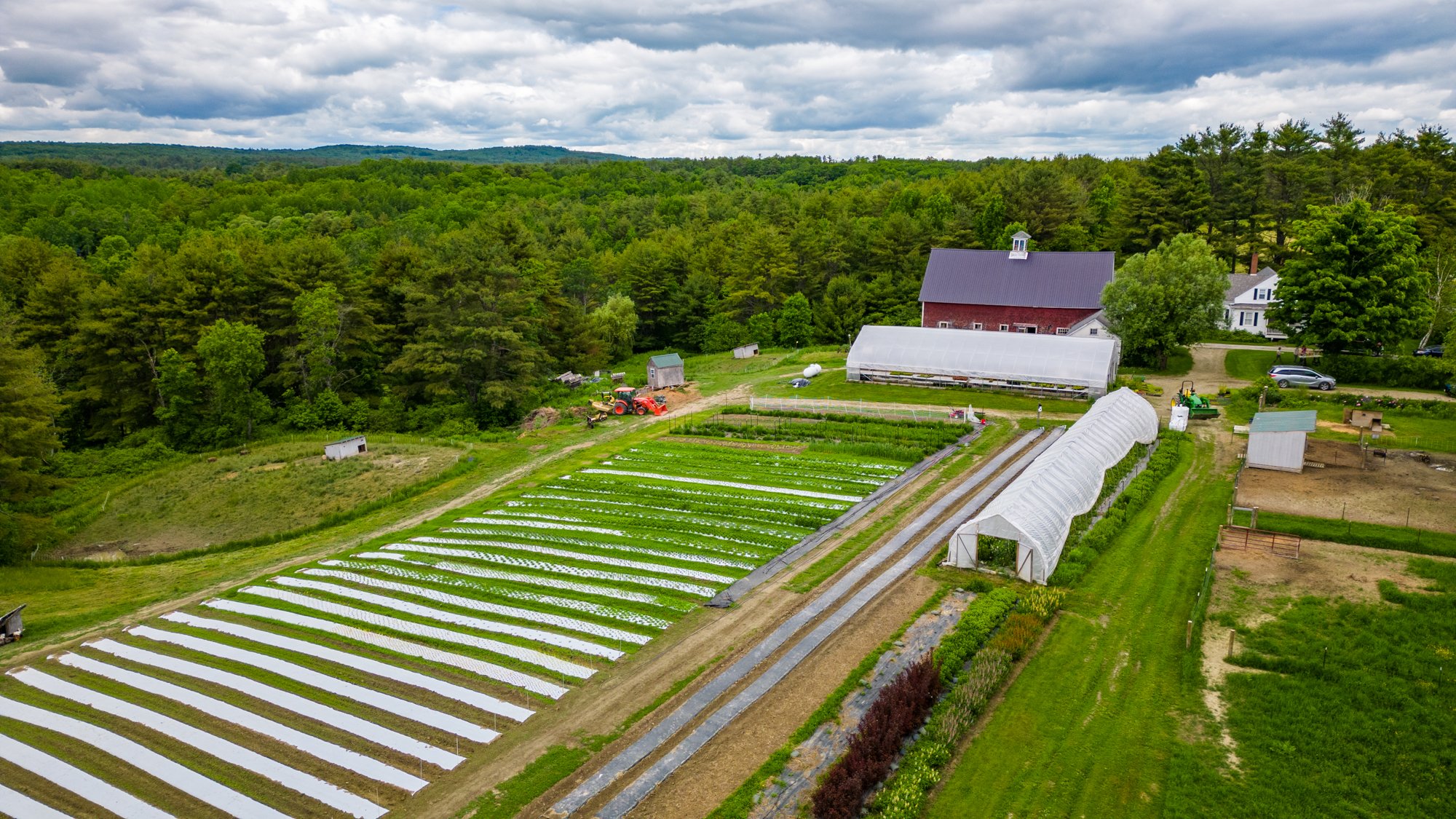
The BEAUTY of a local farm is that the farmer knows everything there is to know about each and every flower starting life as a tiny seed, growing into a teenage plant, and then becoming a stunning adult in its full blooming glory. We even understand how to let the grace of old age offer up seeds for the coming generations, and appreciate each stage of life woven into that very first seed. It's a tender and beautiful process. We understand the ideal stage to harvest a bloom or stem of greenery as it's related to the date of the wedding, how to condition that stem in the ideal way for it's variety, color and longevity, and how to prepare it for the specific piece it will be used in during the wedding styling process. We have learned all the secrets over so many years of trial and error, and paying extremely close attention to all the little details. We are reminded frequently by our clients just how beautifully everything came together for their wedding day, because we spent the time it took to master the crafts: both growing, and styling, not to mention, working as a well-oiled team of four.
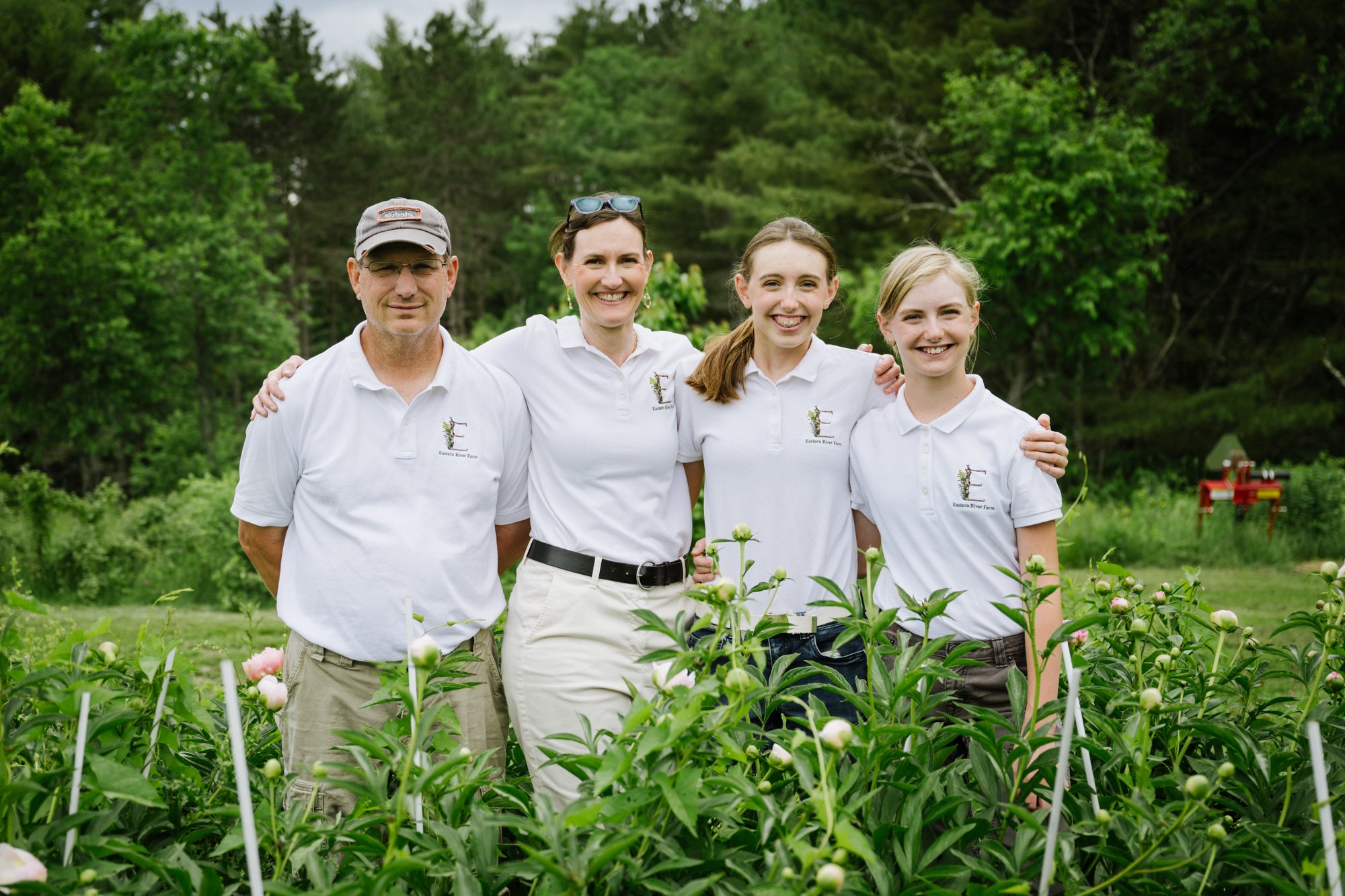
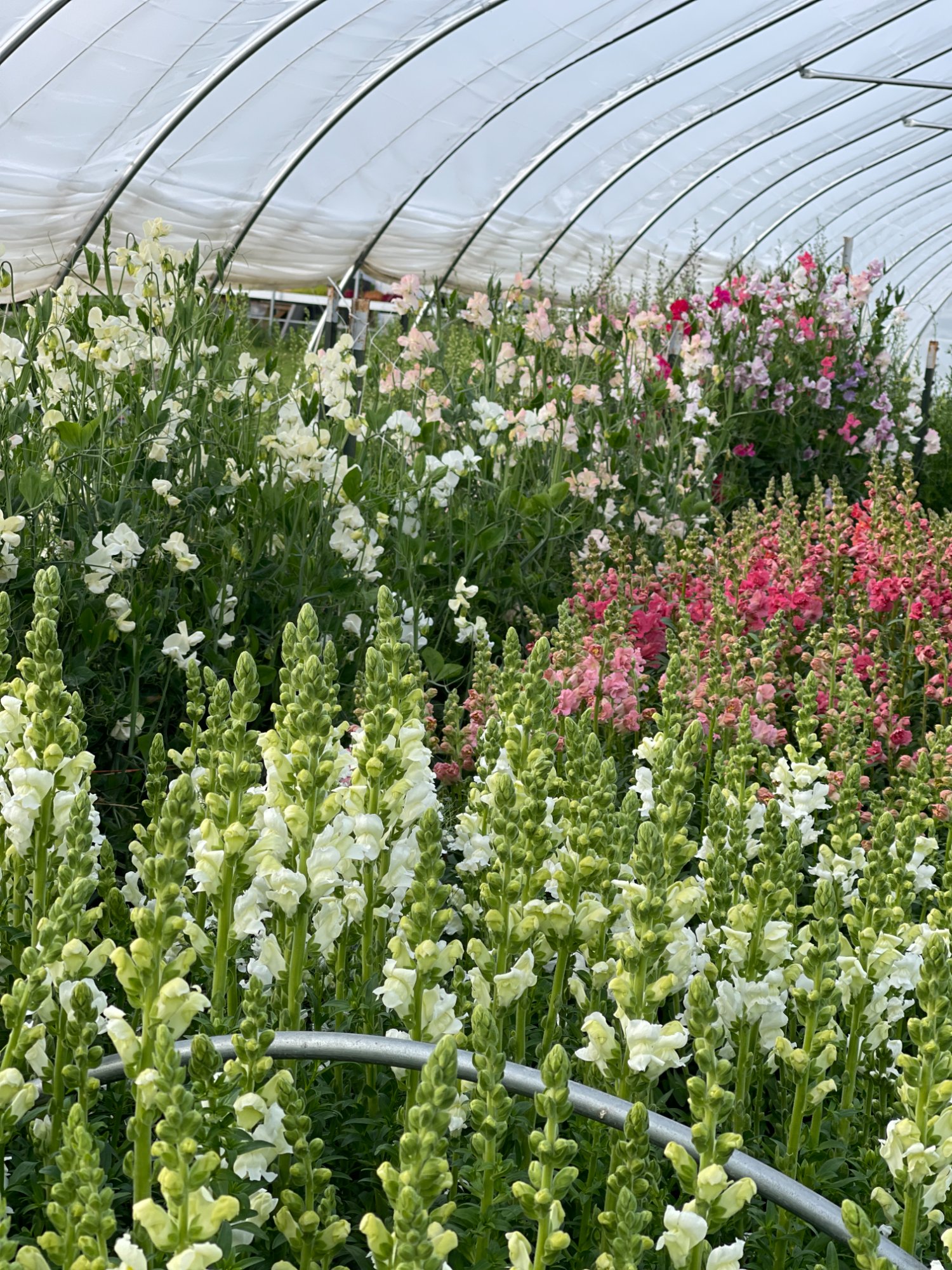
Our clients often ask us to push the boundaries of growing so that we can flower their weddings. However, to flower well and without heavy pest pressure and stress, it is best to follow the cues of the seasons. In late May through the end of June, it warms up quickly and the first flowers arrive, like narcissus, anemones, and Iceland poppies. Most of the gorgeous spring flowers we grow are started from seed the previous summer, and overwinter with daily care in our tunnel. Through the winter, plants don't actively grow on top of the soil much, but their roots dive deep down into the warmer soil and plants bulk up in preparation for additional stems and larger blooms come spring. During the coldest months, we cover the overwinter tunnel planting beds with a frost cloth blanket every night, and open up the tunnel doors and remove the blankets daily when the outside temperature is at or above 20 degrees F to allow moisture to dissipate from the planting beds. It's a wet and muddy job! Then, in the early spring, we pull off those blankets and plants begin to put on tons of top growth with beautiful, bushy green leaves and strong stems, culminating in thousands of heavenly flowers several weeks later that are sweetly scented and get cut on a daily basis by our family each week for our clients to be married.
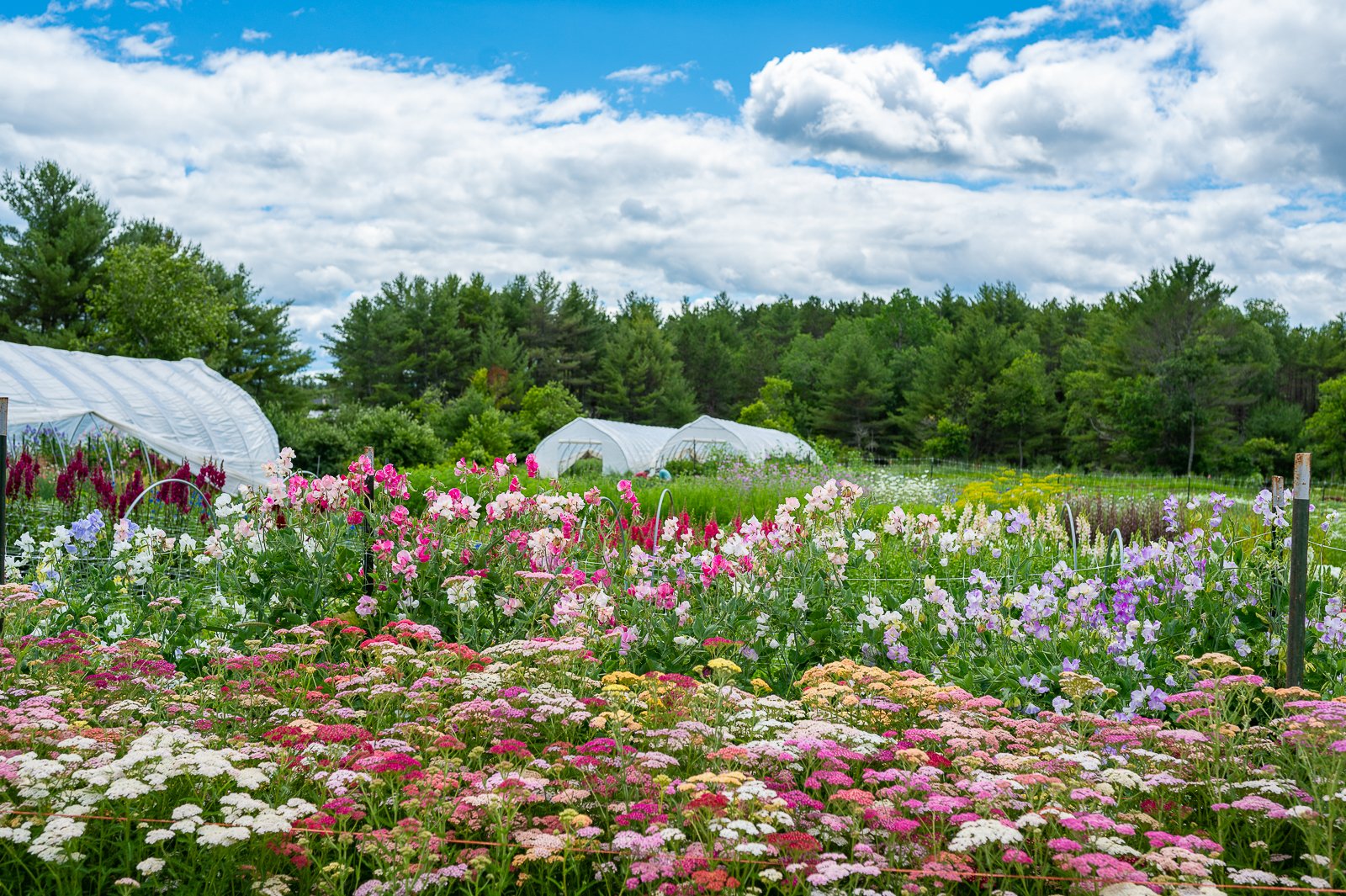
Once the May and June tunnel flowers are beginning to bloom and the field dries out from "mud season" here in Maine, we wait for the perfect soil conditions and weather to allow us to create new planting beds in the main annual field, followed by planting the seedlings we have been tending in our greenhouse since February. Once the days are drier and beds are made with drip irrigation lines down, those babies go into their seasonal homes in the annual field, and stretch themselves toward the sun to become the high-summer wedding blooms, like annual phlox, orlaya, feverfew, nigella, foxglove, delphinium, and tweedia.
In the later part of the season, starting in July when we are weeding those tunnels and field rows regularly, harvesting thousands of blooms a day, and styling all the pretty weddings we have booked the year before, we begin to plant flower seedlings to be grown under the protective cover of our high tunnels just in case our field blooms receive a frost before our wedding season is compete. Additional plantings like heirloom chrysanthemums, salvia, cosmos, celosia, pincushion, gomphrena, strawflower, snapdragons, calendula, amaranth, nasturtium and marigold are ready to be planted into that fall wedding tunnel or greenhouse to give us supporting blooms alongside the dahlias, lisianthus, hydrangea and eucalyptus grown in various places on the farm. It's a fragrant smorgasbord come late September and early October, and we love it! All the flowers plus the colorful, giant maples woven throughout the towering Eastern White pines set a mighty fine backdrop for daily farm walks with the dog that time of the season.
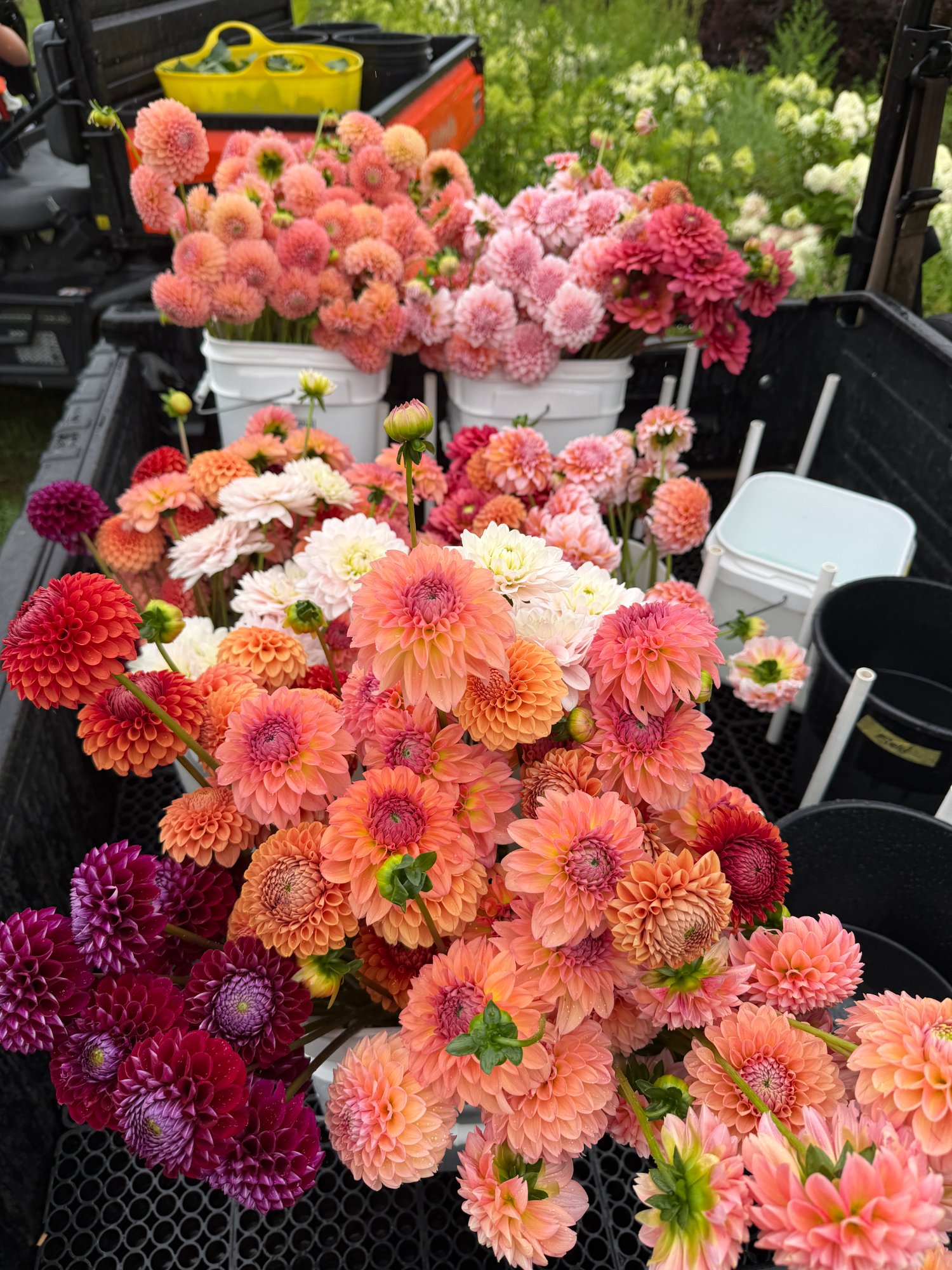
The early spring and late fall seasons are referred to by farmers as "shoulder seasons," and require the most work to grow well, but they also seem extra special, mostly because of the additional care plants receive throughout the planning process and growing season. There's nothing like fresh, vibrant dahlias, snapdragons, celosia, marigolds and lisianthus well after the last frost has cooked the field blooms. People are always amazed that our farm still has fresh flowers in the colder part of fall. That takes lots of experience and planning of course, and this is where experienced growers can really shine for their wedding clients. There's just something special about wedding flowers in the cooler part of the spring and fall seasons, but especially on a family farm where love and care of plants and people abounds.