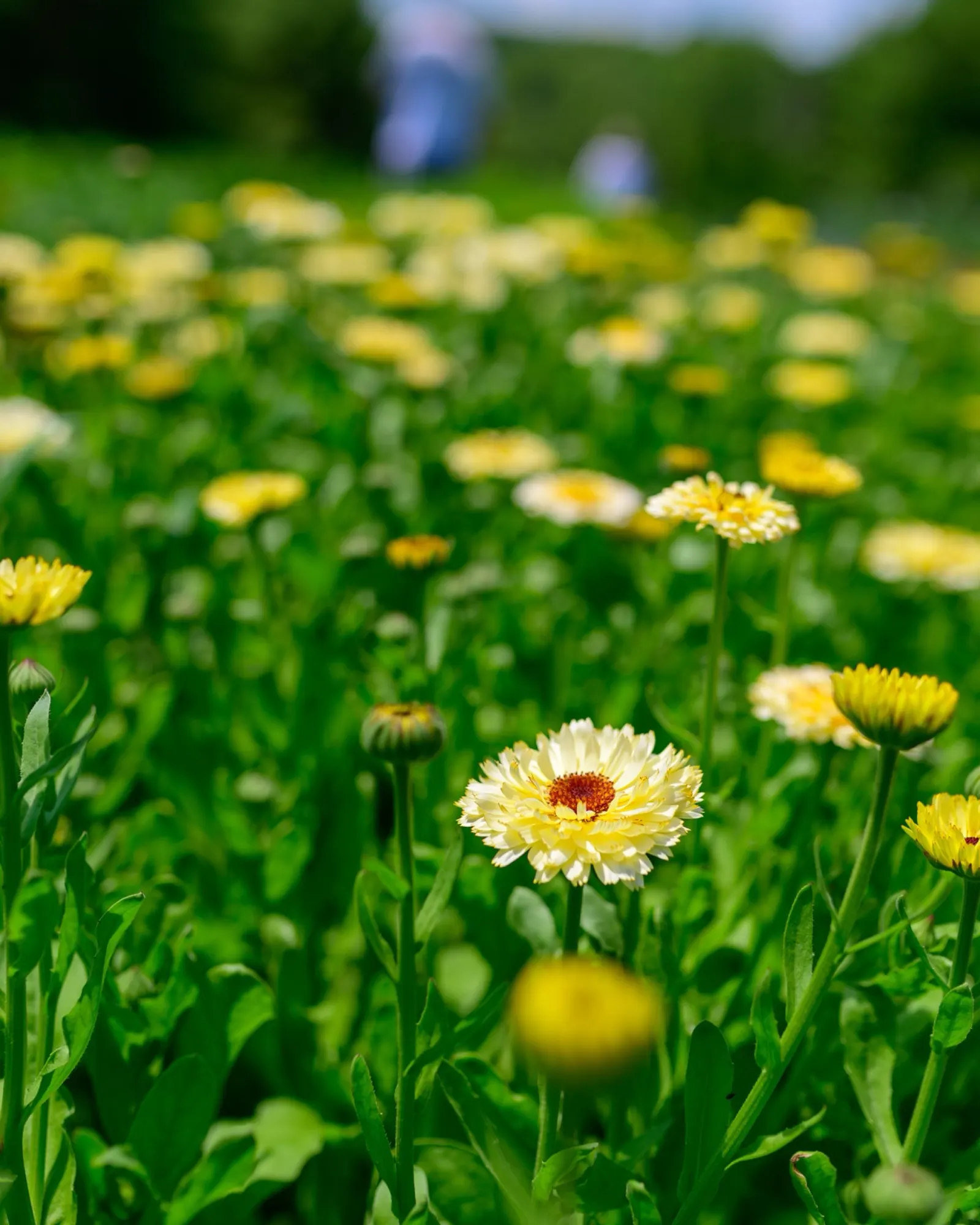
The farm, by season
what the rows are giving, month by month —
what the rows are giving, month by month —
May — June
The season opens with Iceland poppies, ranunculus and sweet peas — delicate, short-lived stems that never survive shipping, and so belong almost exclusively to local growers. Palettes run soft pastel through bright berry, with pops of color.


July — August
High summer brings the widest range: romantic whites and blush, coastal palettes of white, blue and soft yellow, and loose wildflower mixes straight from the rows. Delphinium, foxglove, zinnia, phlox and the first dahlias — the months most of our Full Service weddings fall in.


September — October
The richest palette of the year: burnt orange, velvet burgundy, mauve and toasted brown, layered with fragrant foliage cut from the woodline. Dahlias at their peak — Peach and Rust Orange — with celosia, marigold and amaranth.


Eastern River Farm grows in Pittston, a Kennebec County town of about 2,900 people that was incorporated in 1779 and still describes itself as “Country Living on the Kennebec.” Our fields slope down to the Eastern River, and every flower on this page comes out of those rows. Nothing is shipped in to fill a gap in the season: if it is not blooming here, it is not in the arrangement.
Maine’s growing season is short, and it moves quickly. That is why the calendar above runs from May to October, and why the peak wedding months — June, July, August, September and October — book twelve to eighteen months in advance. A June date catches the last of spring’s poppies and ranunculus alongside the first summer stems. A late-summer date brings delphinium, phlox and zinnia. A September or October date brings dahlias at their peak with celosia, marigold, amaranth and fragrant foliage from the woodline. When you plan wedding flowers grown on the farm, the date you choose is also the palette you choose.
Iceland poppies, ranunculus and sweet peas are delicate and short-lived. They rarely survive long-distance shipping, which is why they belong almost entirely to local growers. We cut them shortly before they are styled, and every stem stays in water from the moment it is cut until the moment it is arranged. Grown here, flowers reach your tables at the stage a grower would pick them for her own table — not the stage that survives a week in a cooler and a truck.
The farm is regenerative, with zero pesticides, herbicides or fungicides — the same practice it was founded on in 2018. Arrangements are designed in the studio in the century-old barn by the people who planted the flowers, layering tone on tone from whatever the rows are giving that week. You can see the seasons at work in the Showcase of weddings we have flowered, and read how the farm came to be on our story page. Growers who want to build something similar can book consulting for farmers, by the hour.
The farm at 766 Kelley Road is not open to the public. The gate opens for weddings, seasonal workshops and special events, and otherwise by appointment. To ask about the next workshop, an à la carte order or a date next season, write to the farm or call (978) 766-9570 — every note is answered personally, within two days.
The farm is not open to the public, with two exceptions: seasonal workshops and special events. Gather at the barn, walk the rows, and arrange what you cut — guided by the people who grew it.
Workshop dates are announced by season. Write to us to hear about the next one.
Ask about workshops