October 12, 2026 · 8 minute read
Wedding Color Palettes: What Works Best in Maine?
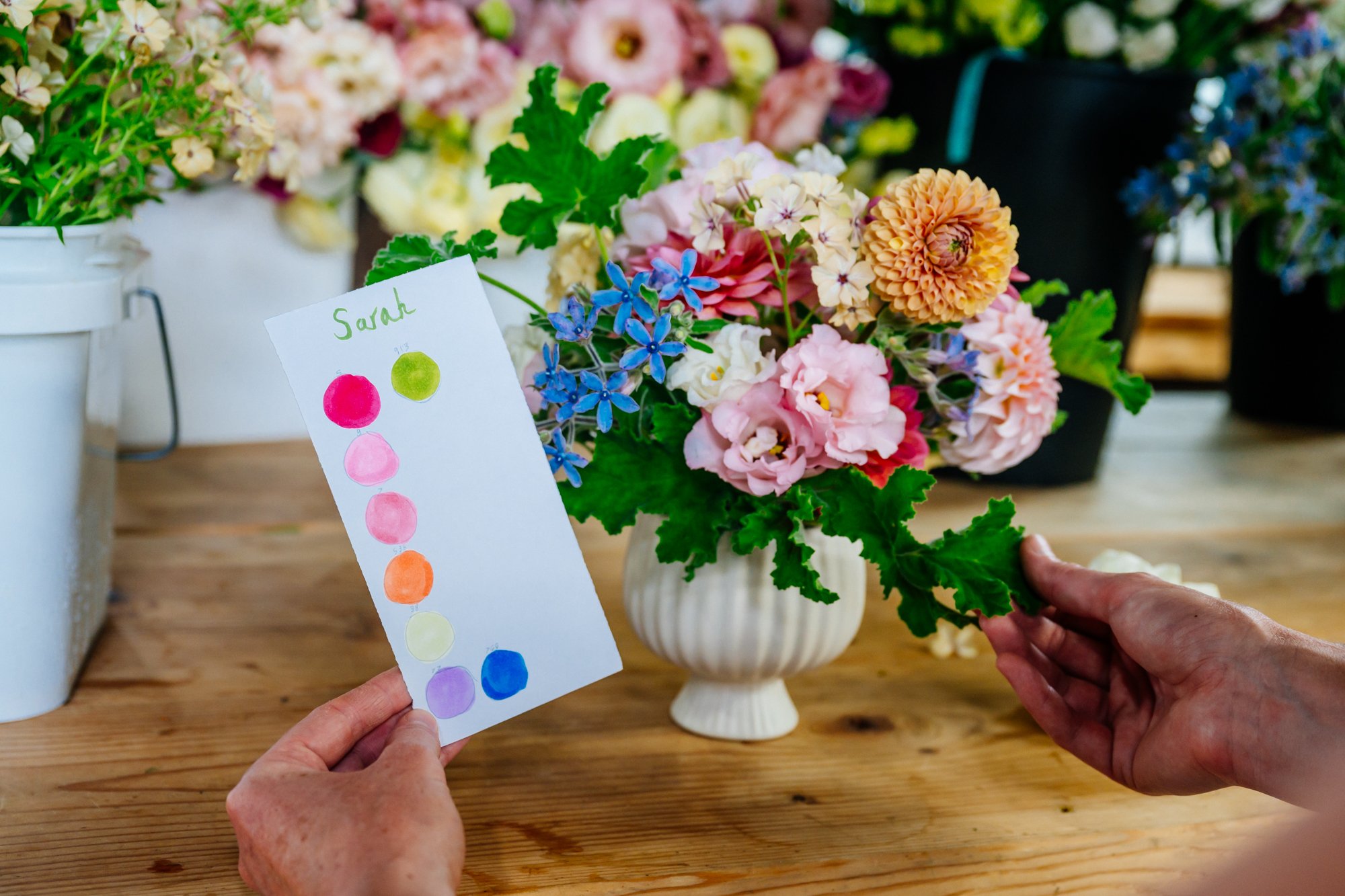
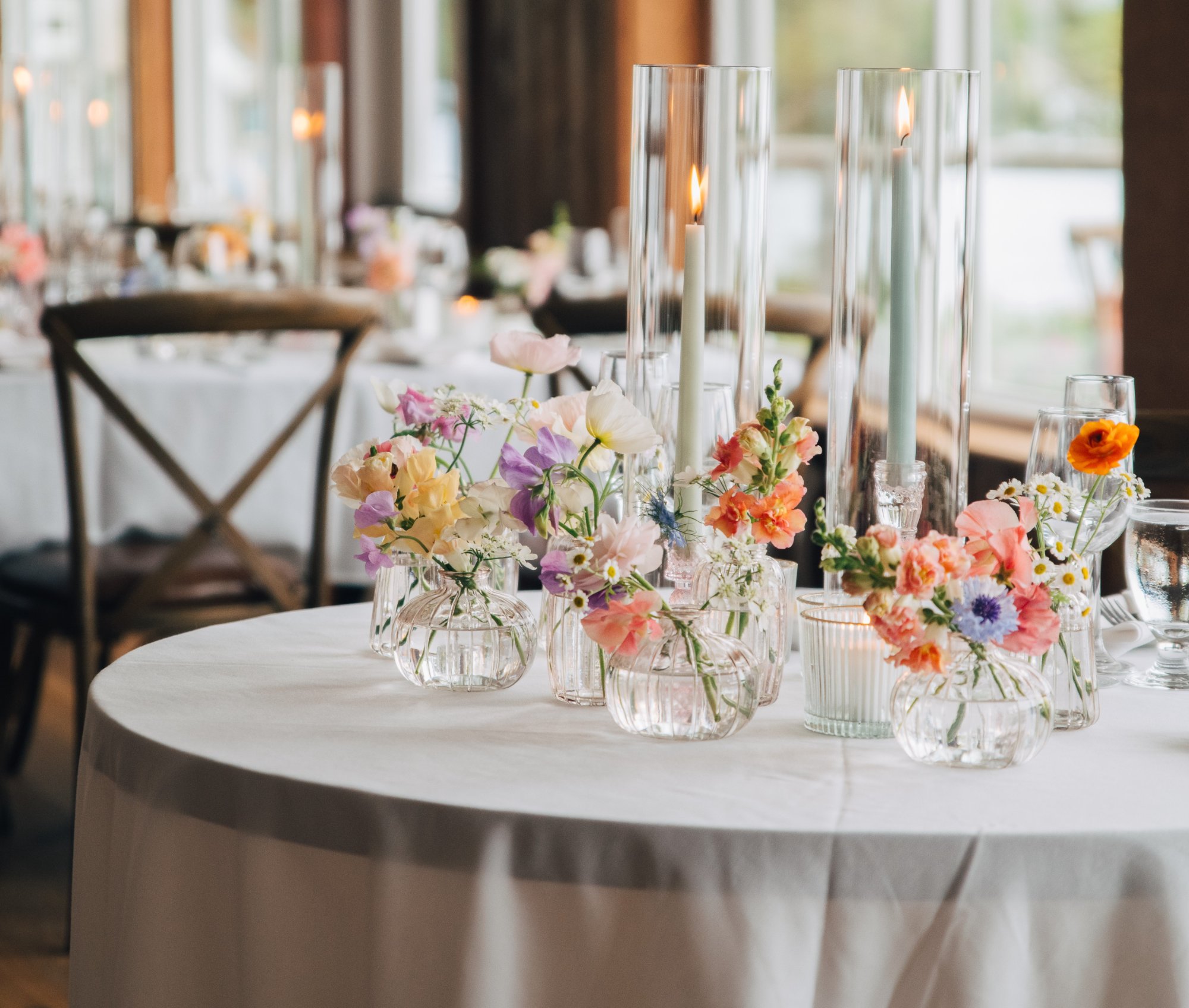
As florists, most of our prospective clients come to us with some idea of colors they gravitate towards for their wedding, or at least an overall vision for their wedding day. Sometimes clients know they'd like a coastal, joyous feeling that incorporates white and blue. Other times, clients are going for a vibrant, colorful and wildflower vibe. No matter the request, some wedding color palettes are a more natural fit for what our family wedding flower farm already grows for the season.
It's key in the first conversation for the client to include some context. For instance, we ask what the reception space looks like, and where ceremony is taking place. White flowers on the water can look washed out and nondescript in photos, but a colorful flower palette can bring joyfulness and cheer against an ocean-blue background. Choosing colors for a reception space also depends on the location. White flowers in a glass greenhouse with lots of natural light will be very bright, but inside a dark barn space with wood and stone light colors would work perfectly. Oftentimes, a client asks for rich colors inside a dark space, but lighter flowers may be a better choice to brighten up the space, and so the flowers can stand out. Similarly, a bright reception space may benefit from some deeper tones to bring life and dimension to the space. Contrast is key.
What does NOT work for seasonal flowers in Maine?
Well, anything that is out of season makes for a difficult fit. Iceland poppies in September and October is just not an option, unfortunately. Pastel weddings in late September and October are not a great fit. Deep, moody purples and reds in spring are not a good fit. While peonies could be purchased from Alaska in August, their quality will be poor, and out of place for the season here in Maine. A better choice for August is lisianthus and dahlias, which are seasonal at that time in Maine, and bring a different kind of beauty to the scene. As beautiful as they can be together, so many images found through seasoned designers include varieties that would never be found together in nature, looking out of place to our eye, like dahlias with ranunculus, or ranunculus and heirloom chrysanthemums. Something else that does not work is trying to align a color palette with a vision that do not pair well together. Several weeks ago, a prospective client asked us for brown-toned neutral flowers to be used in a dark reception space. She was hoping to convey the feeling of joy and cheer to her guests. I suggested colors that would be a complement to the darker space and give the feeling of joy, but that was not what she wanted to hear. It is easiest to work with clients who are open to seasonality, and appreciate that through conversation, a balance can most often be found! 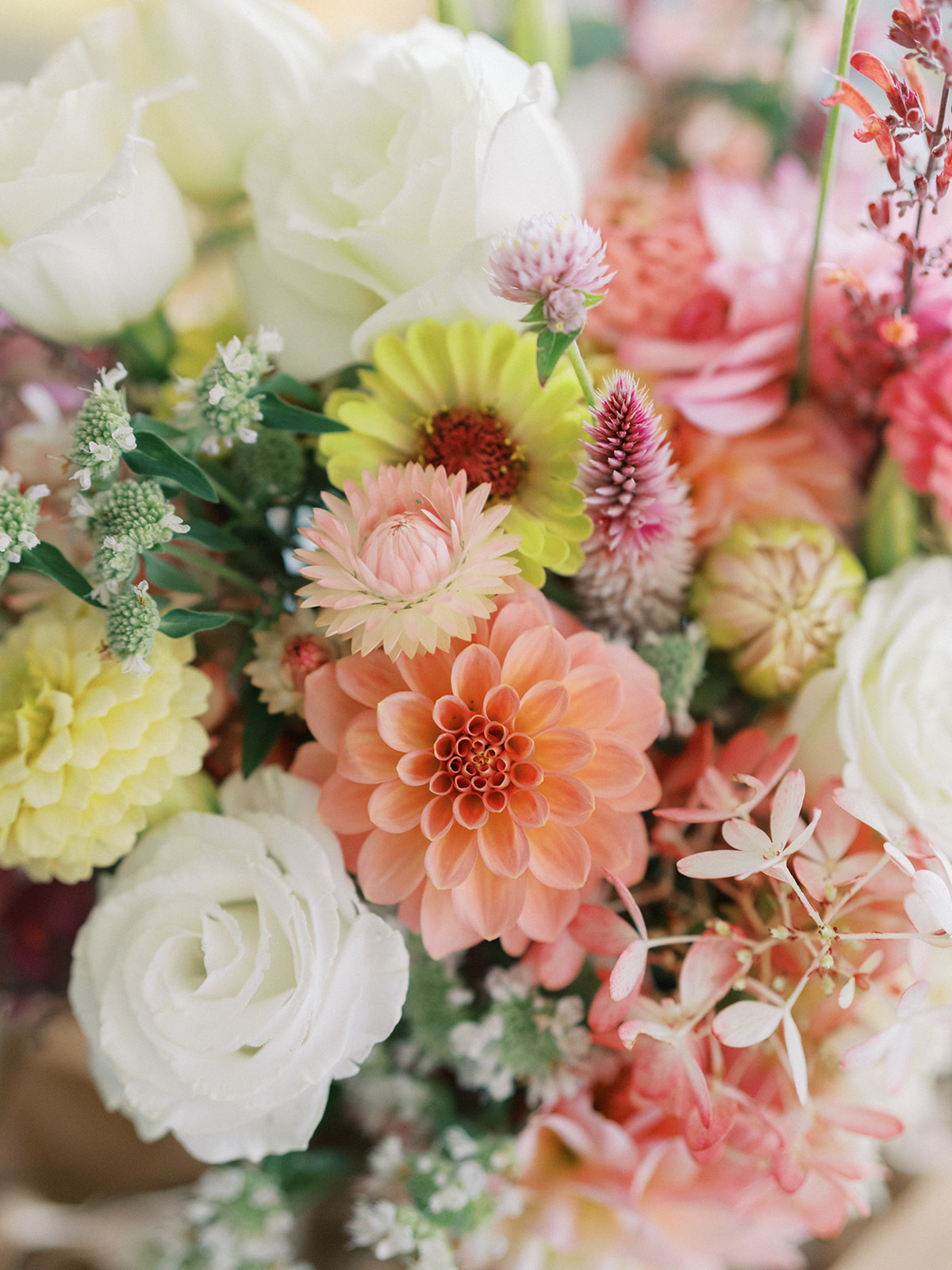
What DOES work for seasonal flowers in Maine?
Seasonality is found all around us in the landscape, and changes with every passing week. If we look around at the colors in nature throughout the seasons, certain color palettes seem more obvious for certain times of the season. Spring is full of pastels and berry tones like watermelon, orange, and yellow. Summer full of bright colors, and fall full of saturated, rusty colors. In early spring, bright yellow forsythia flowers begin to bloom, then whites and light pinks in the little appleblossoms on the trees. In later May and early June, peonies begin flowering in people's landscapes, followed by purples and pinks of lupine.
Late May, Early June
For spring wedding work, any type of pastel color palette with bright pops is a natural fit. White and yellow is possible, but it's easier to combine a few other, lighter colors alongside. Dark purples, dark reds, and dark blues are not readily available, as most clients turn towards warmer sorbet summer colors after a long, cold, grey and white winter.
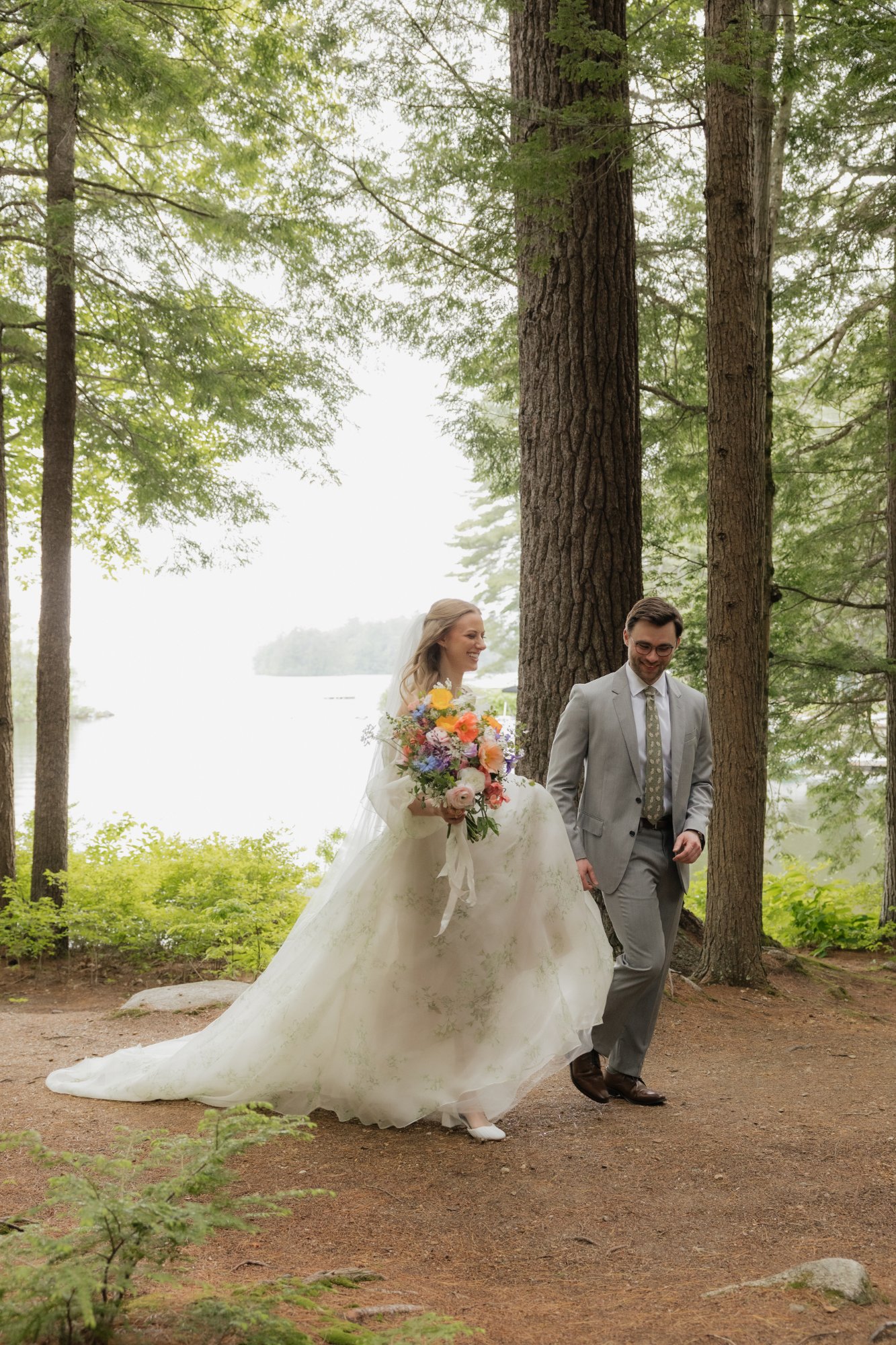
Late June through August
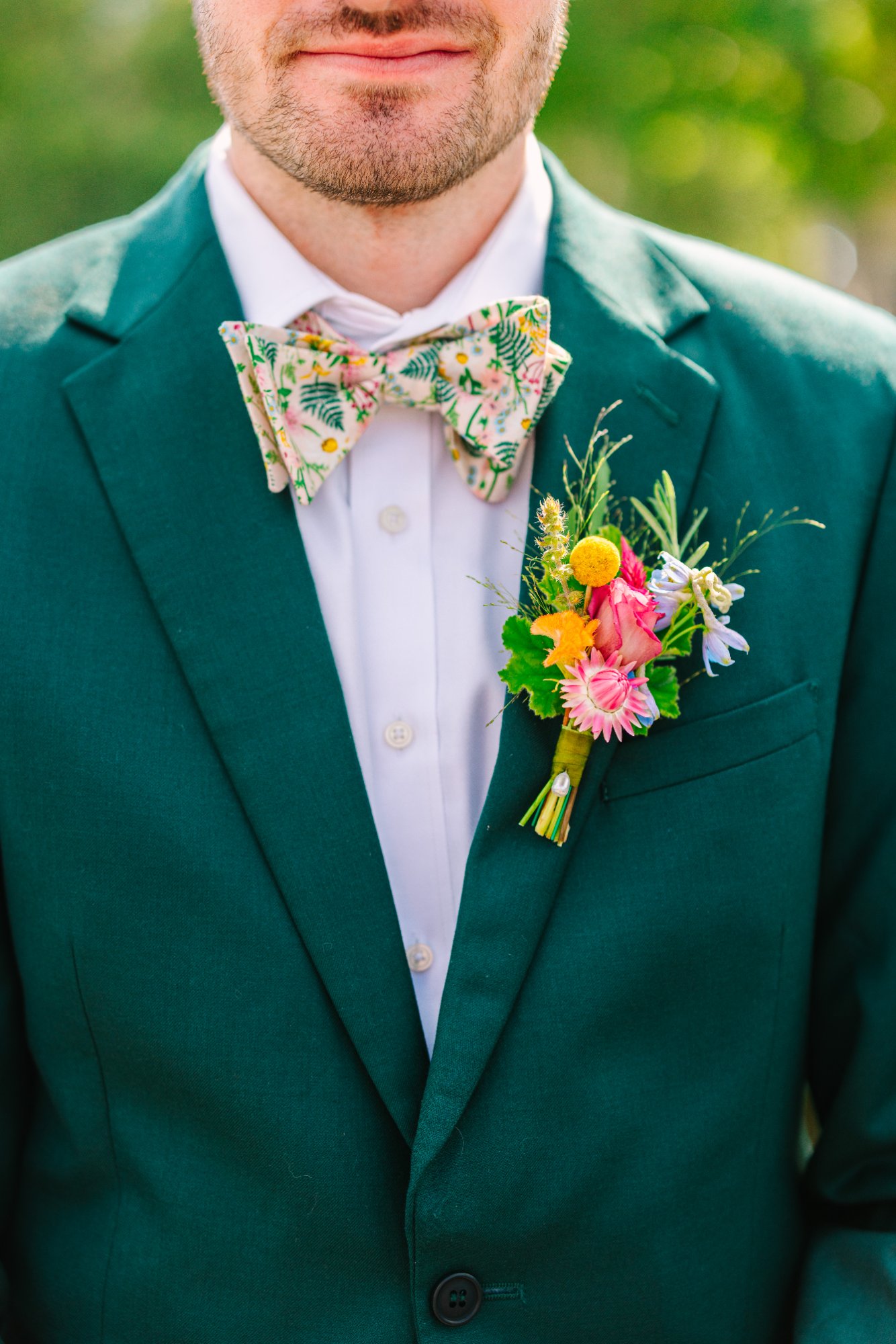
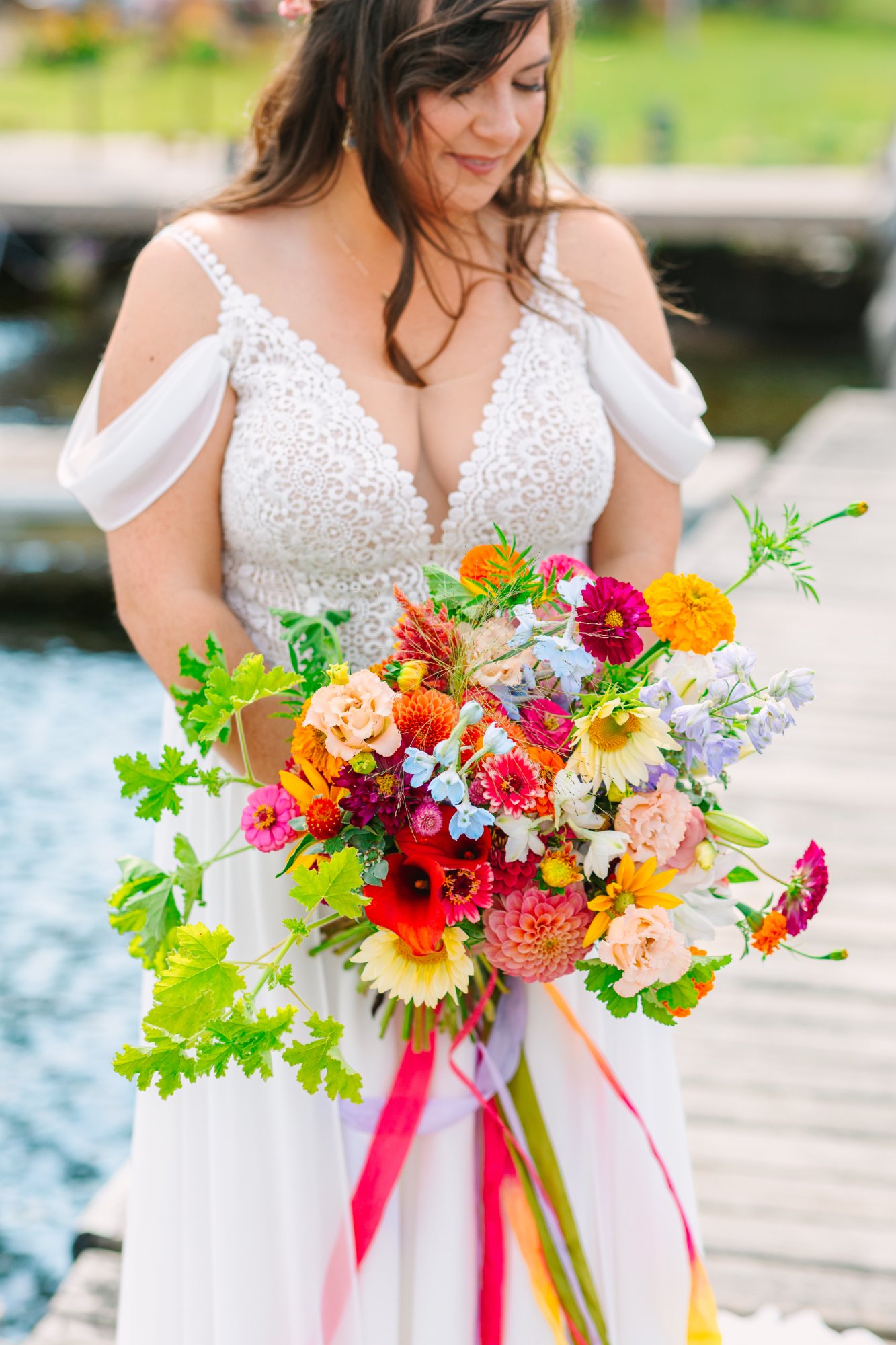
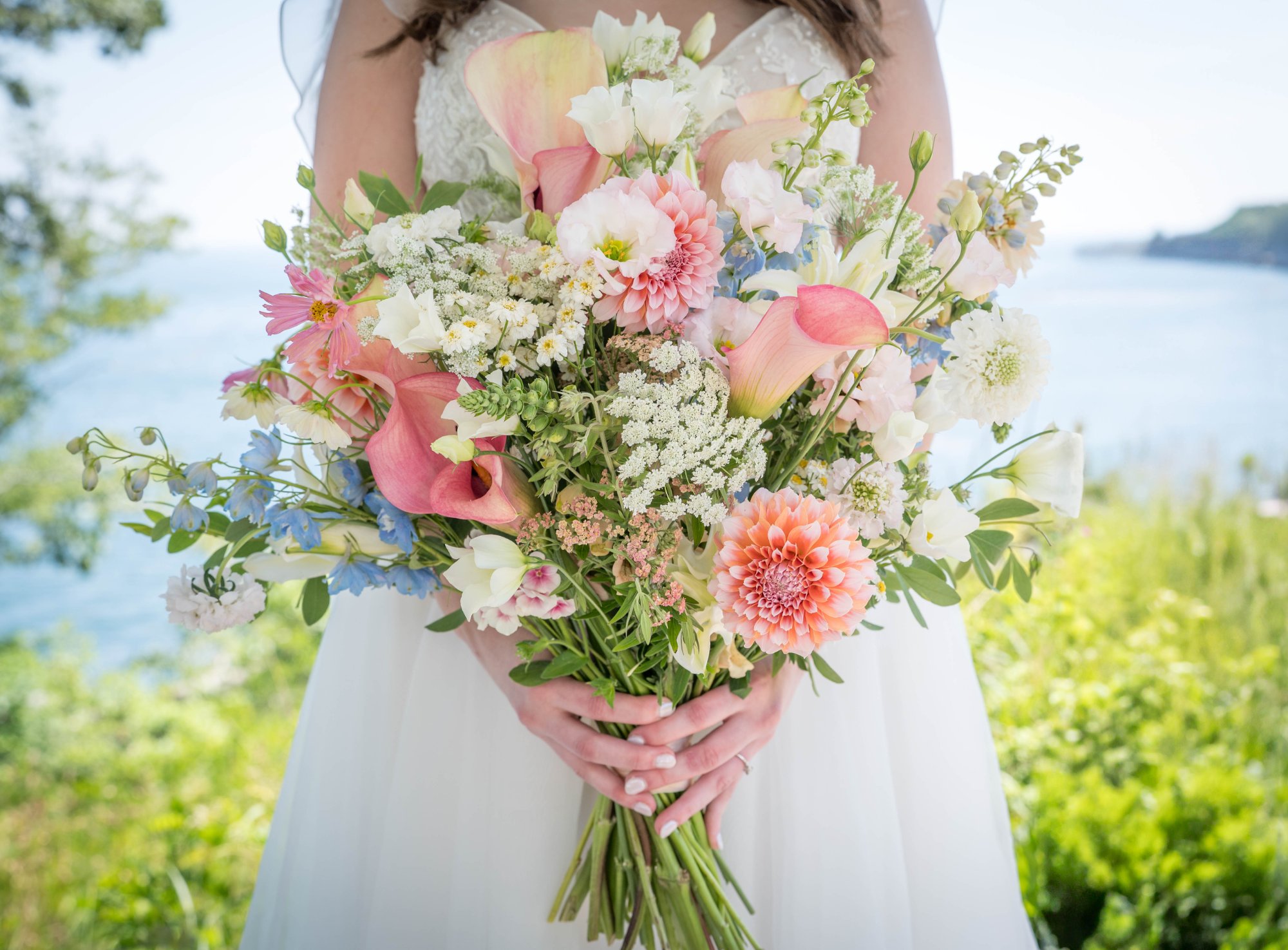
For summer wedding work, bright palettes with medium to hot pinks, peachy oranges, salmon pinks, and golden yellows work great. Light blue and white are also in good supply. White weddings are a decent fit too, and even pastel weddings still work beautifully. Summer is the height of color palette availability, and usually everything from white to bright fit well. Saturated colors indicative of fall are a bit trickier in summer, but still possible.
 July
July
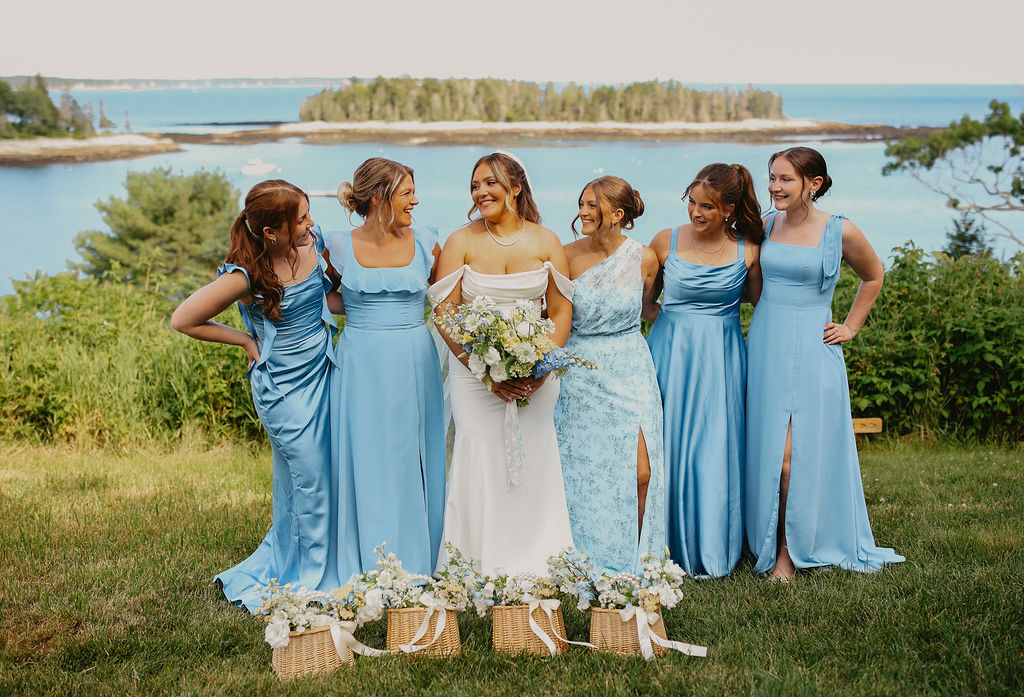
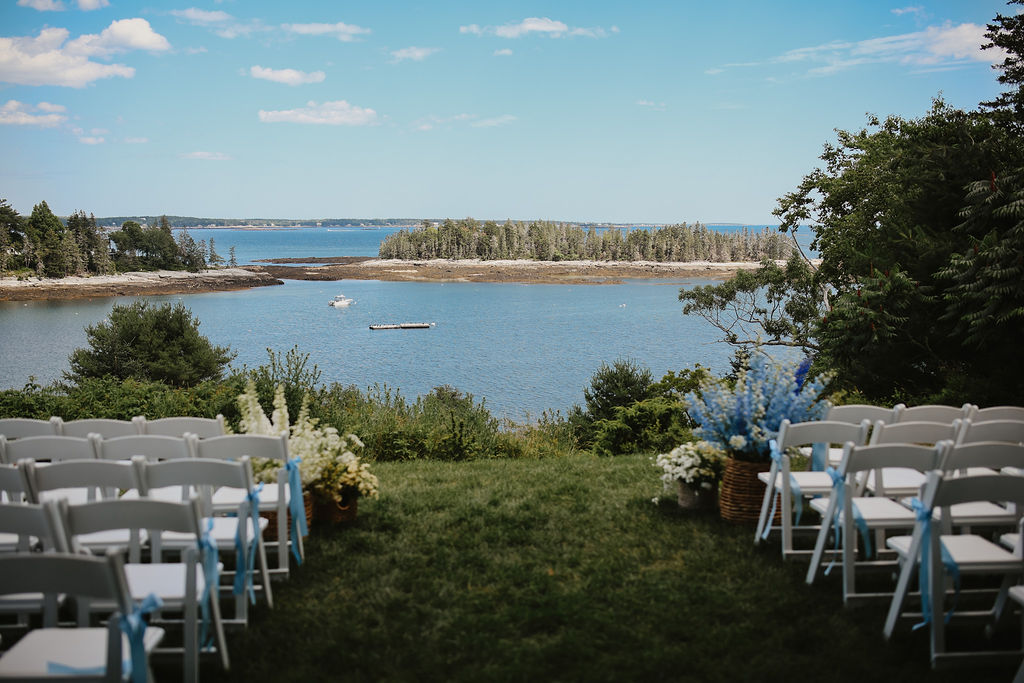
With each passing week of seasonal growing, more and more flower and foliage varieties in a greater color range become available. One highlight of the season for our team includes the incredible field delphinium, sometimes 7 feet tall, and the incredible first flush of foxglove, both arriving close to the 7th of July most years. These are truly the stars of summer weddings. We can never seem to grow enough sky blue delphinium. They just look so amazing en masse in ceremony baskets along Maine's stunning blue coastline! We also love the delicate nature of foxgloves, with their little speckled throats and dainty bells where bumblebees sleep in the evening hours. They bloom all season long with the high level of care we give to them.
Late July
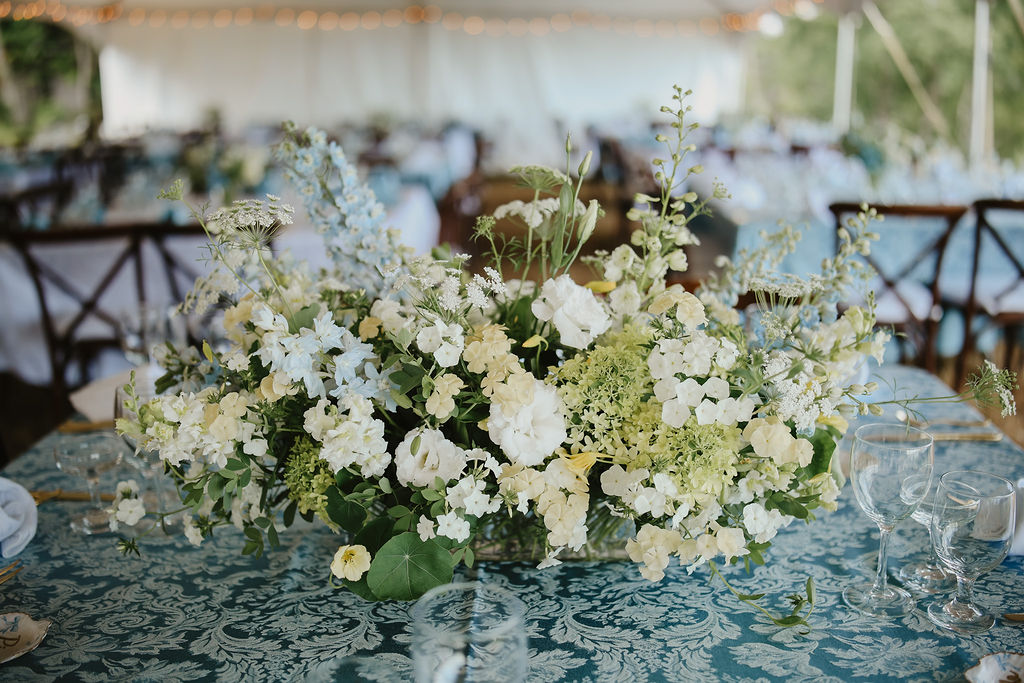
Once in late July, the field flowers have grown tall and strong enough to cut, so many more varieties are available, along with over a thousand dahlias a week from our protective tunnel (another season highlight--dahlias!). All the summer favorites begin to bloom...the very first dahlias and lisianthus, cosmos, zinnias, annual phlox, tweedia, nigella, feverfew, orlaya, white dill, strawflower, echinacea, agrostemma, agastache, pincushion, FAMA scabiosa, rudbeckia...the list seems endless! Once we're in the last few days of July and all through August, a white wedding is easiest to flower, since we have tens of thousands of white flowers in all sorts at that time, and the most important wedding flower--also the most requested--HYDRANGEA begins to bloom. Last year, we styled a summer coastal wedding in all blue and white before hydrangea began to bloom. Our two main hydrangea varieties (and we grow hundreds of each), Limelight Prime and Quickfire, simply aren't ready until August, maybe the last few days of July if we are lucky. For that wedding, we used a lot of other white flowers, and it came out beautifully, because the client was flexible.
 August and September
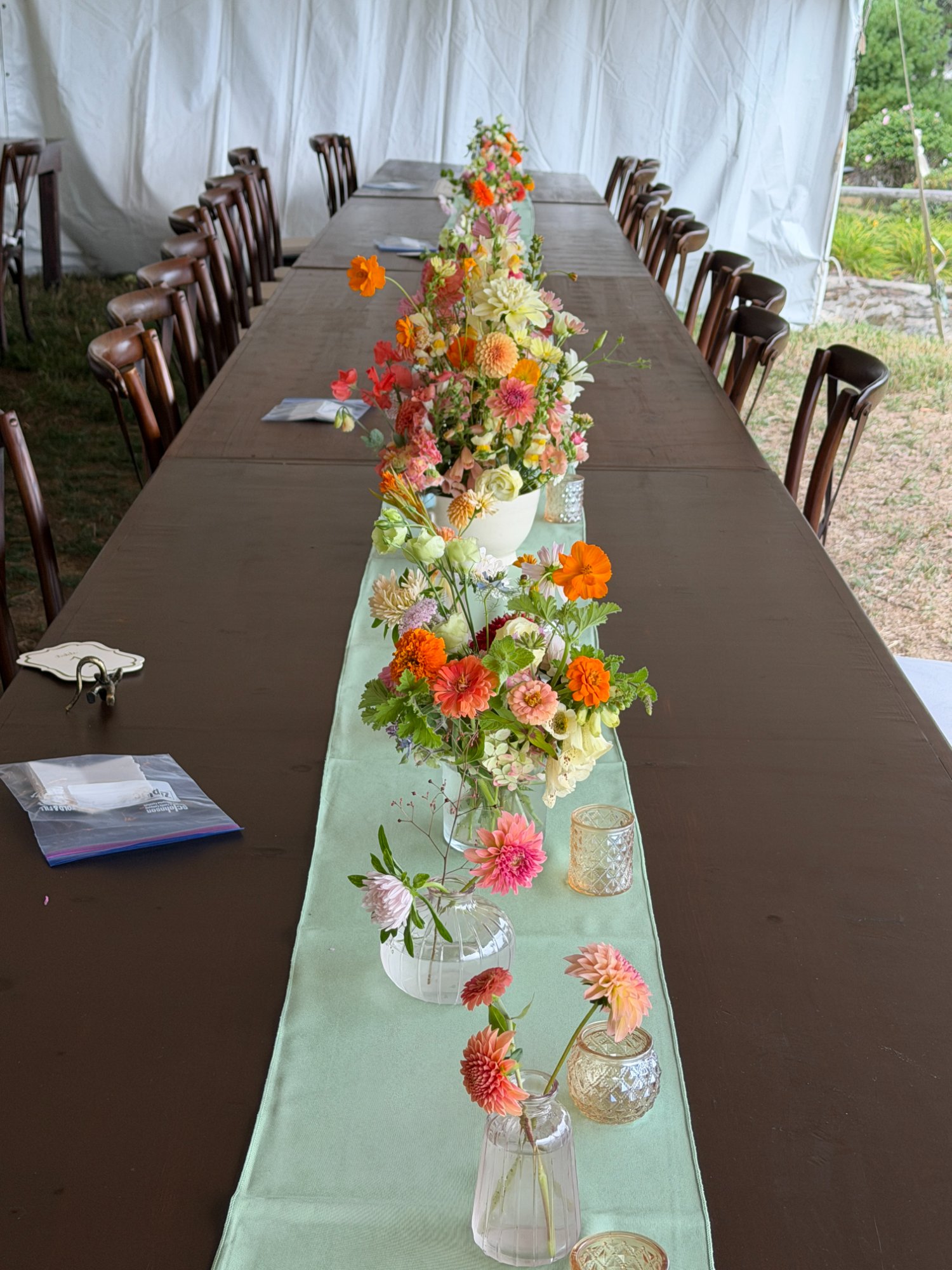
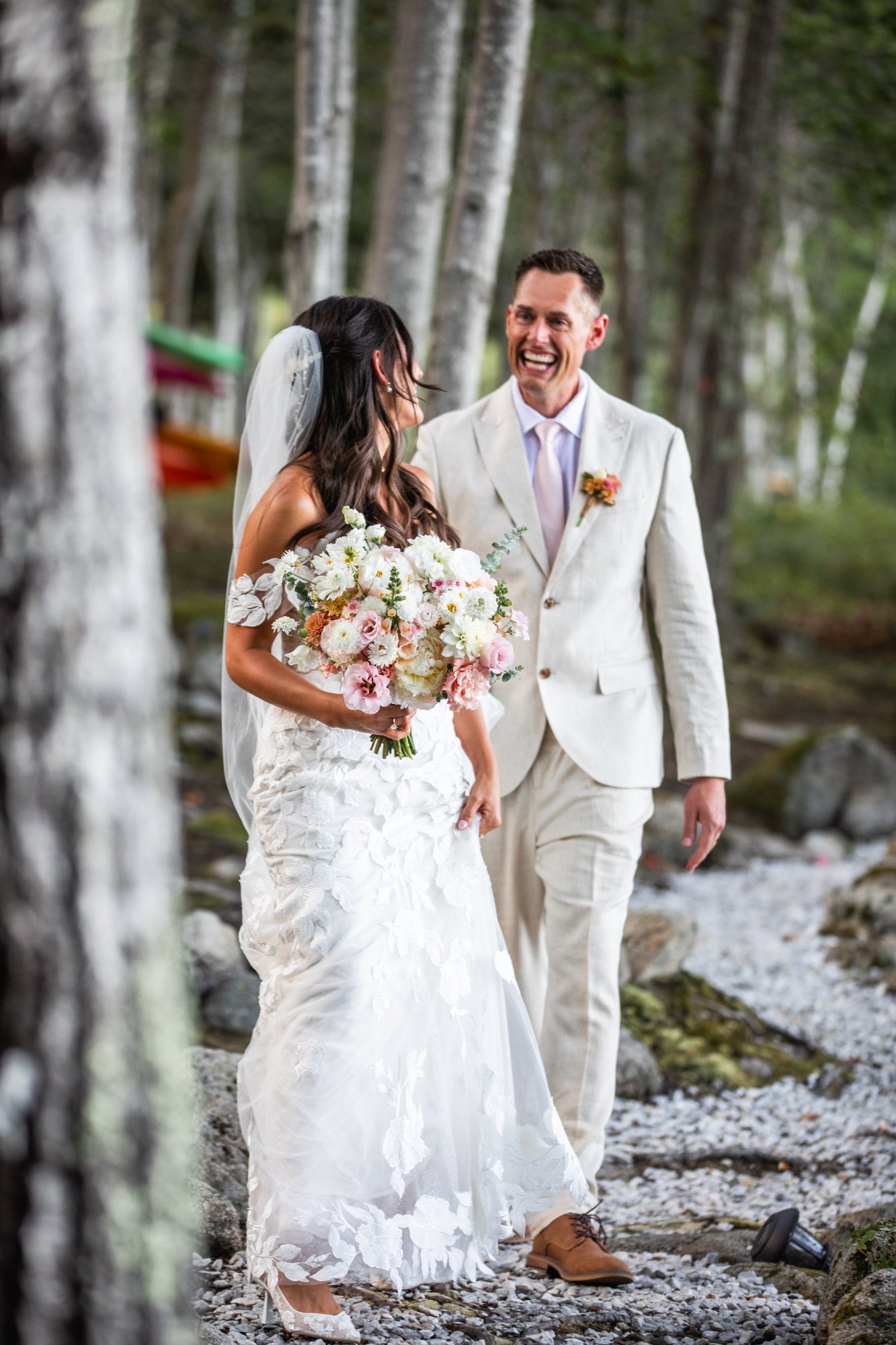
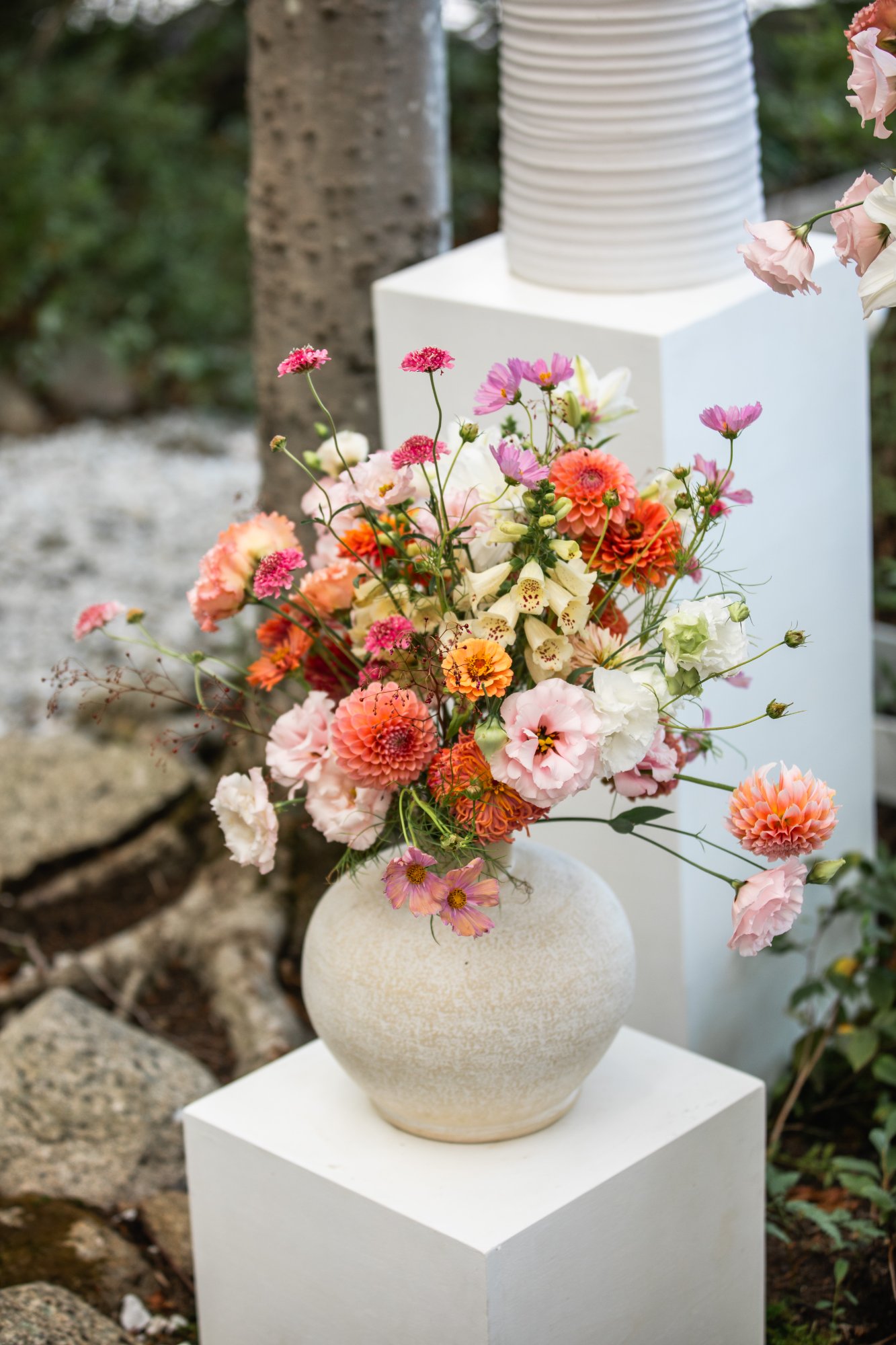
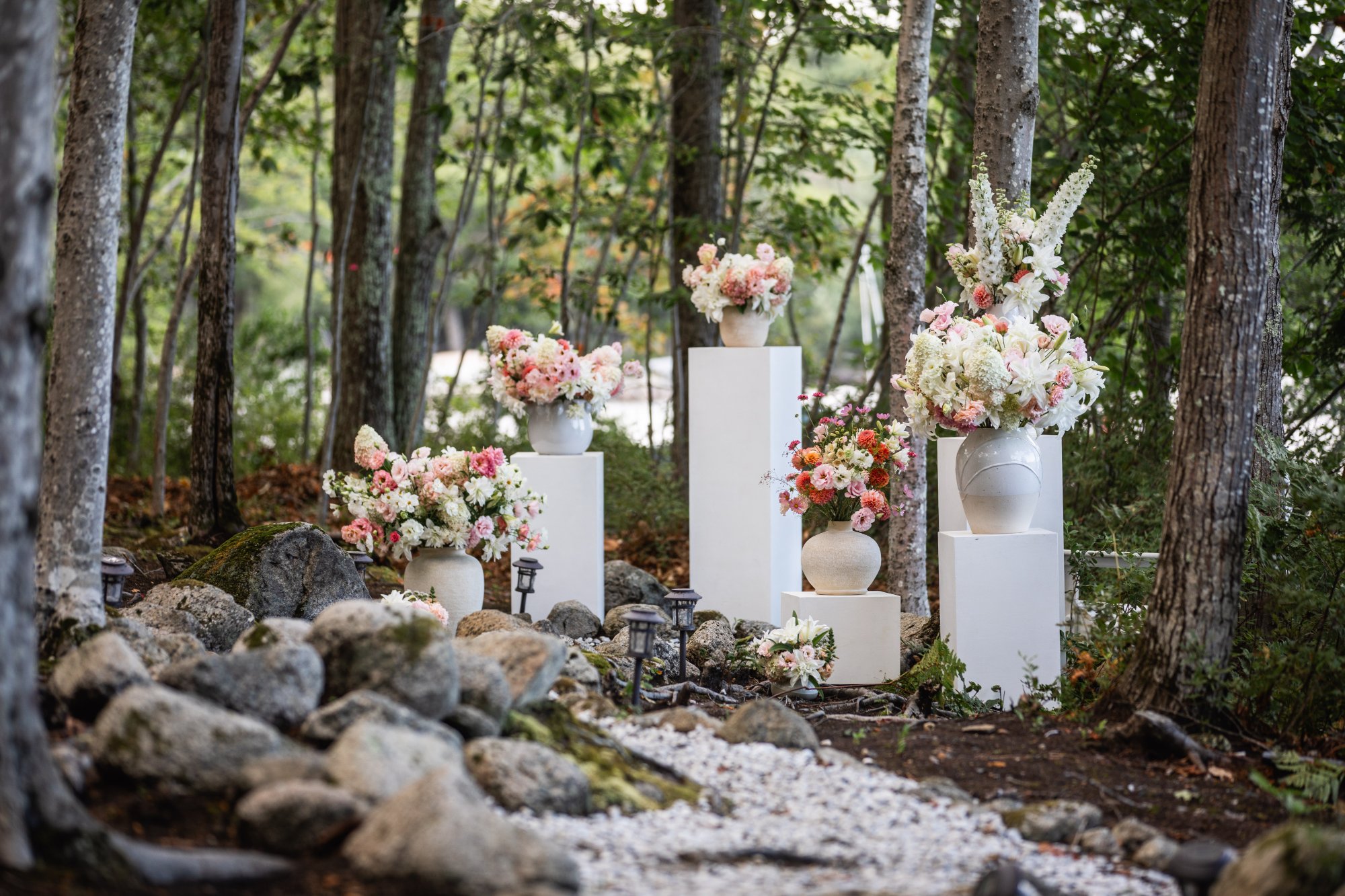
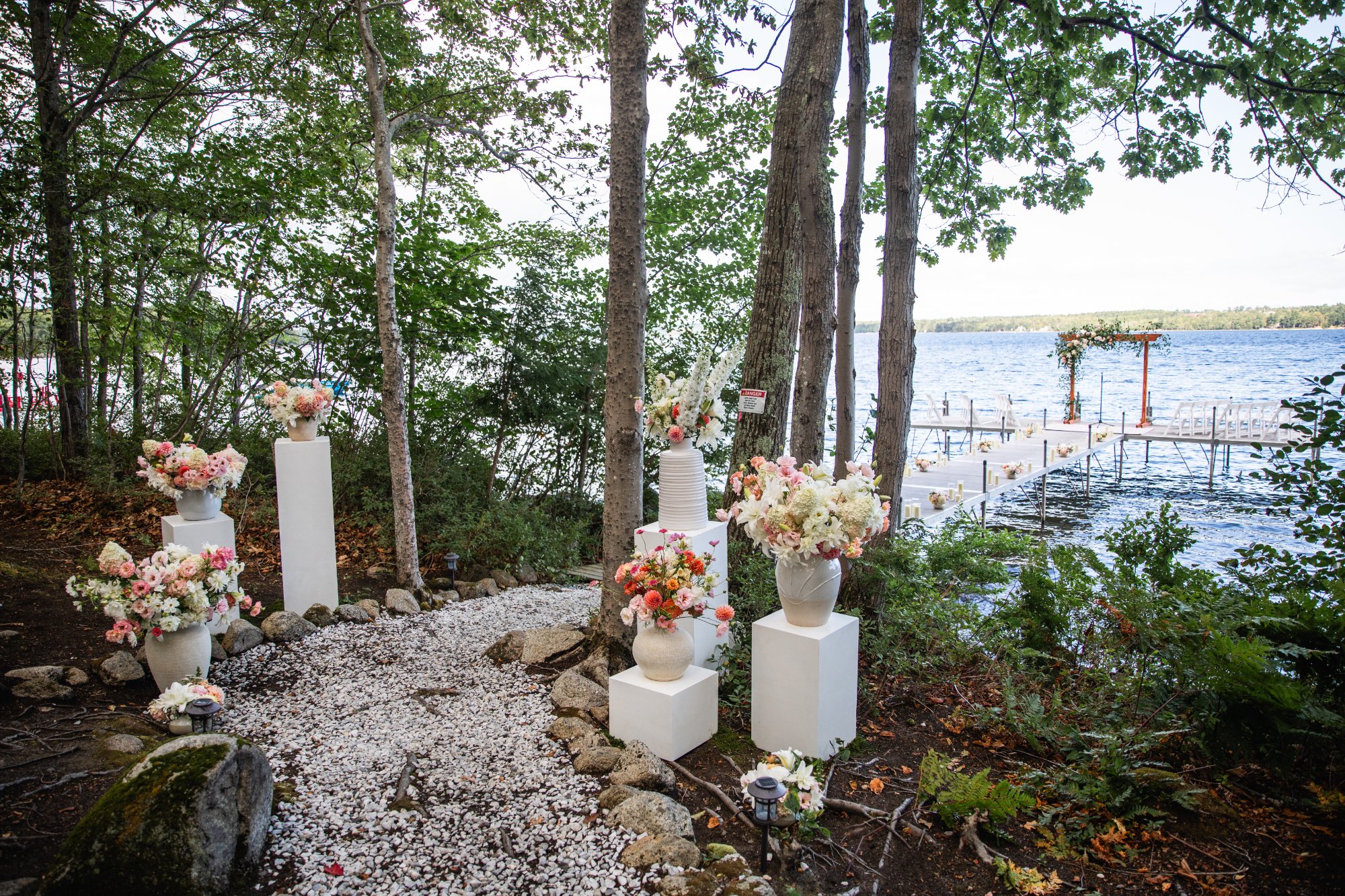
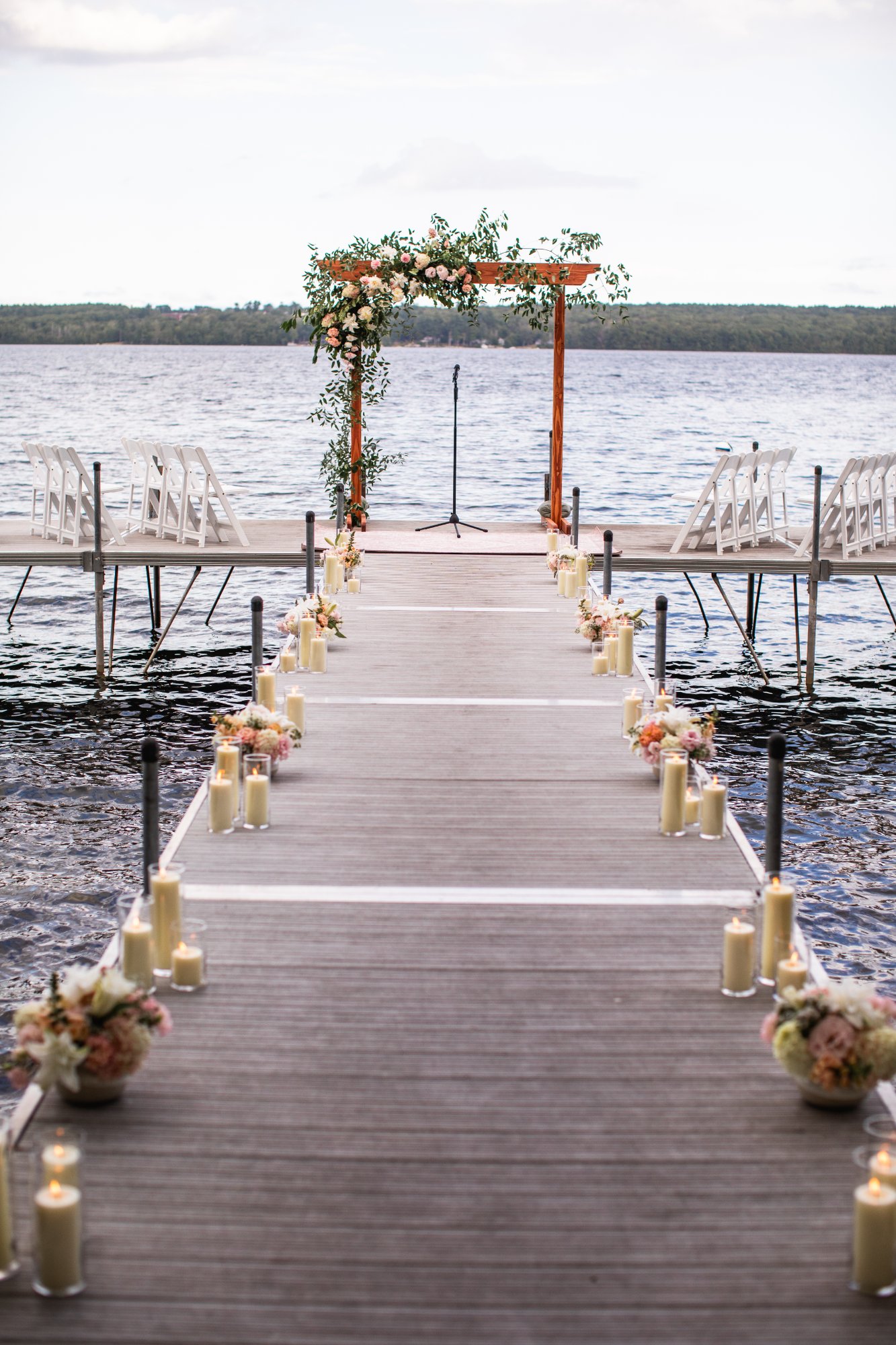
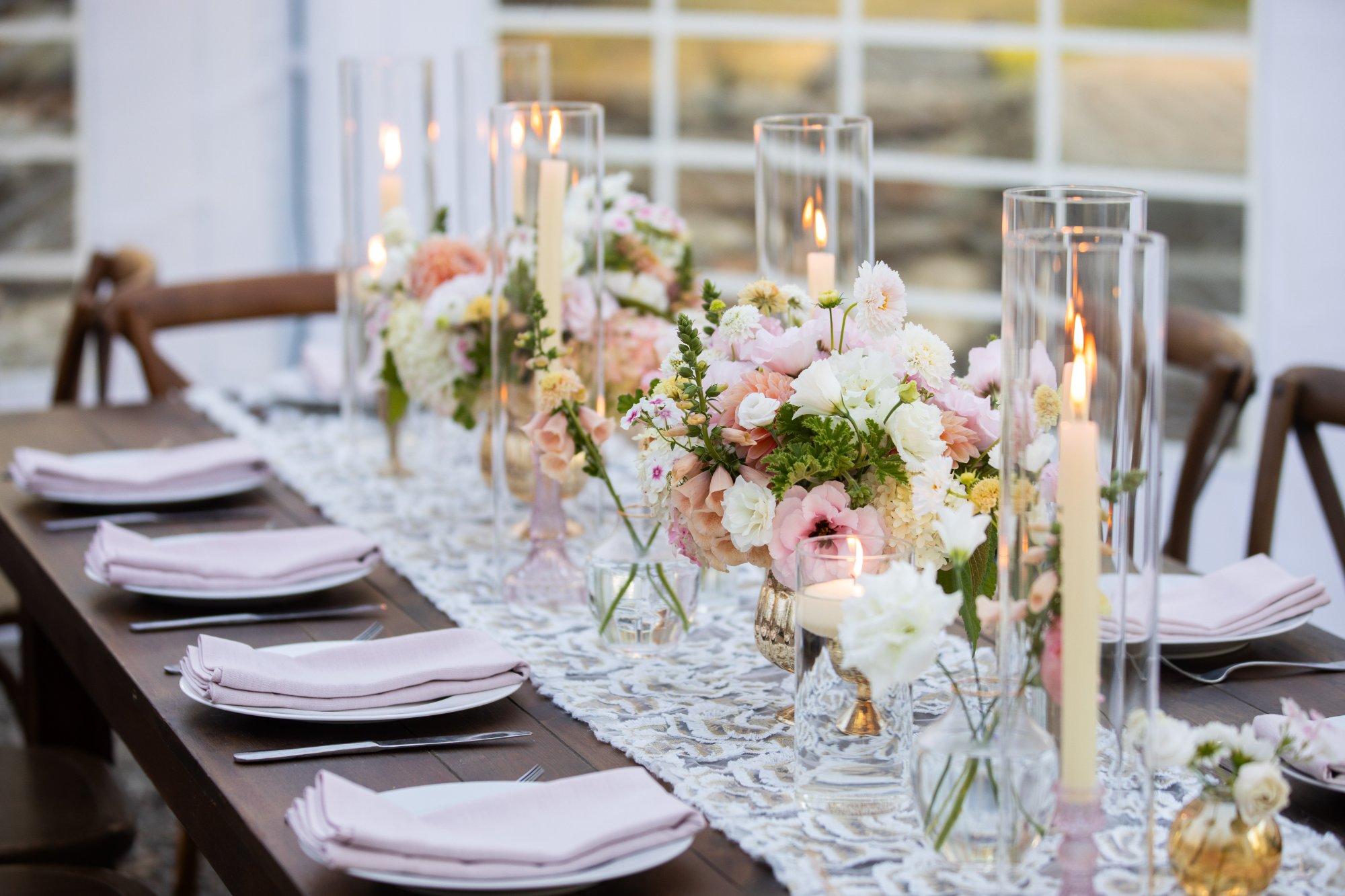
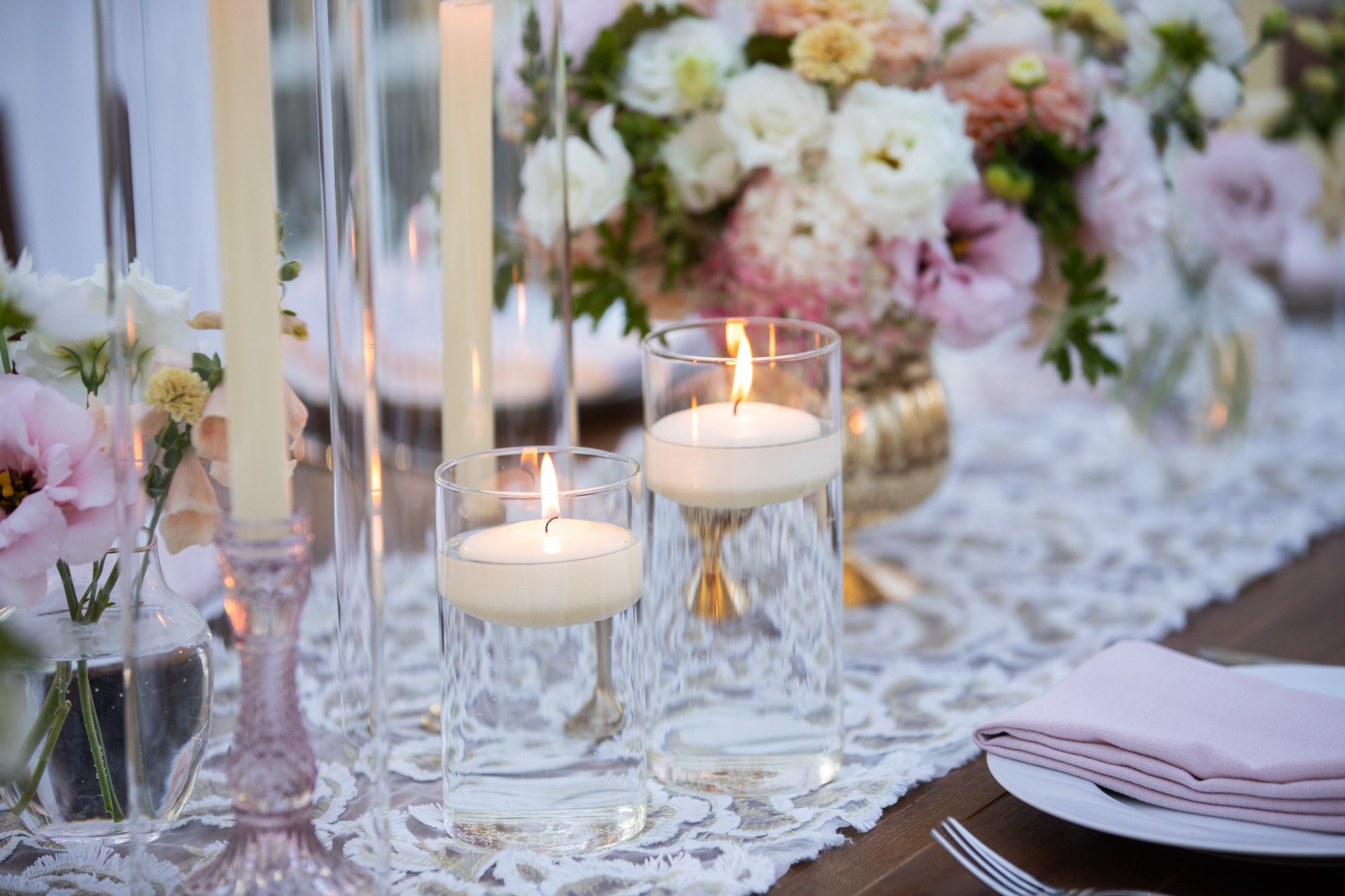
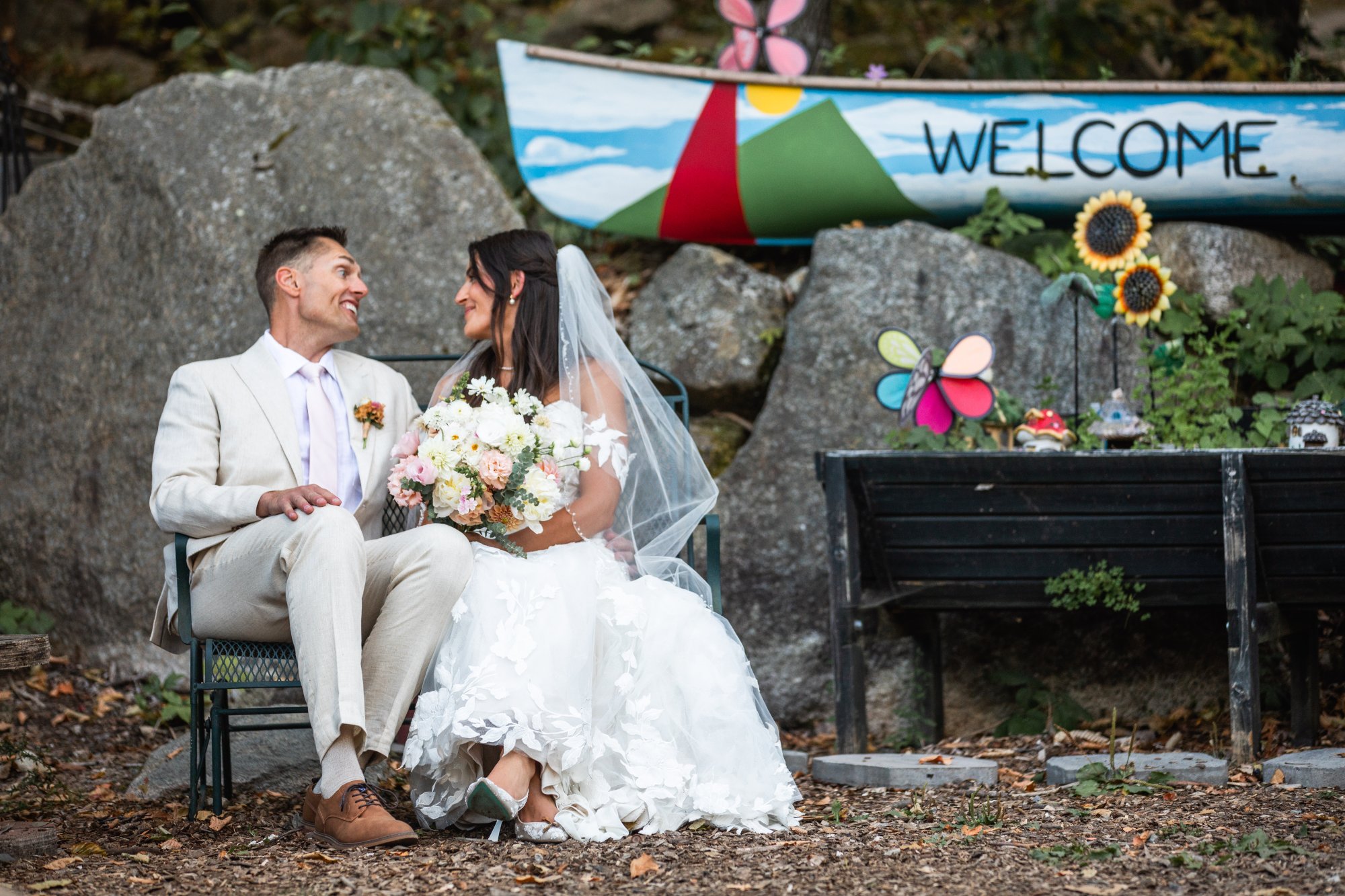
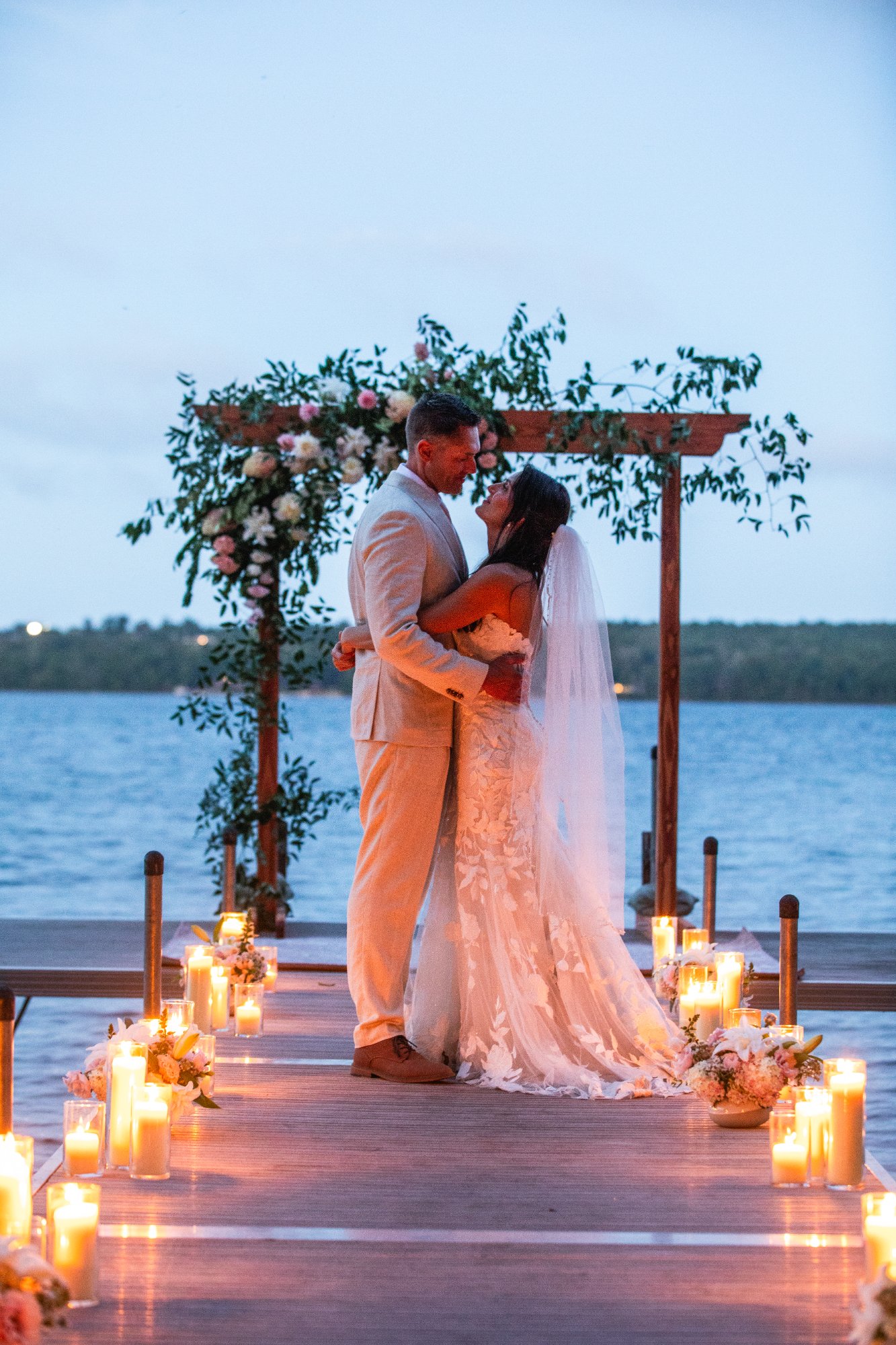
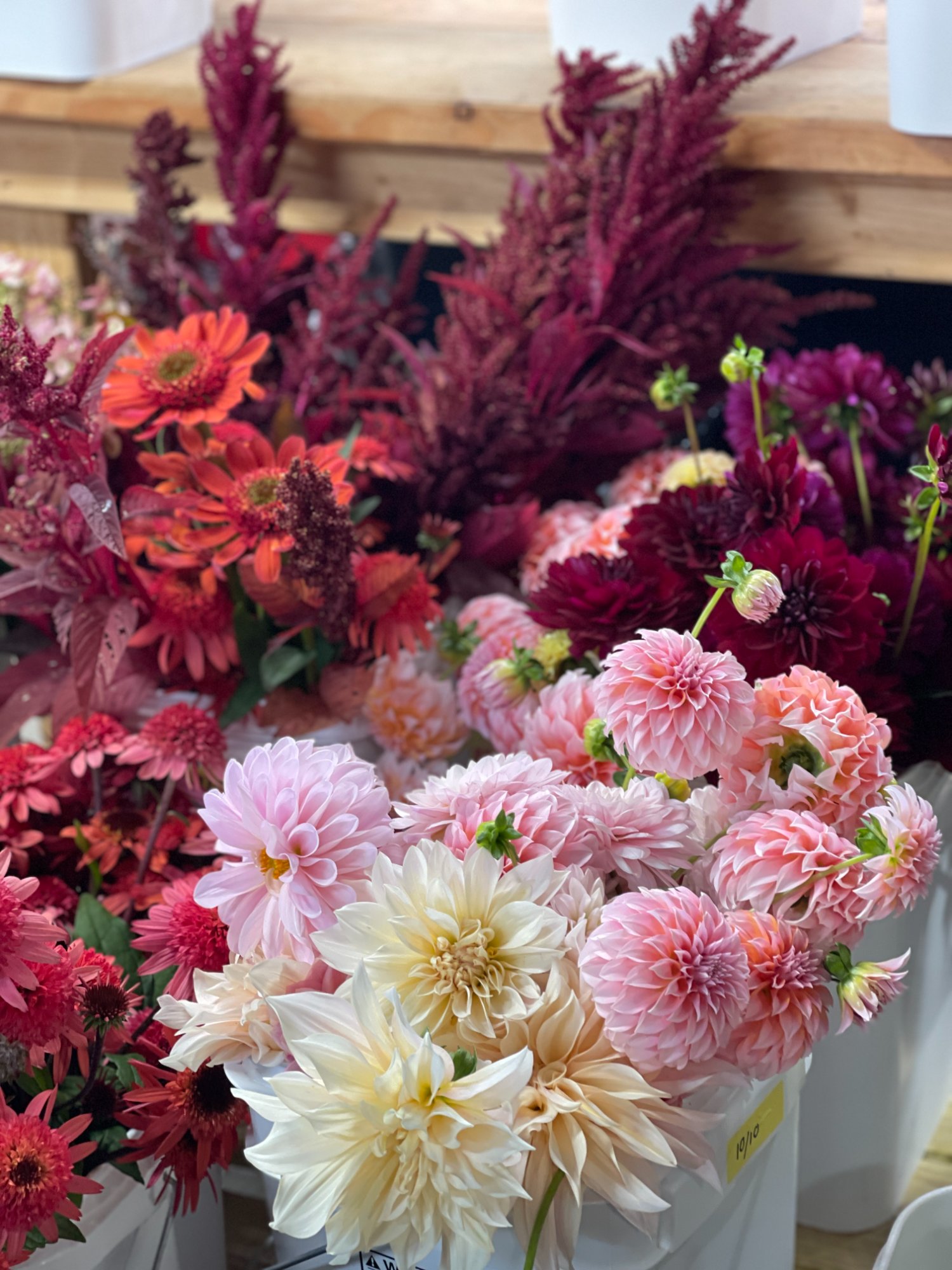
In late August and September, the high heat for the last 6-8 weeks has tired out the pastel and bright spring crops, and flowers everywhere begin to deepen in color and richness. The first chocolate browns, deeper reds, ruby pinks, rust oranges, purples, and maroons beginning to blossom. Varieties like cosmos, dahlias, lisianthus, and zinnias take center stage, but we are also beginning to see the first celosia, marigold, and amaranth. We still tend to have lots of pastels and whites, but clients who ask for strictly white and very pale color palettes get some education from our team first around availability before we finalize their bookings. Instead of all-pale palettes, colors that gravitate toward seasonality with some level of color is better to book. For instance, if a client envisions soft neutrals, we make sure that they understand we prefer to include some dusty pinks and peach as well, as in the below photographs from August 25th on Frye Island. Bonus if soft yellow and touches of burgundy are workable! If a client is dreaming of colorful, we will frequently lean warm into warmer salmon pinks, orange/peach, with touches of yellows. We also love to add either pale blue or lavender, and almost always some white for contrast.
October
In the fall, colors naturally patina and deepen. There are many flowers with multiple tones like rosy pinks and sandy browns, and there is richness to nearly every flower. While we still grow many white flowers for fall, white naturally becomes more ivory rather than crisp white, and pastels are not as readily available as richer reds, burgundies, rust oranges, deep purples, and golds. We do not take weddings in white and pastel tones from late September through October because they don't show off the season's best. We prefer to book weddings that celebrate the seasons, and are truly fun to harvest and style, not to mention they fit the season and make sense to guests.
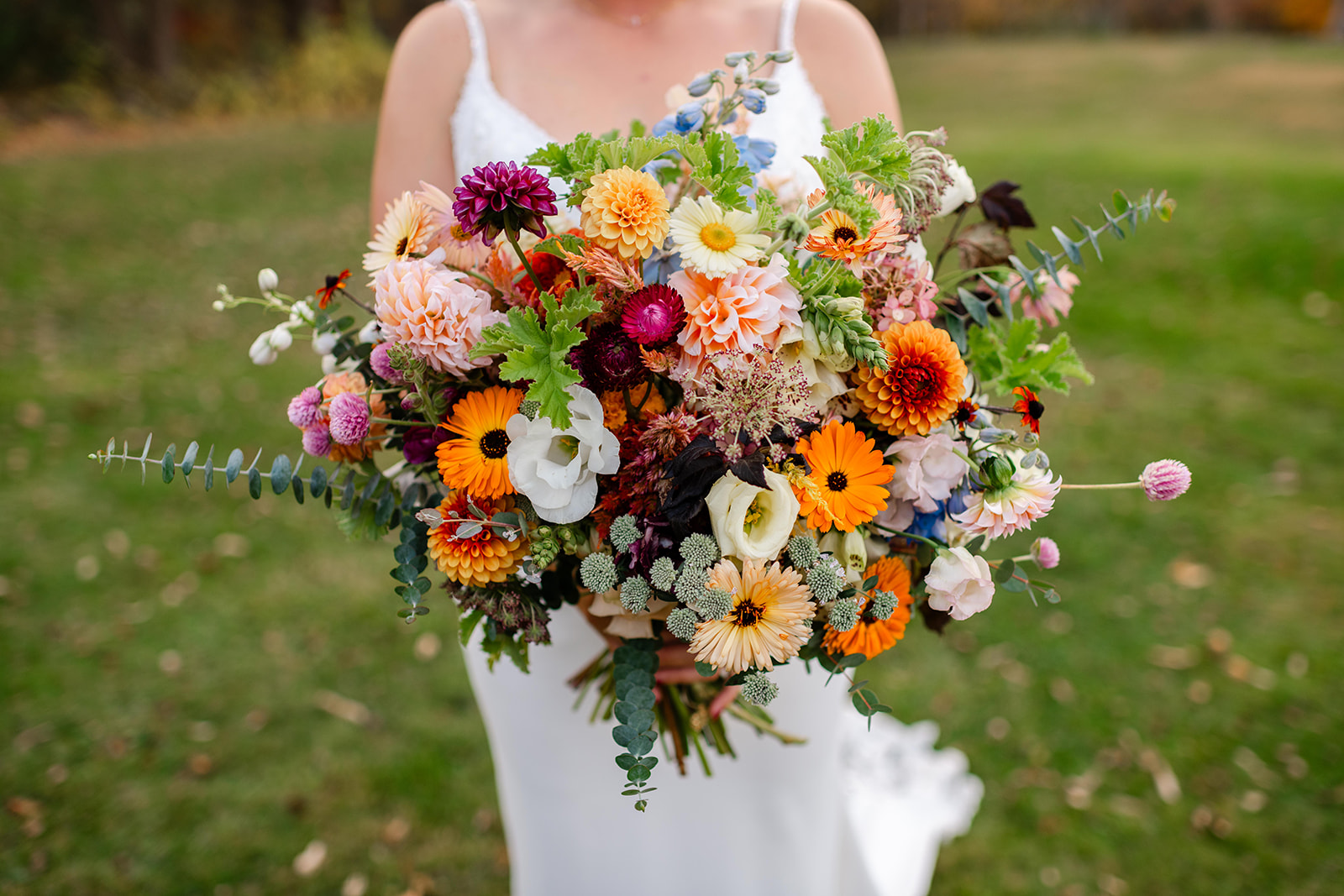
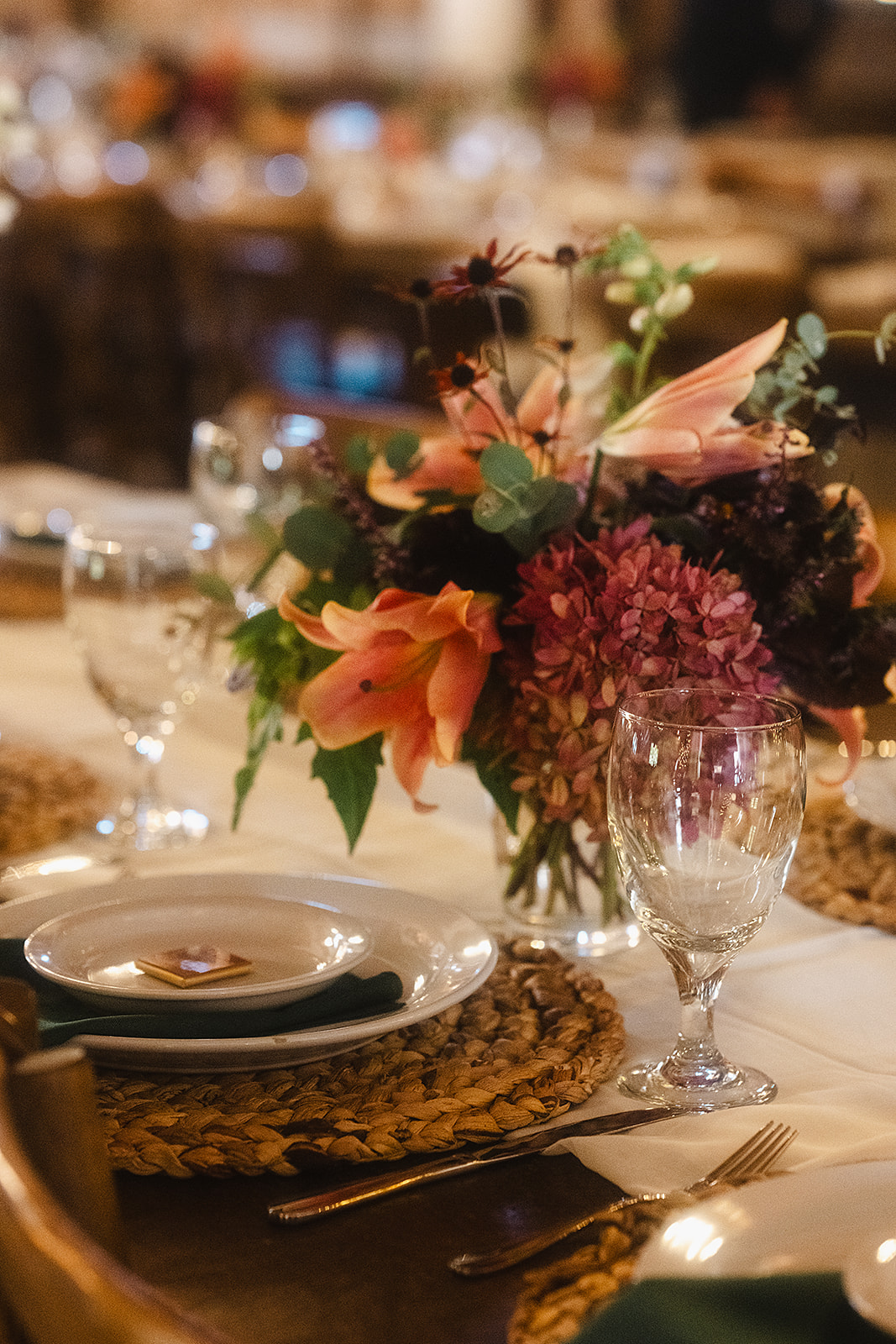
Once October rolls around, foliage naturally patinas and looks more vintage. Hydrangea has a rich rosy hue with brown atop or on the sides of the flower heads, which is a natural turn of the season when the weather gets cool. We find it is quite lovely woven into arrangements! Dahlias are getting tired but still producing hundreds a week, and are bolstered by heirloom chrysanthemums, the last marigolds, celosia, amaranth, and gomphrena. We often still have laceflower and annual phlox, too, all of which work just beautifully with perennial foliage in multiple tones. Our copper ninebark, scented geranium, and eucalyptus are at their peak, and some of our favorites to add with shiso, mint, and rosemary. Although we still have flowers in the cream, pale blue, and white range, it would be too difficult to put together a wedding using strictly those colors, so blending them with deeper foliage and flower colors works best and looks the most natural for the season. A vintage-inspired palette with rich colors is fun that time of year.
 Talk with us about your dream wedding flowers to learn more.
With a little flexibility, any client can end up with a terrific flower plan that highlights seasonal flowers here in Maine. Eastern River Farm is always excited to show what can be done with the experience we have been blessed to earn through trial and error farming flowers together as a family. Jennifer