October 24, 2026 · 7 minute read
Dahlias, A Wedding Favorite! How We Grow Them With Zero Harmful Chemicals
Spotlight on Dahlias: One of the Most Popular Summer Wedding Flowers
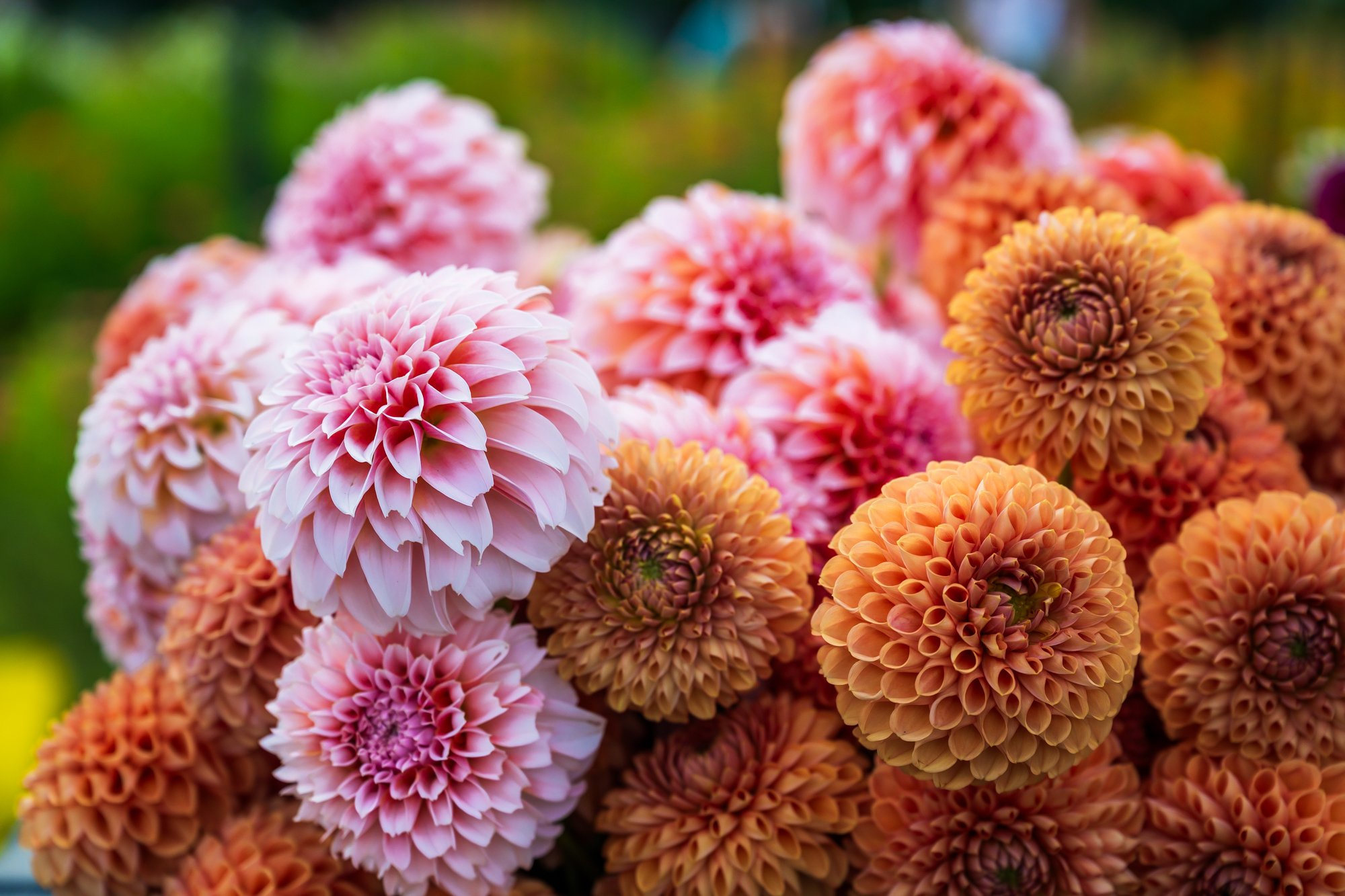
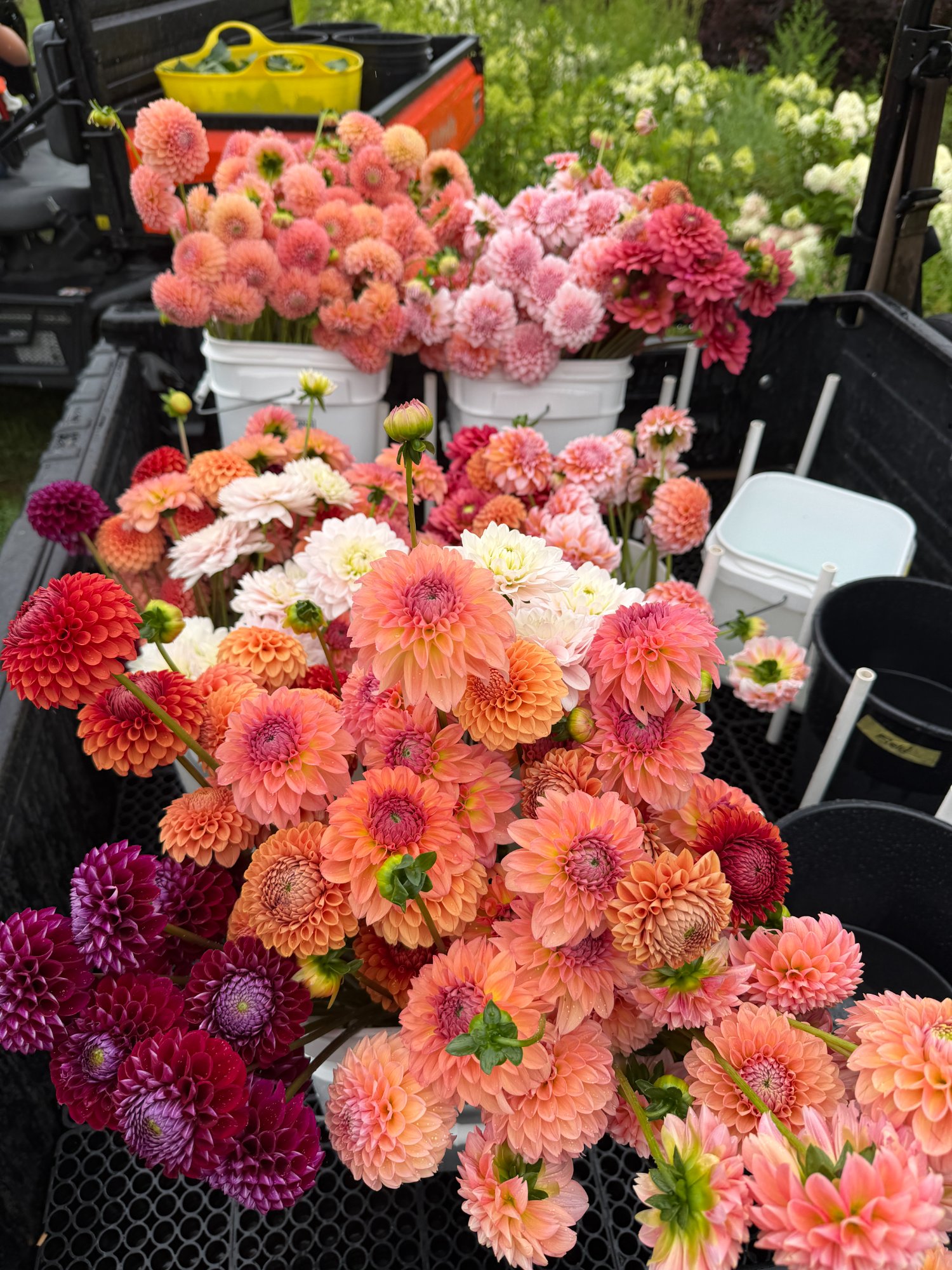
When it comes to a crop most summer and fall brides request, dahlias are at the very top of the list!
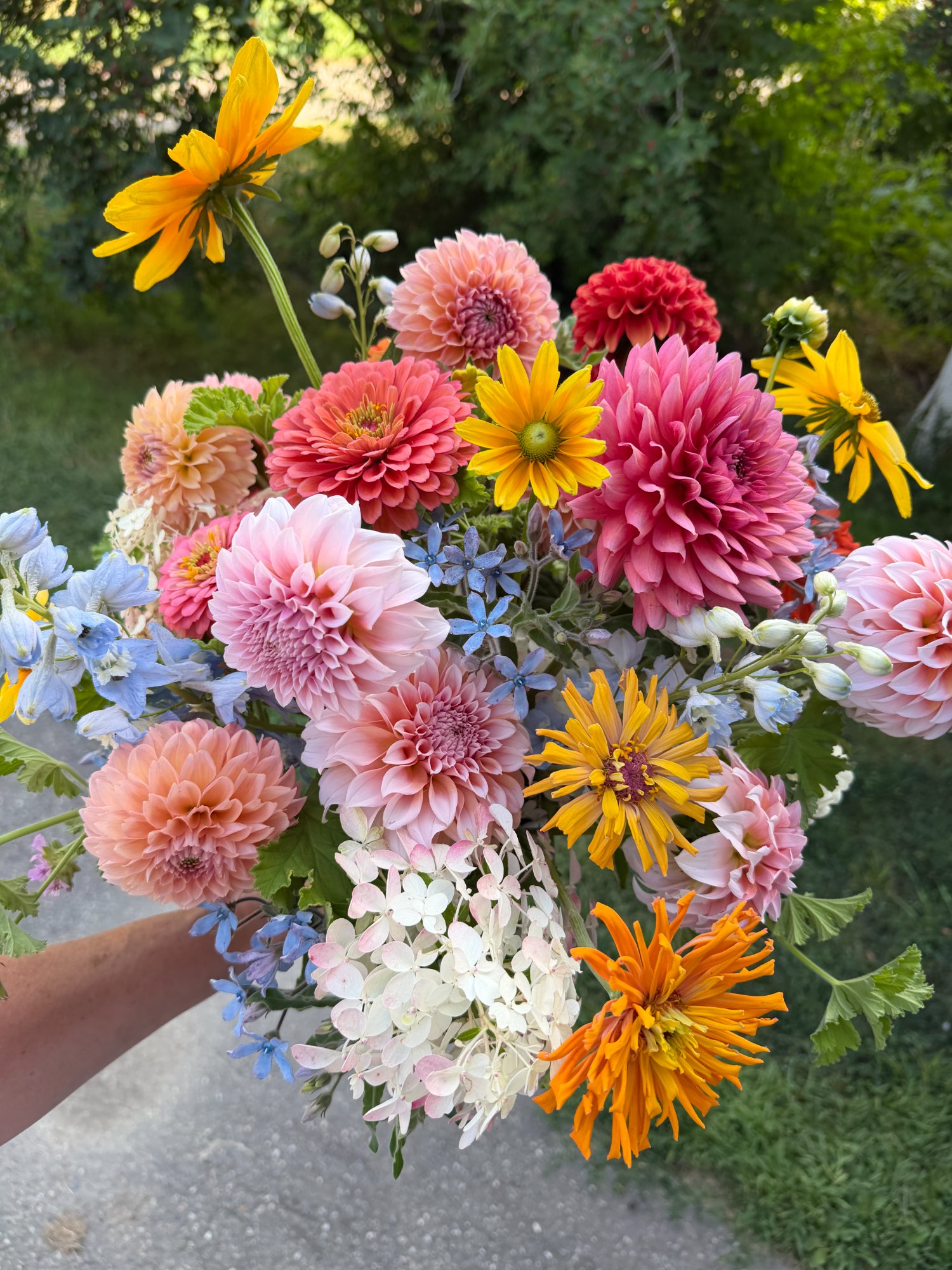
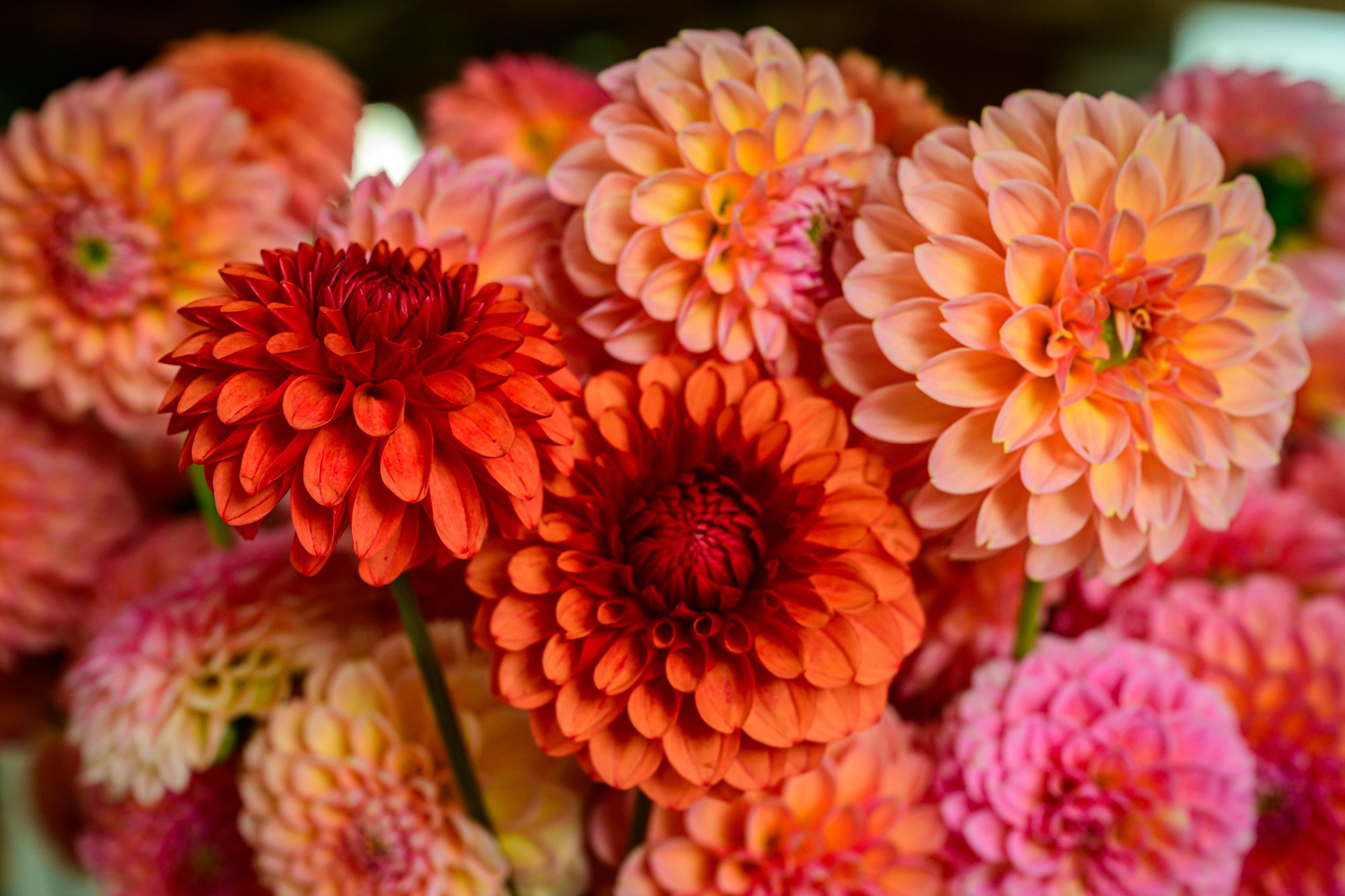
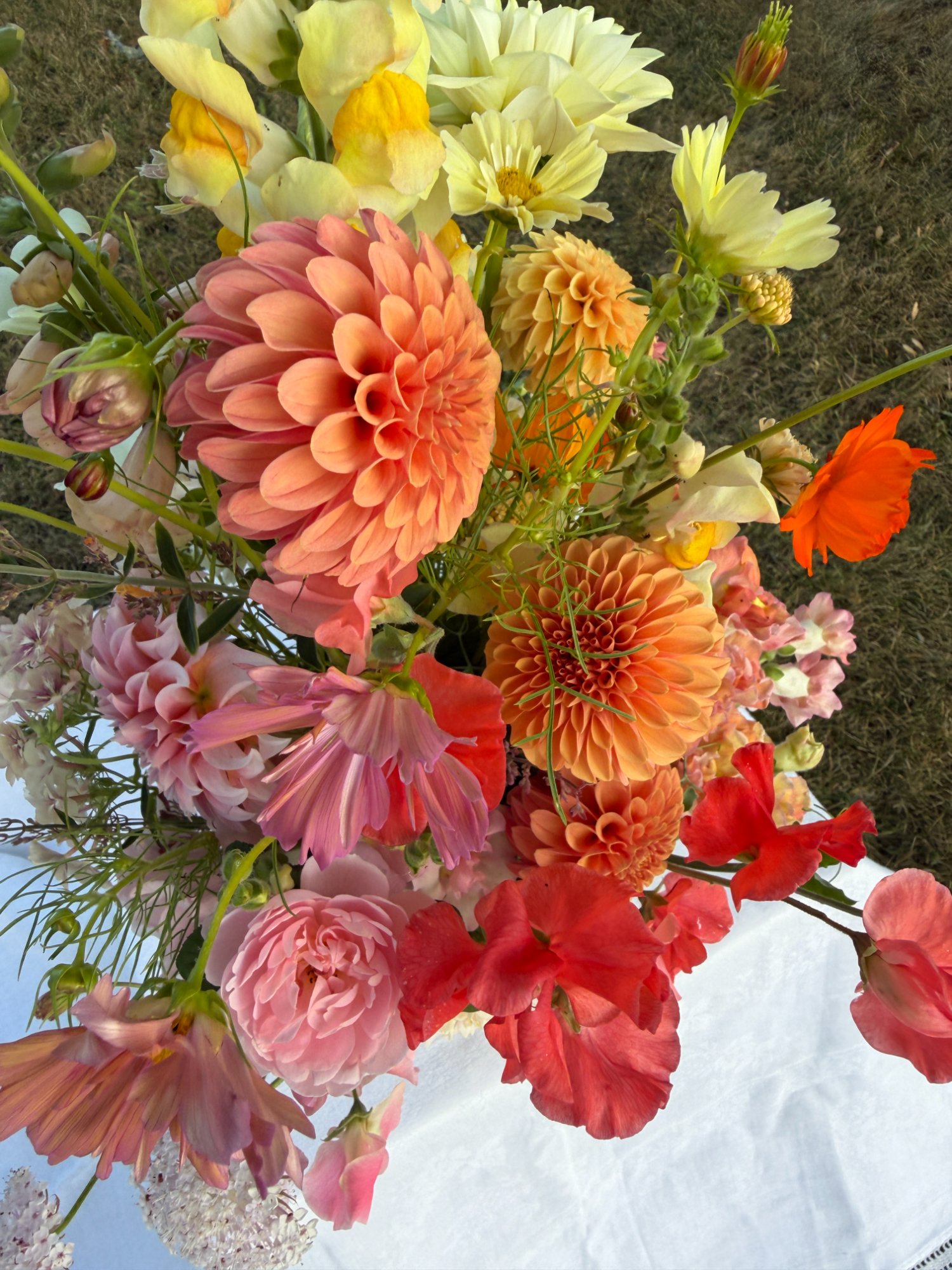
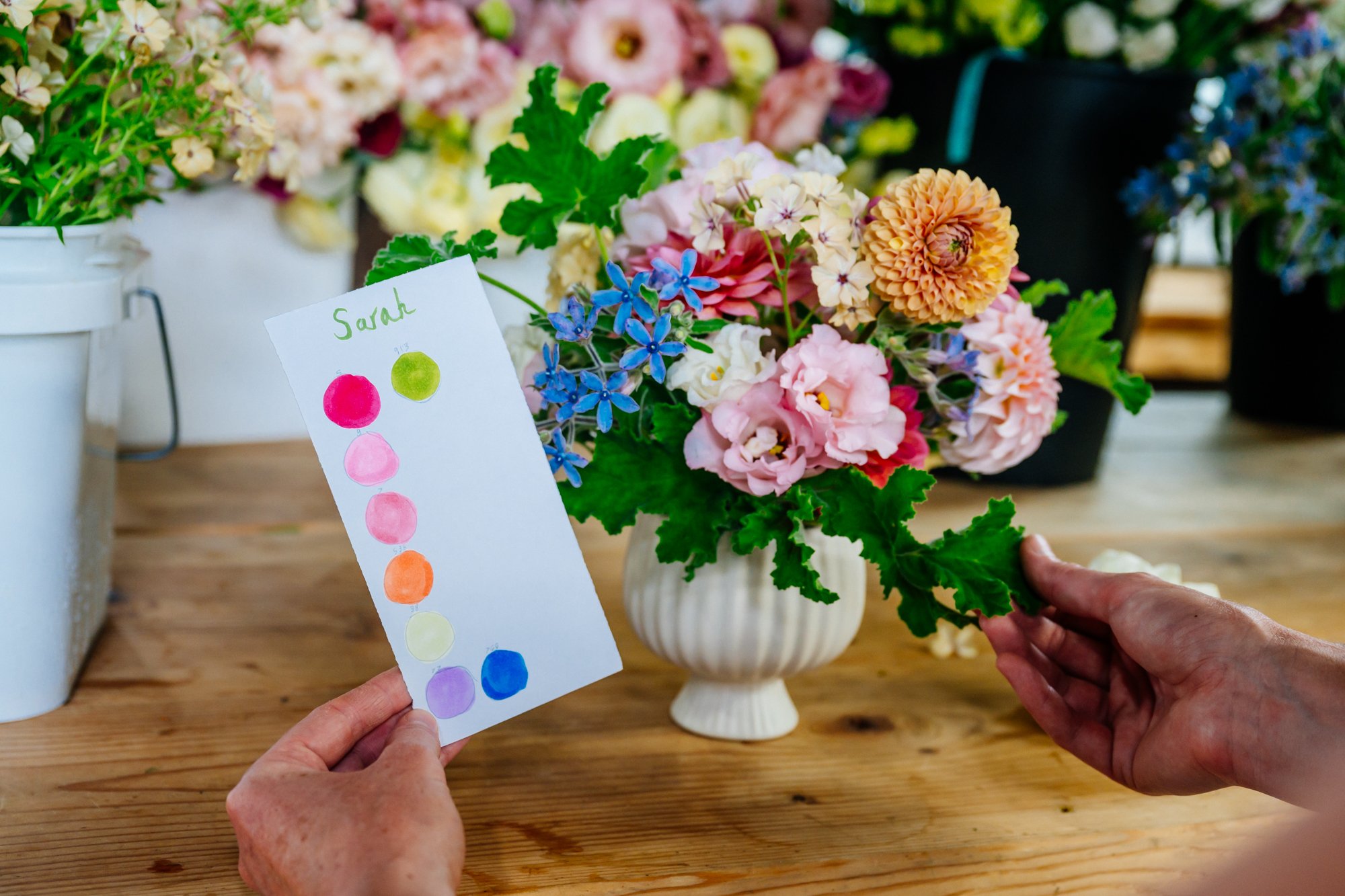
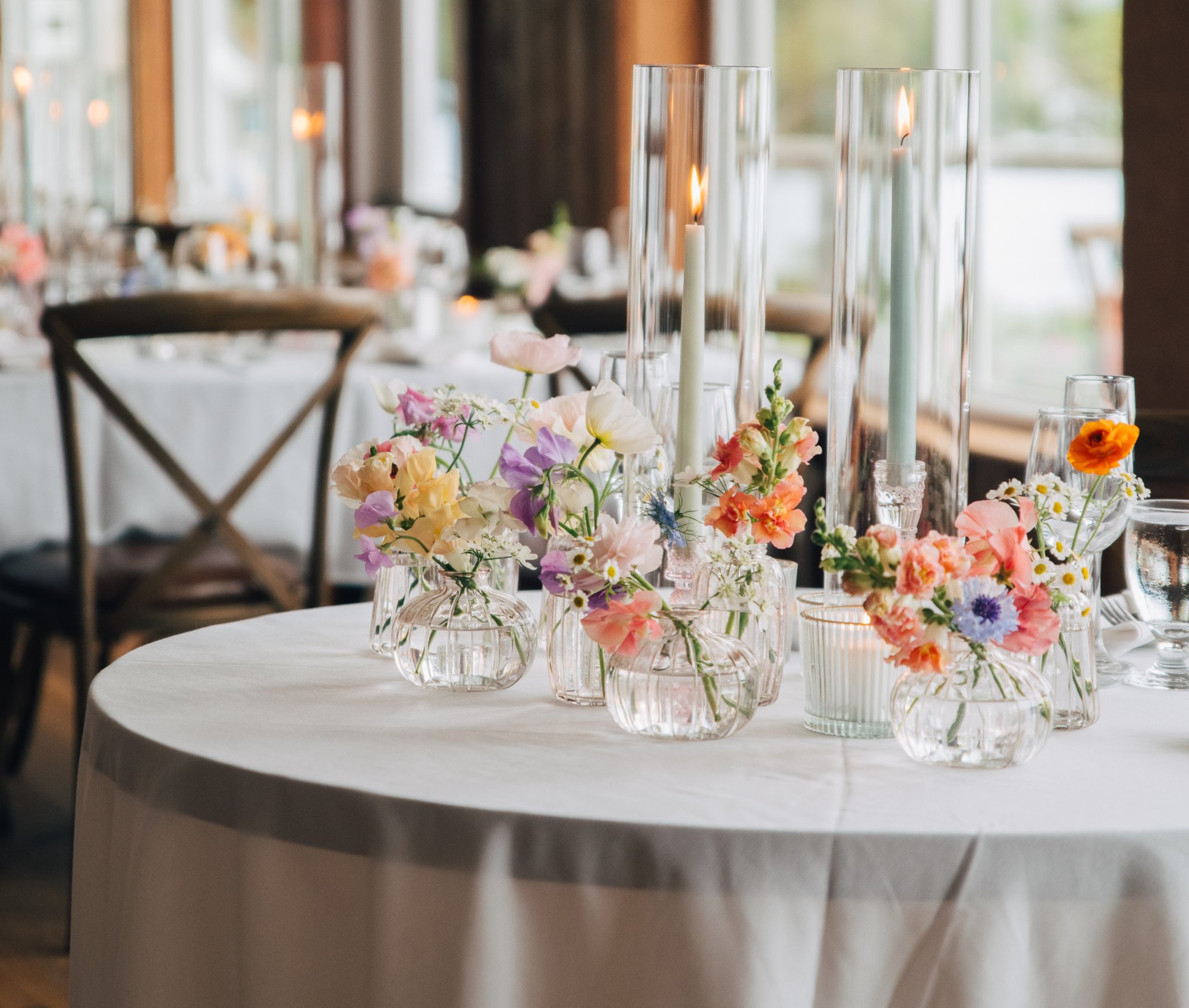
Dahlias are used as focal flowers in most of our summer and fall wedding arrangements. They are the intricately-patterned, textural and richly-colored stars in bouquets, centerpieces, arbors, ceremony designs, and sometimes even more petite work such as bud vases, boutonnieres, and wrist corsages.
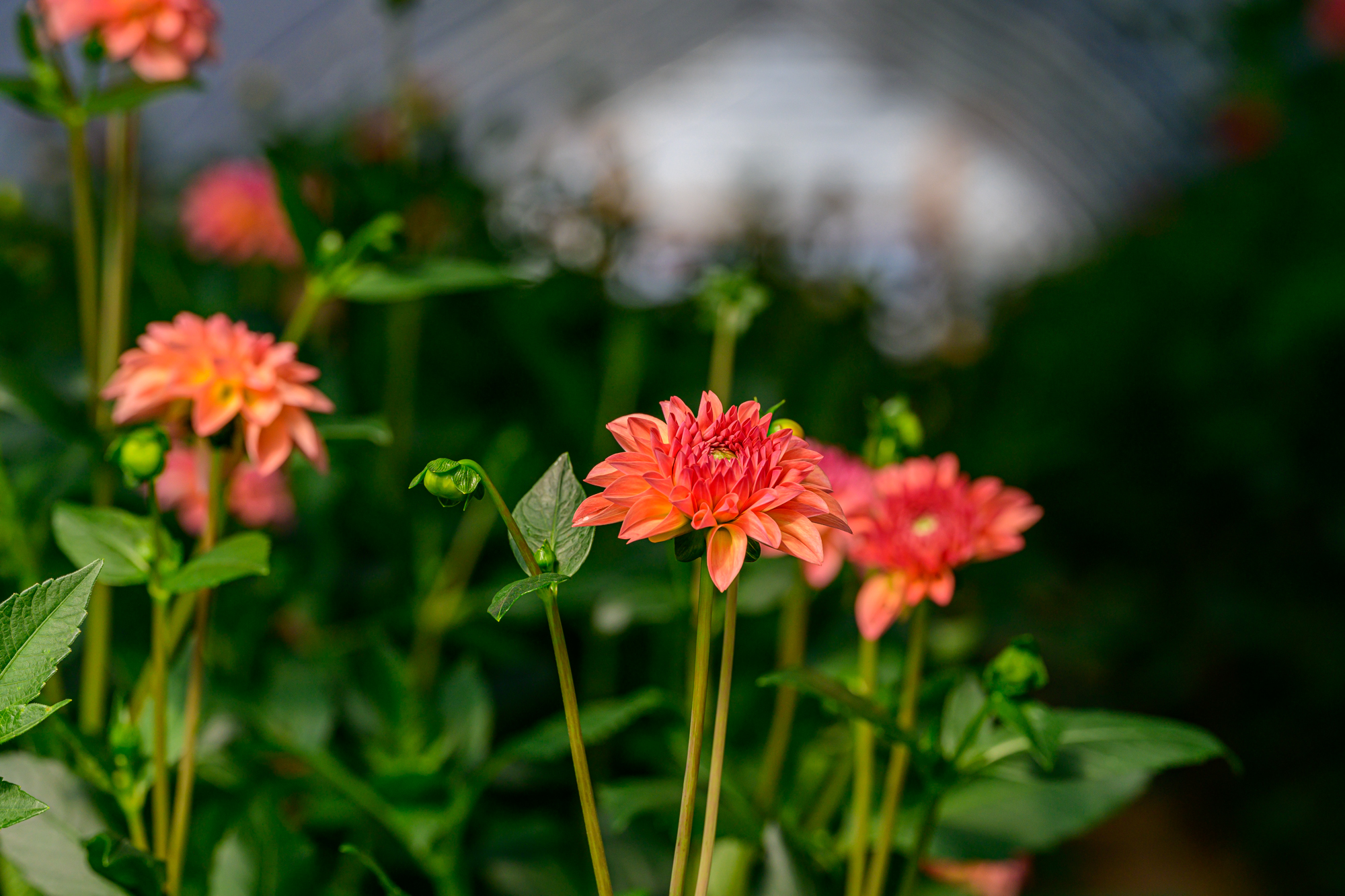
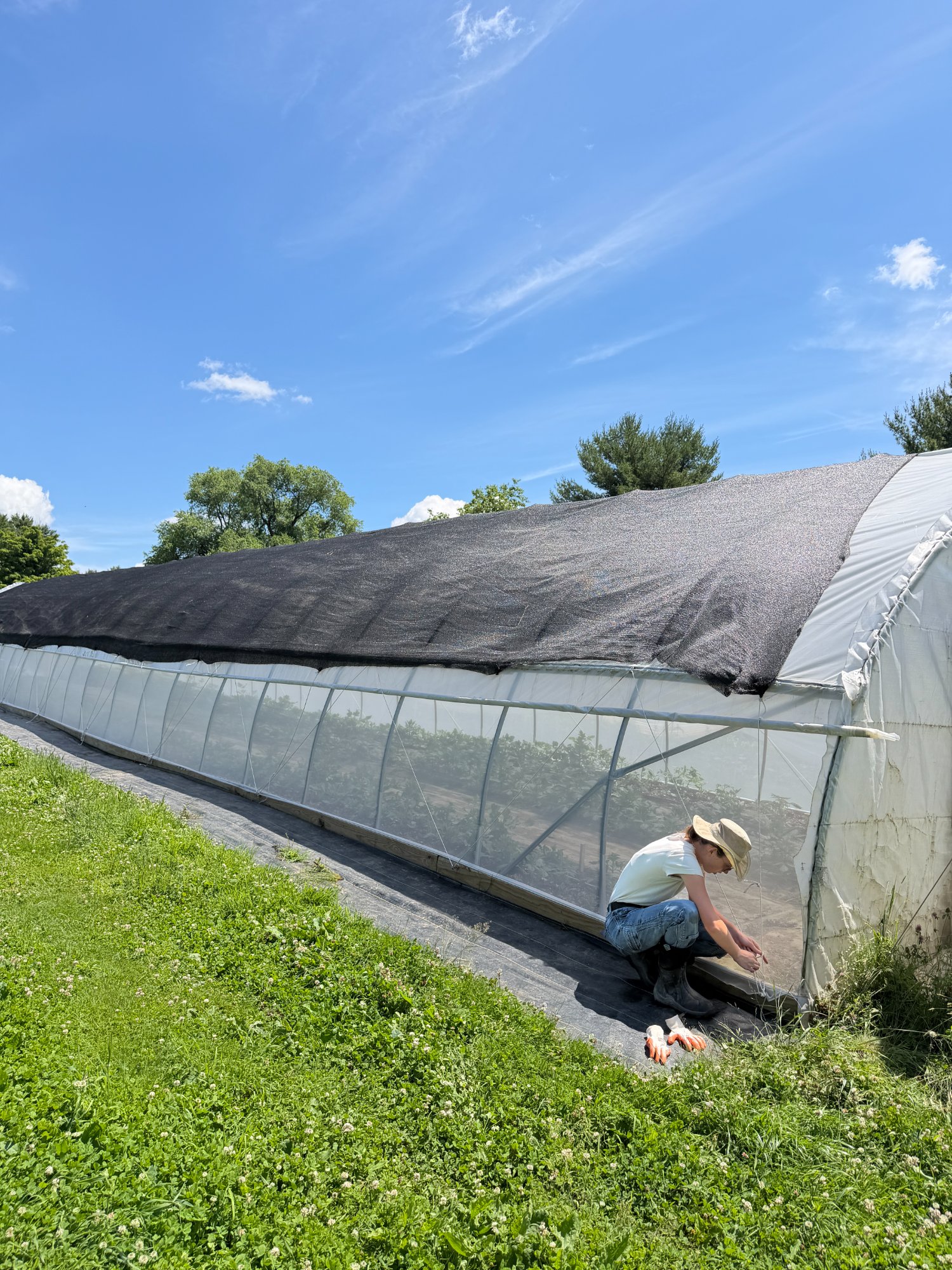
On our family farm, we grow dahlias as annuals in a special tunnel to protect them from pests.
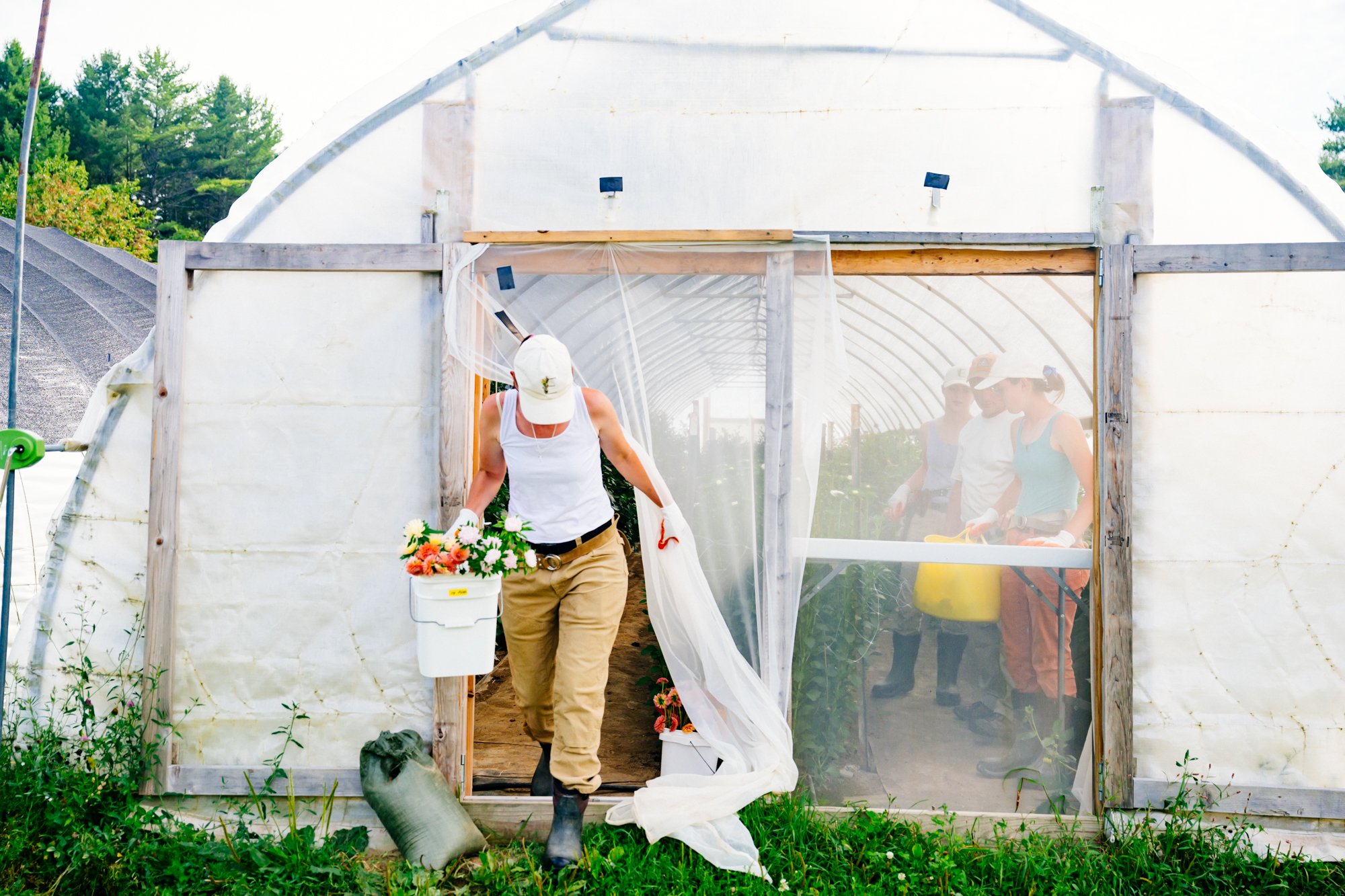
This allows us to use zero harmful chemicals and end up with gorgeous blooms for finished wedding work. Here is how we do it!
We begin in the previous season, by cutting back all the foliage from the current season, then digging each plant--a large clump of tubers--out of the earth. We tap off the soil, label, inventory, and pop into bulb crates by variety. 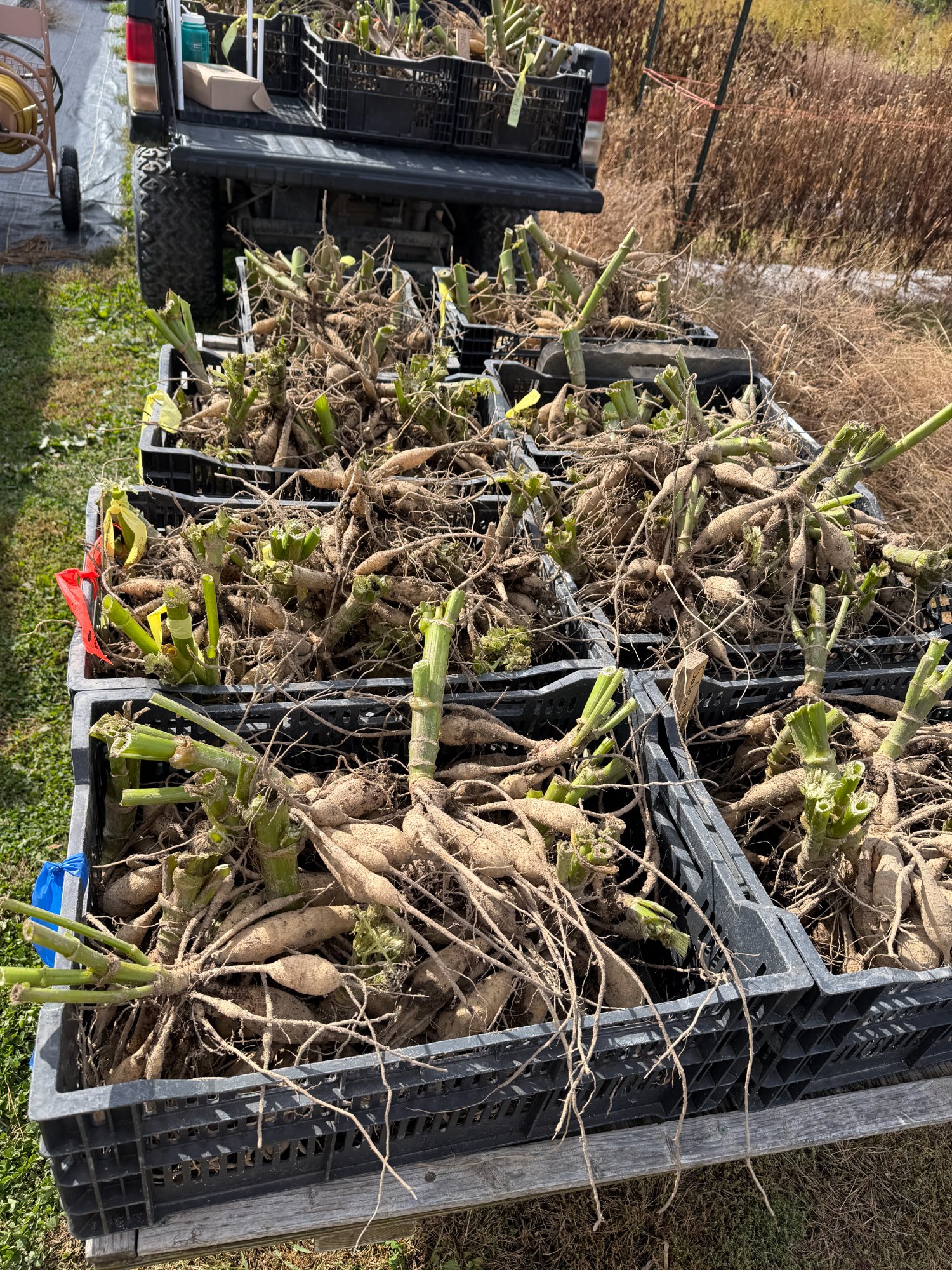 Next it's into our floral cooler with large labels showing us total tuber clumps and total number of crates per variety to make the next steps easier. After a few days, we rinse each clump, dry them, and divide them into individual tubers. These individual tubers to pre-sprout the following season. At this point, those individual tubers get packed carefully into labeled bins layered with vermiculite, which retains moisture through the long winter. The binned-up dahlia tubers seem to do very well here in Maine in our humid, cool basement until the springtime, when we take them out again and pop them into pots with soil to begin the pre-sprouting process about two months before we plant them into our newly-amended dahlia tunnel. The ProtekNet material needs to be replaced every year, as winter winds and harsh conditions cause it to rub against the metal ribs of the tunnel, causing rips and tears. It is very thin, but extremely effective at excluding most types of pests, even as small as thrips and spider mites, all the way up to the moths that give birth to corn borers. The only pests that aren't deterred by netting are slugs, snails, and earwigs, which we scout for every time we enter the tunnel for care and maintenance on our dahlia plants.
We plant each tuber at about 12" apart in two rows along our 100' planting beds, and grow about 400-600 dahlias tubers a season in the tunnel.
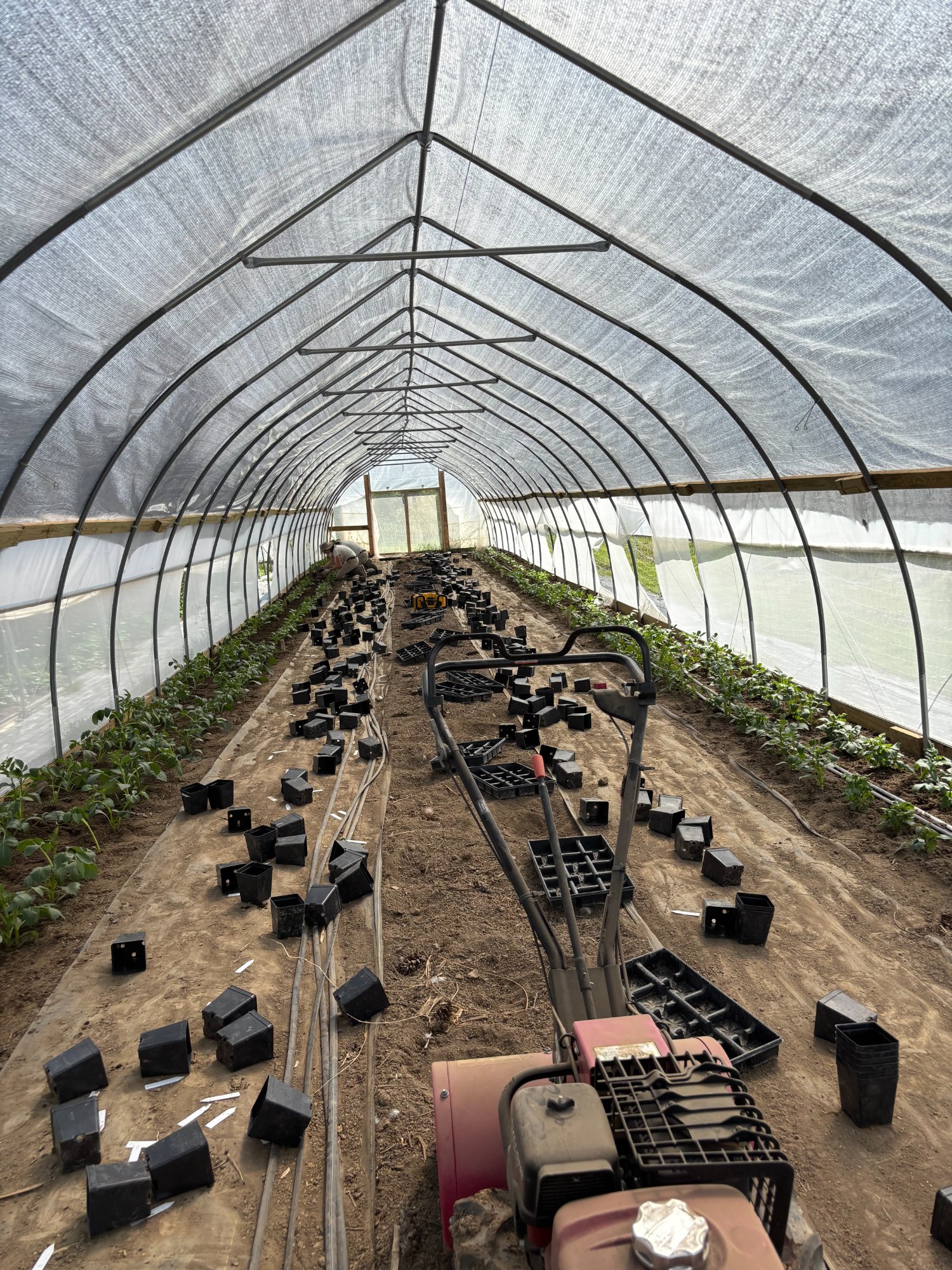
In between the young plants we add fragrant herbs with high volatile-oil content, like rosemary, sage, and oregano, as added pest deterrents. These herbs quickly get shaded out, but it's a great insurance policy against pests early on. After planting, we add a thick layer of composted leaf mulch about two years old which keeps plant roots cool in the heat of the tunnel, and keeps weed pressure to a minimum. Leaf mulch also adds healthy microorganisms like mycorrhizal fungi to the soil, which is key in the health of any living plants, flowers or veggies. The beneficial fungi create a web beneath the soil which helps nutrients get transported up into the roots of the plants, allowing them to uptake more of what they need, which might otherwise not become bioavailable. We know our dahlias are healthy by the color and form of their leaves, their growth habit, and their healthy production of flowers all season long.
About 4 weeks after planting, we add shade cloth and snip out the center buds.
This allows their basal branching stems to get stronger and the energy of the plant to go back into the roots rather than early flowers on thick stems, which would be unusable for design work. We also cut back any dahlia plantings to 3 or fewer main stalks for flower production, as this assists the plant in producing high quality flowers without a lot of extra, gangly green stems to support. We also scout for pests at this time, and remove any slugs or snails, then purchase beneficial insects if there are any signs of pests. The first pests are usually leafhoppers, which typically cannot get through the ProtekNet. If some snuck through the doorway upon people entering or exiting the tunnel, this is a great opportunity to remove them or at least place predators down in the soil for added protection throughout the season. If they aren't removed, their sucking mouth parts drain sap from leaves while simultaneously transmitting disease into the healthy dahlias plants. Aphids may also sneak in, but they are easy to remove by hand, and lacewing larvae are easy to shake on those young dahlia plants for added protection as well. Just like people, if a dahlia plant is getting all it's necessary nutrients, it will naturally deter pests on its own. But, if the plant is under even a small amount of stress, pests can be drawn to it like a magnet. This is one reason we focus on the health of our plants (and our people) here at the farm. Through observation, research, and 100% natural methods of growing with zero harmful chemicals, our dahlias and other plants thrive and consequently, we are under less stress throughout the busy growing season as well.
Another 4 weeks later, and it's time to weed again, and remove the lower 12-18" of foliage on the stalks which are now laden with green leaves.
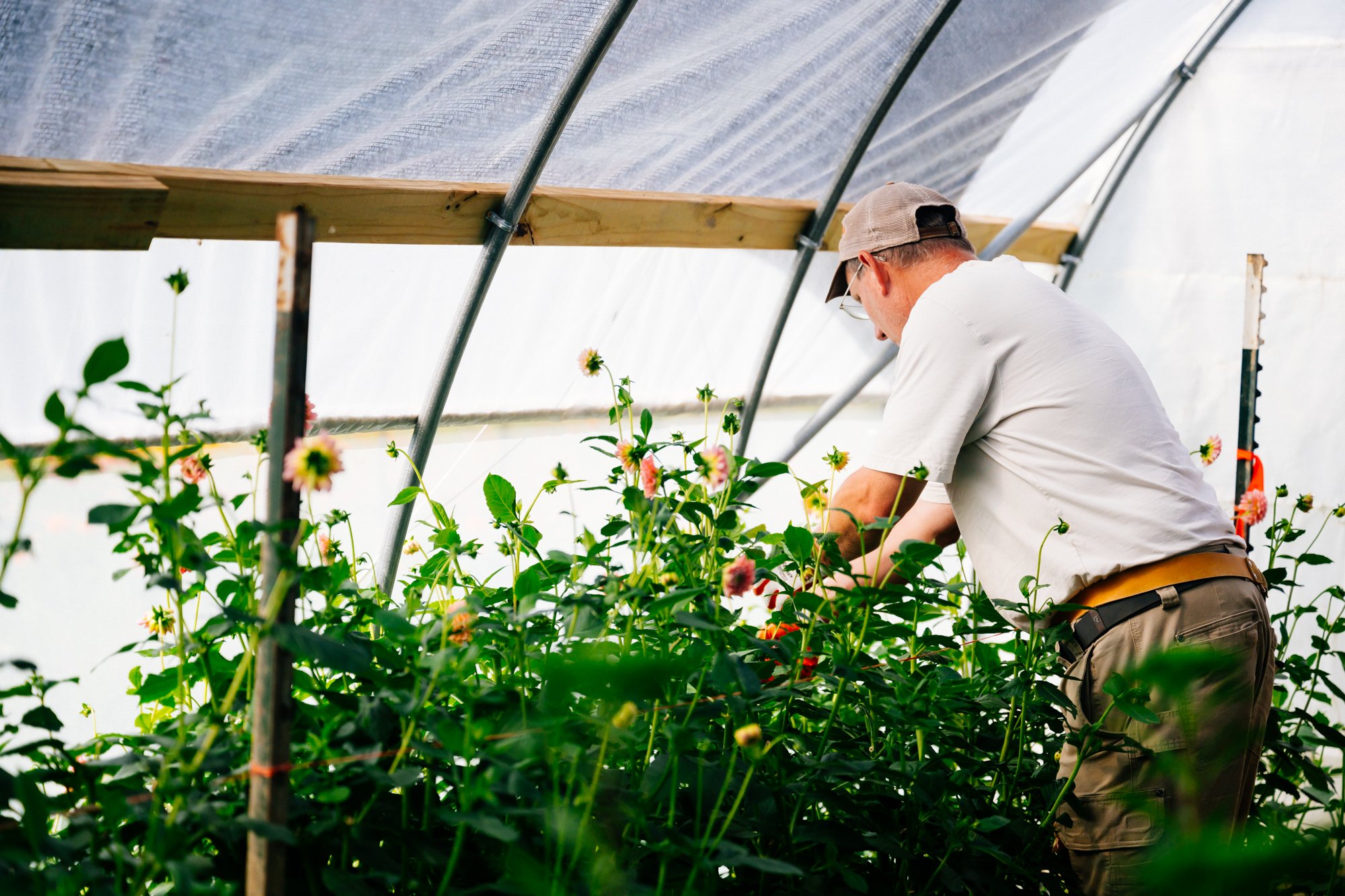
Removing this foliage increases air circulation in this protected environment, minimizing the risk of powdery mildew and other diseases. Just like people, plants need fresh air that circulates! By this time in the season it can get close to 100 degrees F or higher on a sunny day, so 50% shade cloth is necessary to keep those dahlias cool, along with the earlier application of leaf mulch around the base of the plants. Spiders are helpful and encouraged to live amongst the stalks.
By this time in the season, plants are needing major support.
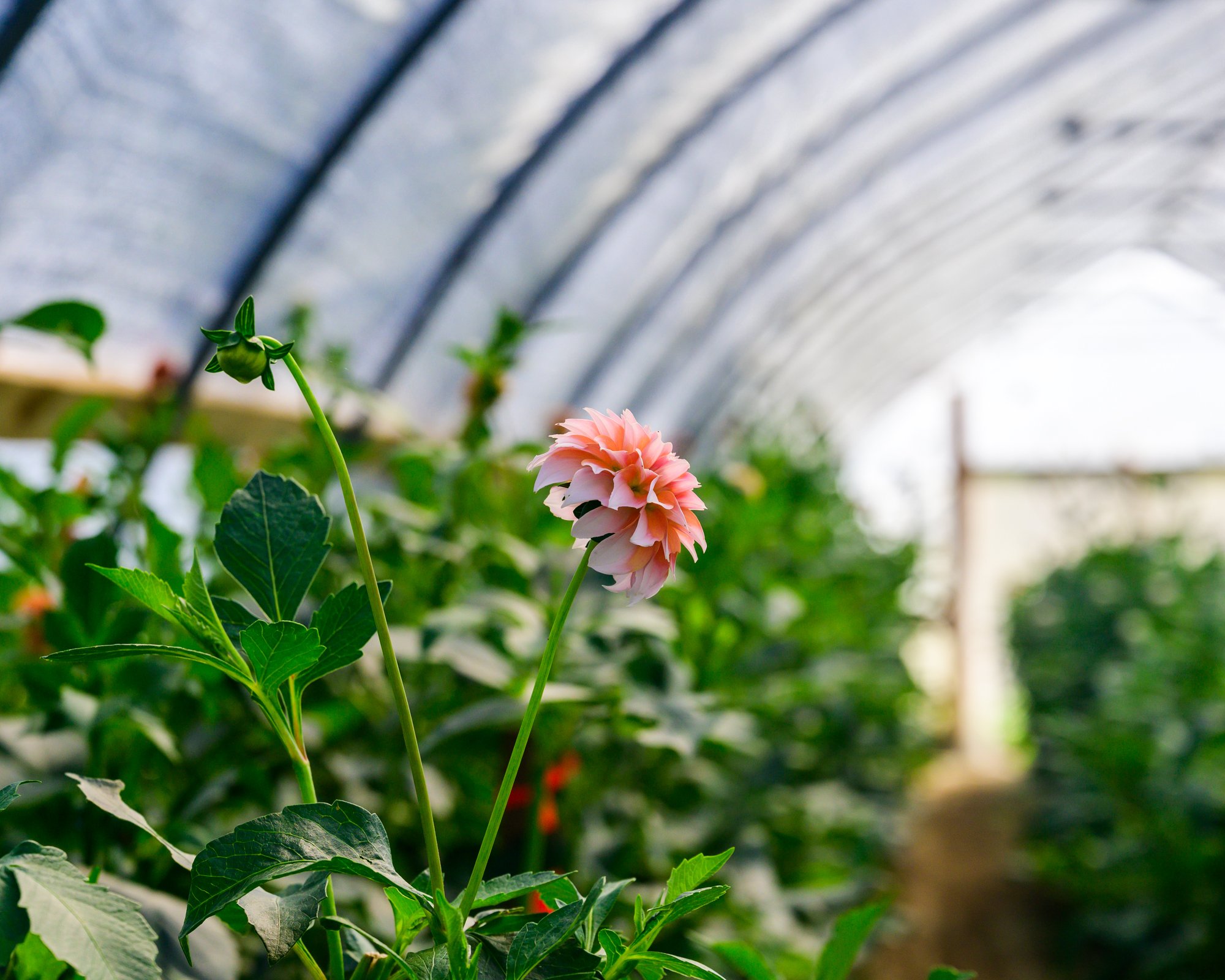
Each week, dahlias continue to grow stronger and taller, and eventually their main stalks become quite heavy. We begin to support them at this point, so they continue to grow upright, instead of breaking off at or above soil level, which causes bent stems and challenges walking through our tunnel pathways. Very soon we will be cutting hundreds of flowers every 3 days, so it is critical to get in there and support individual plants and long rows, through a variety of methods. We usually pound T-posts in every 10 feet, then tie multiple layers of poly twine along and through the posts, creating a corral and X pattern. This past season we found that plants were so vigorous and strong, they needed even more support, so we went through and did a second supporting of many varieties. Growing large, branching plants through cattle panel isn't easy, but we do our best to use the strongest methods we can for support, and may consider individual tomato cages on certain varieties which get very long stems later in the summer.
Soon it's time to harvest!
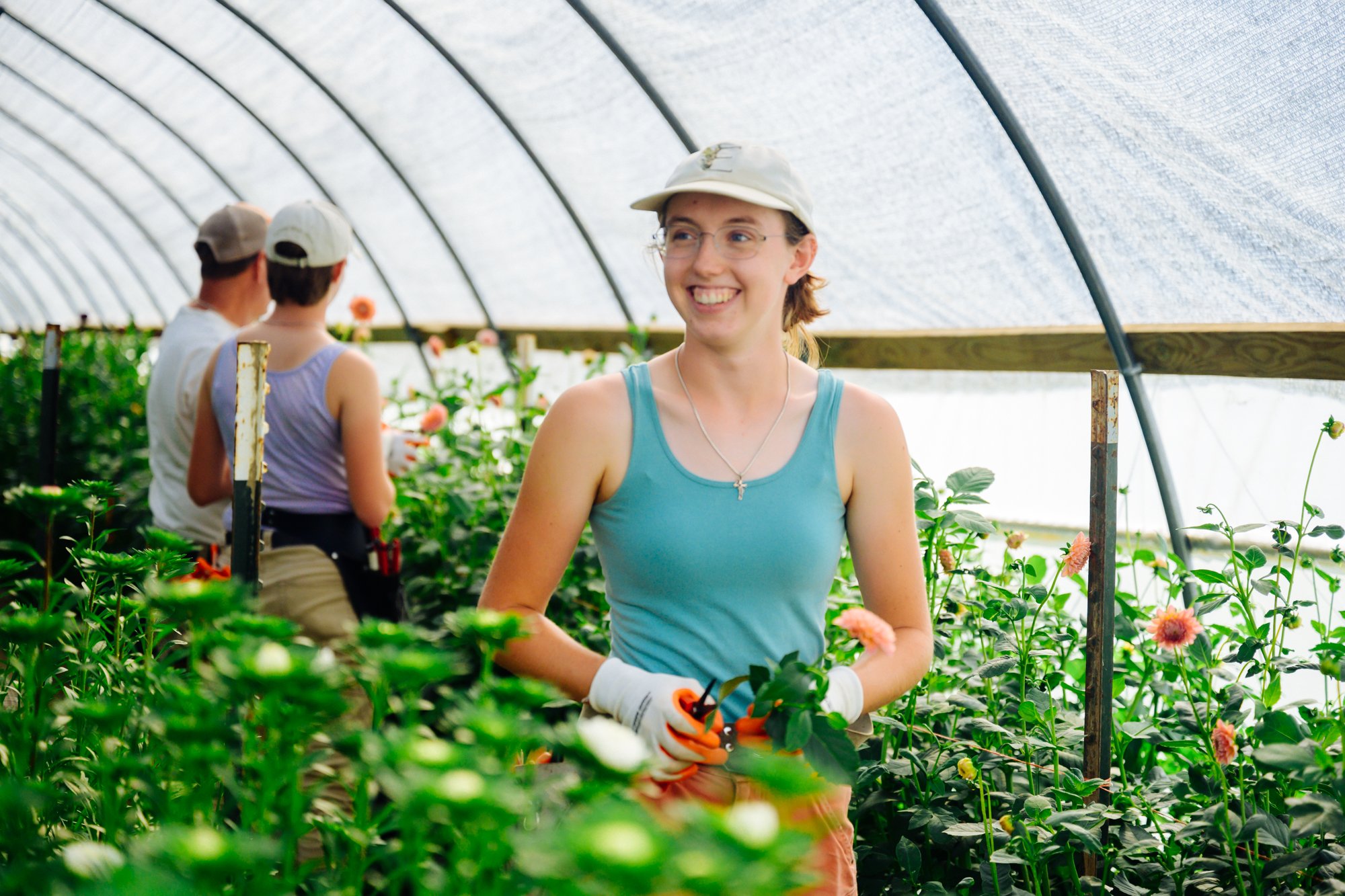
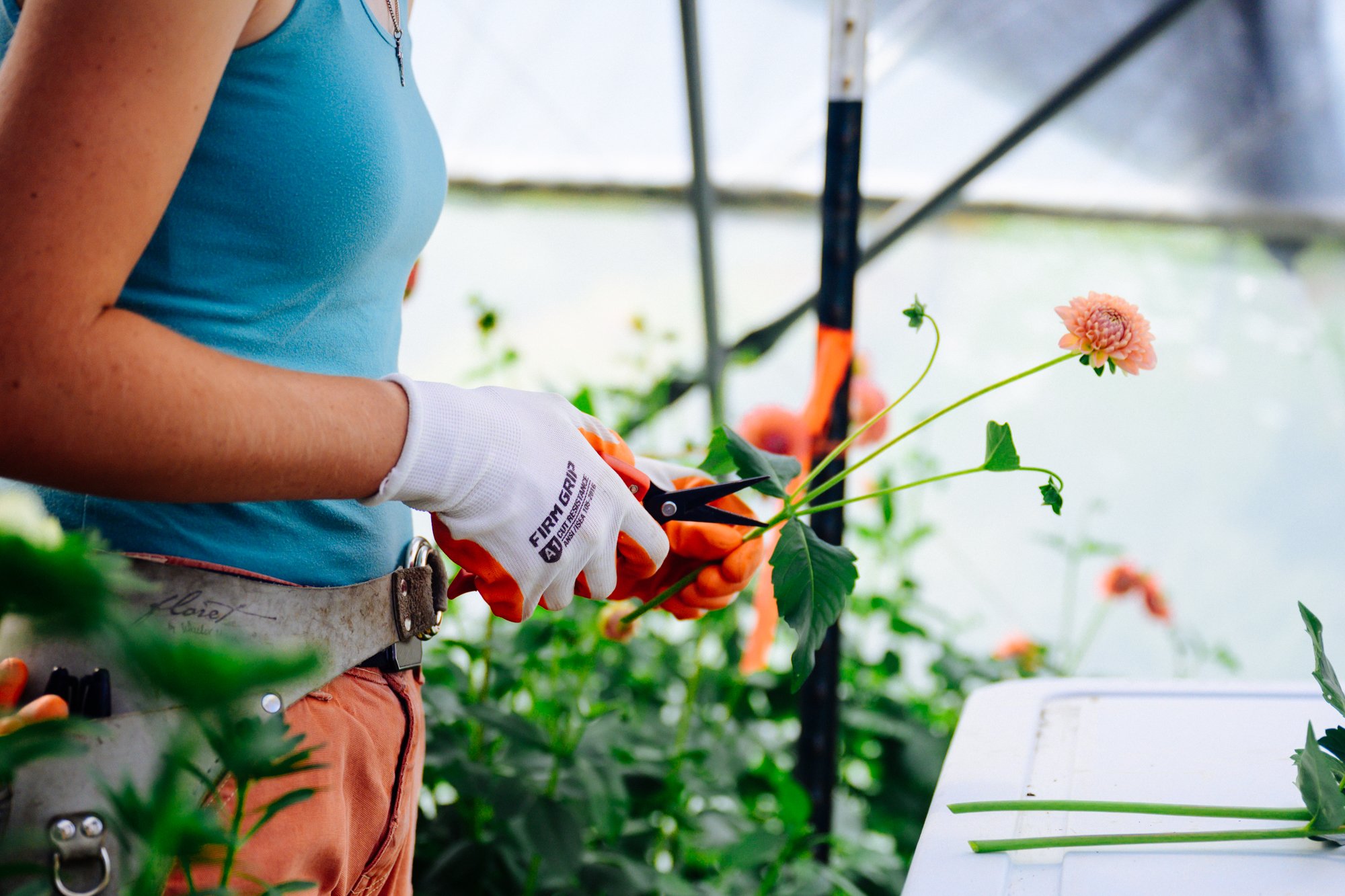
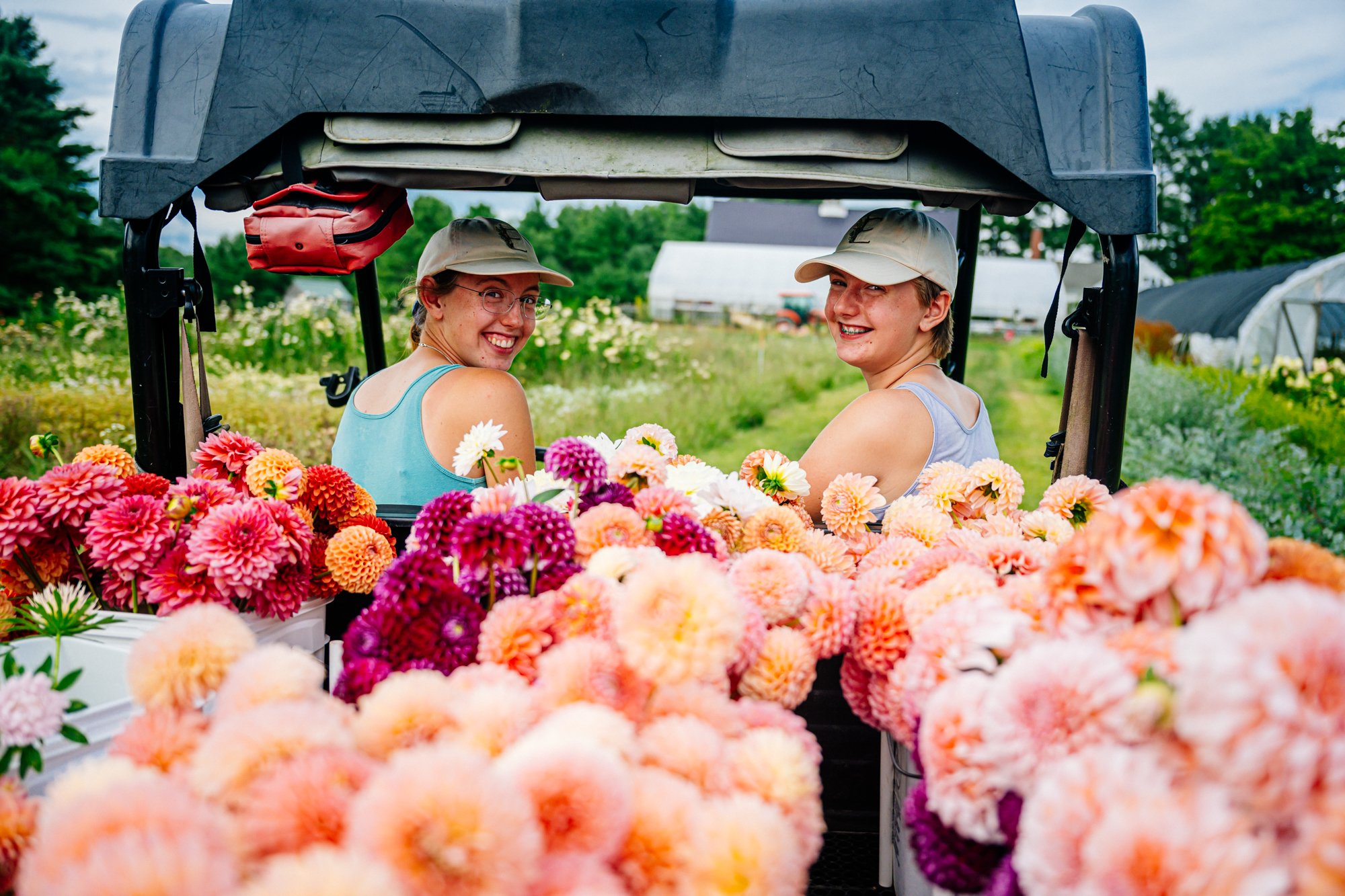
Harvesting dahlias happens every three days on our farm, and with each harvest beginning as early as mid-July, we total between about 1,500 every week. That's a lot of flowers. Our system for harvesting uses 3-4 people. Scott goes through plant by plant and assess which dahlias need to get cut, and whose wedding they will be styled into. Depending on their end floral piece, he may pick them more open or more closed. He then passes the cut stems to Chloe, who knows just how to cradle a large bunch before running them to Violette, who is ready to process and strip the foliage at a folding table by the entrance of the tunnel. With each bunch, she counts, records data of varieties and numbers, strips, then passes to me to grade and put into the correct bucket, labeled with the date and sorted by color and variety. This process takes about 45 minutes to an hour each harvest, and we always exit the tunnel feeling relieved we have harvested so many gorgeous flowers for our wedding couples.
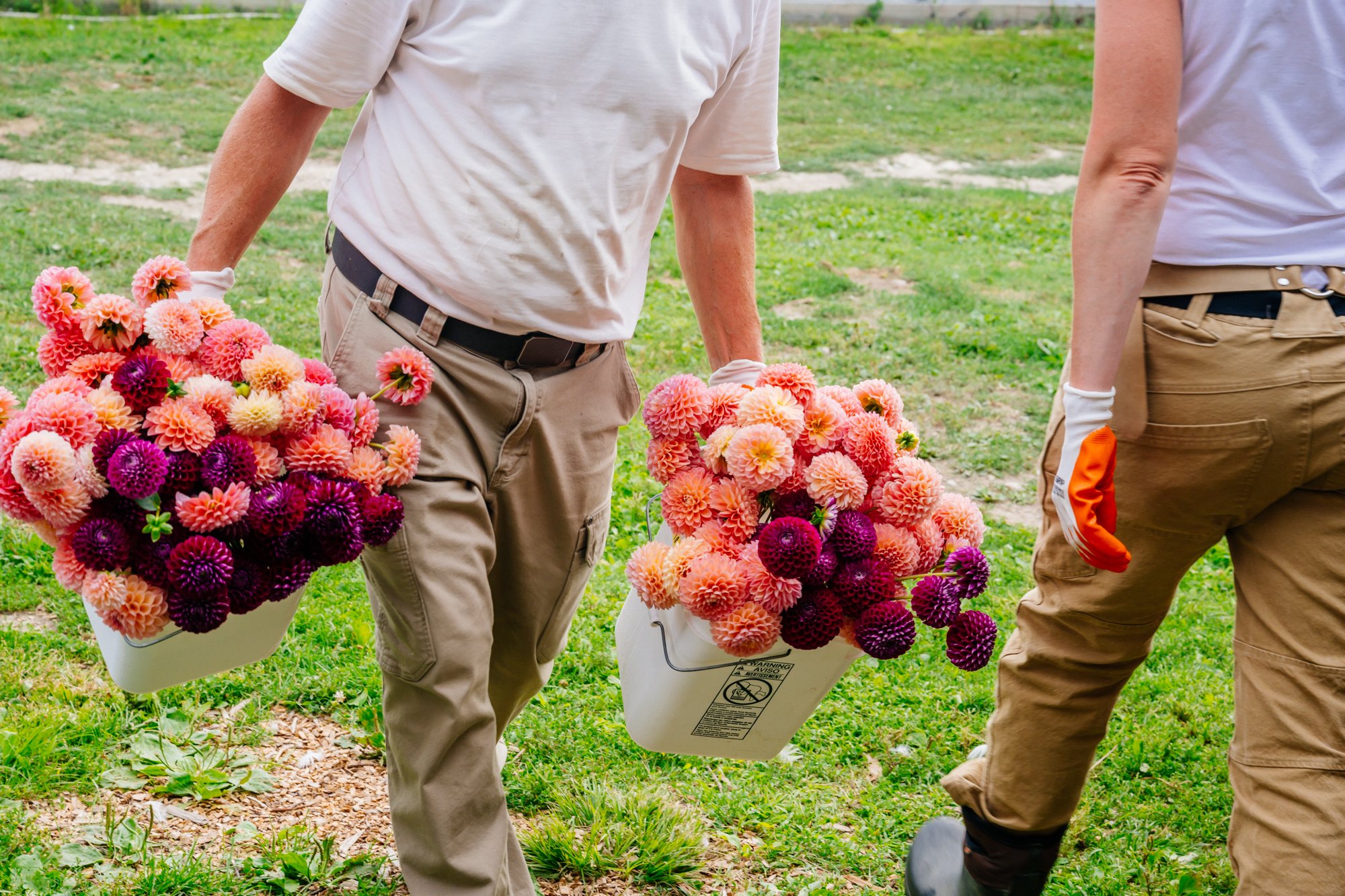
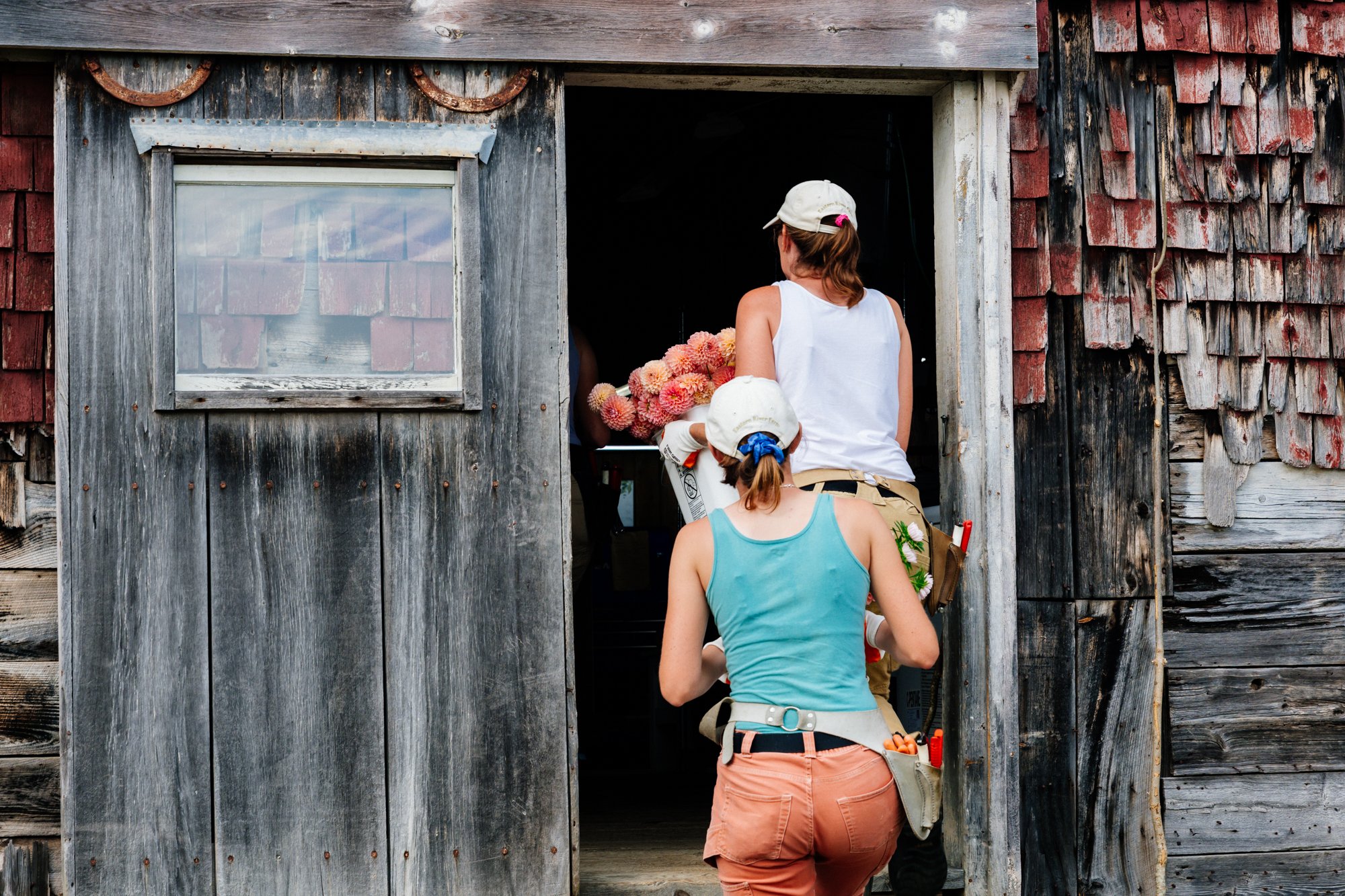
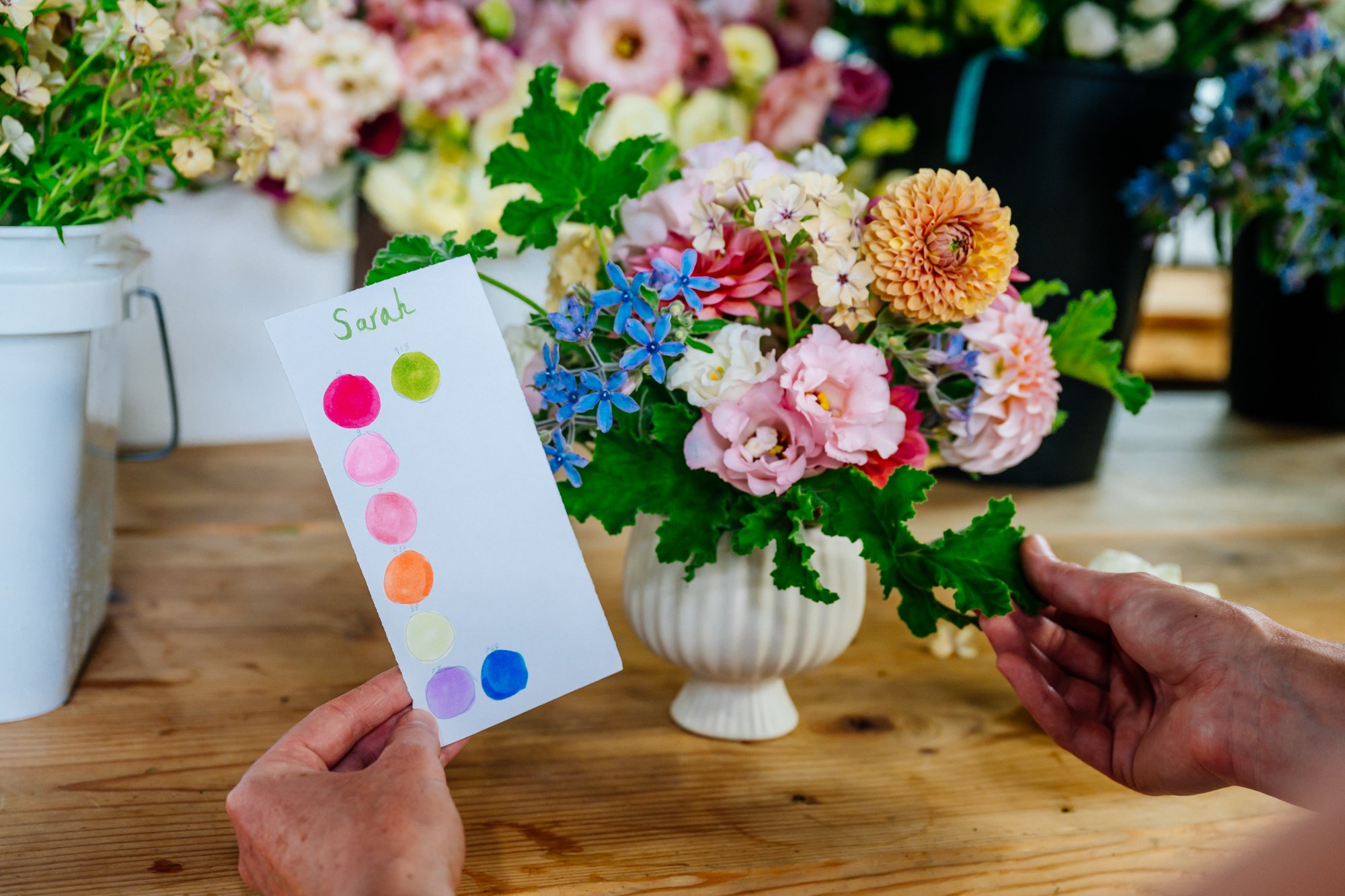
It is such fun to work together as a family, and also to learn more and more about this crop which we all love.
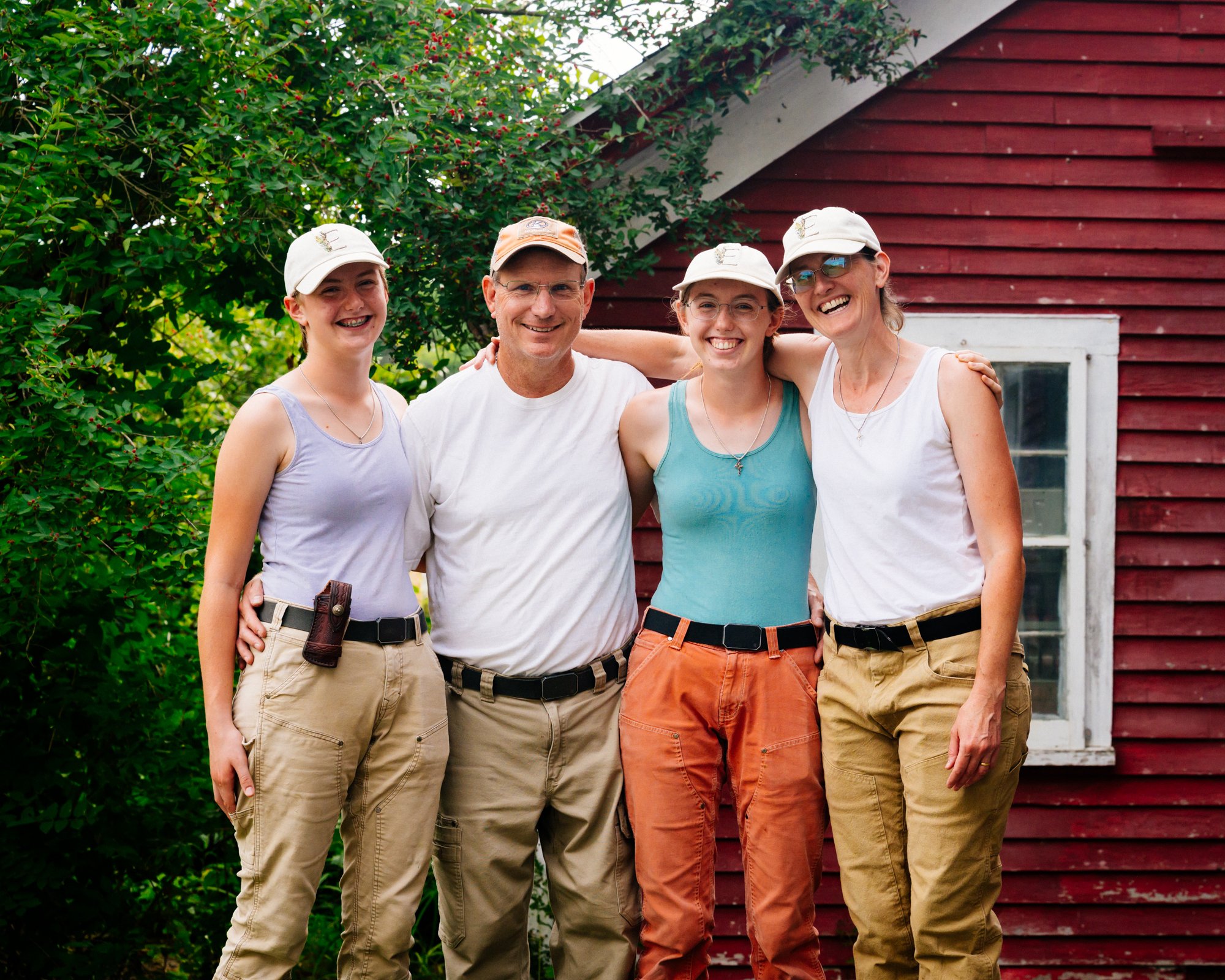
Dahlias are tricky to grow well on the east coast, but through the methods our family has learned and practiced for nearly a decade, we find they are a labor of love, and one that continues to keep us learning and looking forward to the next dahlia season!